
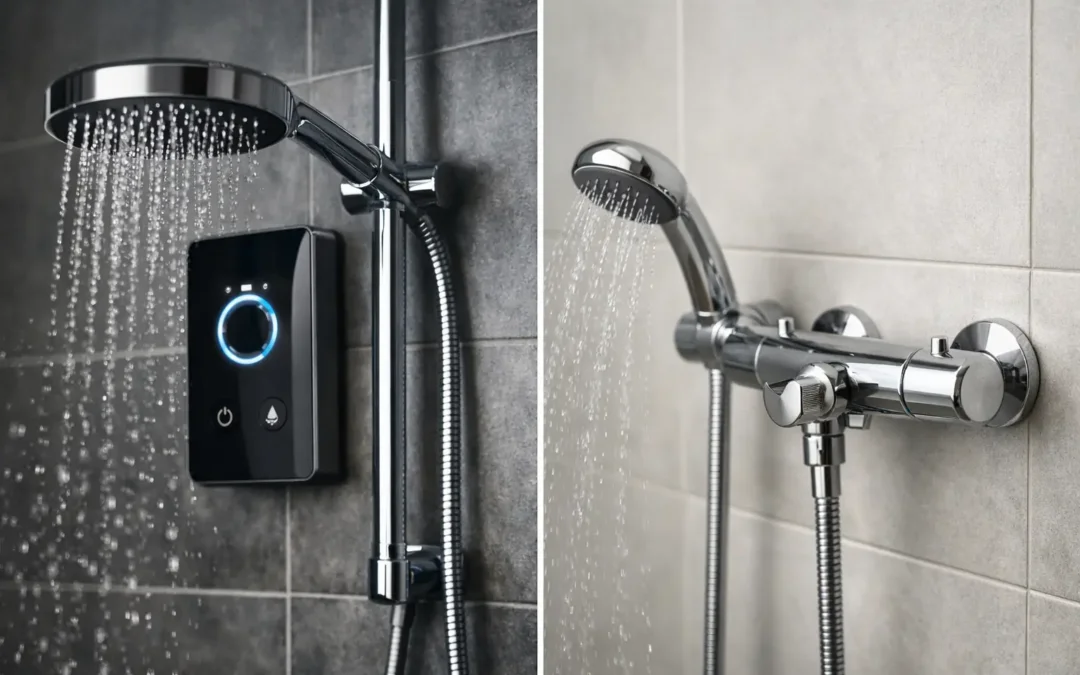
The shower is often the first decision that shapes a bathroom’s daily comfort. When weighing up a digital shower vs mixer shower, the right choice is less about which is newest and more about how your home’s water system, household routine and preferred bathroom design work together.
Both can deliver an excellent shower. A carefully specified thermostatic mixer shower is dependable, elegant and familiar. A digital shower brings precision, convenience and a cleaner look around the showering area. The difference is in the way each controls water, the services it needs and the budget it calls for.
Digital shower vs mixer shower: the essential difference
A mixer shower blends hot and cold water within a valve. Turn the controls and you regulate temperature and flow directly at the shower. Most quality mixer showers include thermostatic control, which helps keep the temperature steady if someone turns on a tap elsewhere in the house.
A digital shower moves the control of the water away from the wall valve. A digital processor, usually concealed in a cupboard, loft space or service area, mixes the water electronically. A slim control panel in the shower lets you set the temperature and start the shower, while some models offer remote controls, warm-up indicators and individual user settings.
It is worth clearing up one common point of confusion. A digital shower is not the same as an electric shower. An electric shower heats cold water as it passes through the unit. A digital shower uses your existing hot and cold water supplies, so its performance still depends on the system serving your home.
Why a mixer shower remains a popular choice
For many bathroom renovations, a thermostatic mixer shower is the most sensible and satisfying option. It has fewer electronic components, is straightforward to use and comes in a huge range of finishes and styles. Whether your scheme calls for polished chrome, brushed brass, matt black or a more traditional exposed valve, there is usually a mixer shower to complement it.
The controls are immediate and intuitive. There is no need to charge a remote or learn a menu. For families, visiting guests and anyone who wants a familiar shower experience, that simplicity has real value.
A mixer shower can also be an effective way to make the most of an existing water system. With the correct valve and compatible shower head, it can provide strong, stable performance without introducing the additional equipment of a digital system. This can make it attractive where the project budget is focused on quality sanitaryware, tiles, furniture and lighting as well as the shower itself.
The pressure question matters
Not every mixer shower performs equally on every water system. Homes with a combi boiler or an unvented hot water cylinder often have the pressure needed for a satisfying shower, provided the hot and cold supplies are balanced. Older gravity-fed systems may require a low-pressure valve or a suitable pump arrangement to achieve worthwhile flow.
This is why choosing a shower solely from a showroom display or online image can lead to disappointment. The valve may look right, but if it is mismatched to the property’s water pressure, the finished shower may not feel as good as expected.
Where a digital shower earns its place
Digital showers appeal to homeowners who value control and convenience. The ability to set an exact preferred temperature is particularly useful in a busy household, where several people use the same bathroom. Rather than repeatedly adjusting dials, each person can start at a known setting.
Remote operation is another genuine benefit, not just a novelty. You can start the shower before stepping in and wait for its indicator to show when it has reached temperature. That is useful on cold mornings and can reduce the time spent standing under a shower while making adjustments.
The visual advantage can be just as compelling. Because the processor is positioned away from the shower wall, the visible control can be compact and uncluttered. This suits contemporary wet rooms and minimalist walk-in showers, especially where large-format tiles are intended to take centre stage.
Some digital systems also allow separate control of more than one outlet, such as an overhead drench shower and a handset. This can create a more refined showering experience, although it should be planned around the available flow rate. Two outlets are only a luxury if the water supply can support them properly.
The trade-offs to consider
Digital showers usually cost more than an equivalent quality mixer shower. The initial product price is higher, and the overall cost can rise depending on where the processor is located, how accessible pipework is and whether electrical provision is needed nearby. Future access also needs careful thought. Concealing equipment is attractive, but it should not mean making servicing unnecessarily difficult.
They are also more reliant on electrical components. Reputable systems are designed for bathroom use and can be very reliable, but a mixer valve is mechanically simpler. If your priority is the most straightforward long-term solution with minimal technology, a well-made thermostatic mixer may be more appealing.
A digital shower will not correct a poor water supply. If the property has limited pressure or restricted hot water capacity, the system must be selected to suit it. In some homes, a pumped digital model is appropriate; in others, a high-pressure model is the better fit. The specification should follow an assessment of the existing plumbing, not the other way around.
Comparing everyday use, cost and design
The decision often becomes clearer when you consider how the shower will be used rather than comparing features on a specification sheet.
For a family bathroom, a thermostatic mixer shower is hard to fault. It is practical, easy to understand and can be specified with a riser rail, fixed head or both. Temperature stability and anti-scald protection are the key priorities, and a quality mixer achieves these well.
For an en-suite used by two people with different preferences, a digital shower can be particularly attractive. Preset temperatures and a more considered control layout make the room feel tailored to its users. It may also suit a renovation where a simple, pared-back shower wall is central to the design.
For a traditional bathroom, an exposed mixer shower can become a design feature in its own right. It gives the room character while still offering modern thermostatic performance. In a more contemporary room, either option can work: a concealed mixer offers a discreet finish, while a digital control can make the wall even cleaner.
Budget should be viewed across the complete bathroom, not as the price of one product. The shower valve or processor is only part of the cost. Pipework alterations, wall construction, waterproofing, tiling, shower screens, brassware, ventilation and access for future maintenance all influence the final figure. Being honest about these details at the design stage protects both the finished look and the budget.
Questions to answer before choosing
Before selecting either shower type, establish the property’s hot water arrangement, available water pressure and likely demand at peak times. If two bathrooms are used at once, for example, the system must deliver enough hot water and flow without compromising either shower.
Think about who will use the room and what will make their routine easier. A remote-start digital shower may feel worthwhile in a principal en-suite, while uncomplicated physical controls may be preferable in a guest bathroom. Also consider whether you want one shower outlet or a combination of overhead and hand shower.
Finally, consider access from the outset. A concealed mixer valve and a digital processor both need to be serviceable. Good bathroom planning creates the polished finish you want without sacrificing sensible access to the components behind it.
Making the right choice for your bathroom
There is no automatic winner in a digital shower vs mixer shower comparison. A digital shower is a strong choice where personalised settings, remote operation and a minimal visual finish are worth the extra investment. A thermostatic mixer shower is often the better value choice where timeless design, straightforward operation and mechanical simplicity are the priorities.
At MBK Design Studio, shower selection begins with the wider room and the realities of the property, from water pressure to the way the bathroom will be used every day. The most successful bathrooms do not simply follow a trend. They make the morning routine easier, feel right for the home and continue to perform well long after the tiles have been chosen.