A beautiful bathroom should still work when the morning is rushed, the family queue is building and the house is cold outside. That is why the most worthwhile bathroom trends are no longer simply about a dramatic tile or a social-media-ready basin. They are about creating a room that feels calm, performs reliably and suits the way your household actually lives.
For homeowners planning a bathroom refurbishment in Maidstone and across Kent, the challenge is separating a passing look from a decision that will continue to feel considered in five, ten or even fifteen years. The answer is rarely to avoid trends altogether. It is to use them in the right places, with a well-planned layout and products chosen for everyday use.
Bathroom trends are becoming warmer and more personal
The stark, all-white bathroom has given way to rooms with more depth and character. Warm neutral shades, soft stone effects, muted greens, clay tones and gentle greys are increasingly popular because they make a bathroom feel more like part of the home, rather than a purely functional space.
This does not mean every bathroom needs to be dark or colourful. In a compact en-suite or a bathroom with limited natural light, pale finishes can still be the best choice. The difference is in the undertone. A warmer off-white, light oak-effect furniture or a softly veined porcelain can add interest without making the room feel smaller.
Colour is often most successful when it is used as a layer rather than a commitment across every surface. A painted vanity unit, coloured wall tile or a richly toned shower area can bring personality, while keeping larger items such as sanitaryware and flooring timeless. This approach also gives you more flexibility if your tastes change later.
Spa-inspired design, without sacrificing practicality
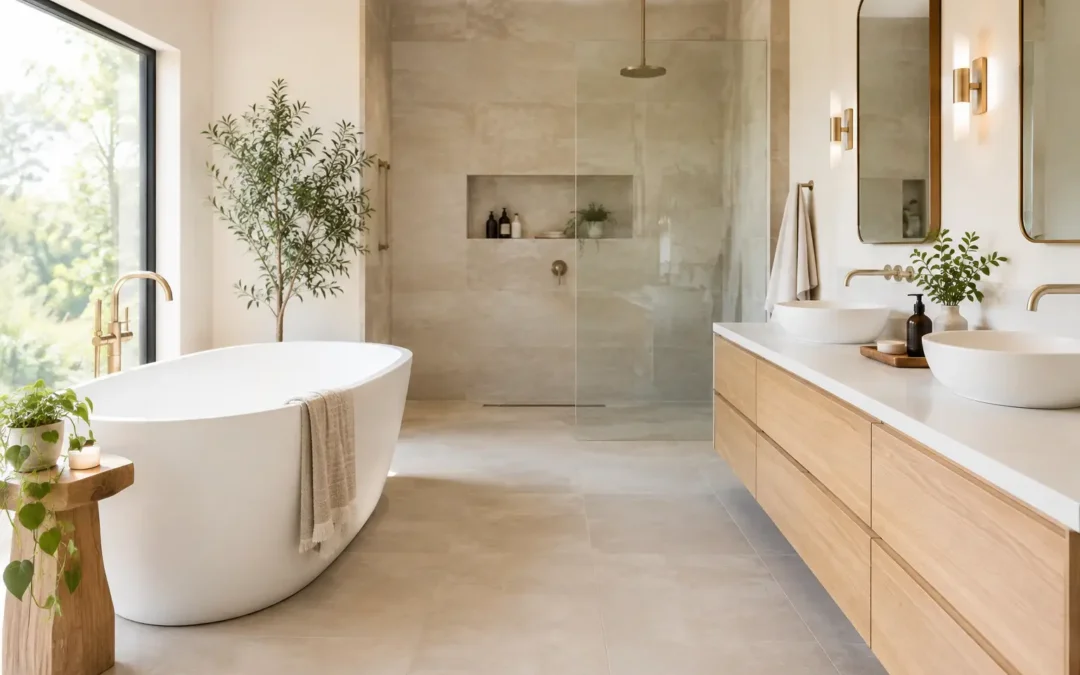
The desire for a more restorative bathroom remains strong. Freestanding baths, walk-in showers, rainfall shower heads and natural-look materials all contribute to a quieter, more indulgent feel. Yet a true spa-like bathroom is not created by adding features for their own sake. It begins with a layout that gives each part of the room enough space to work comfortably.
A large walk-in shower can be a superb investment, particularly for households that rarely use a bath. With minimal framing and a carefully positioned glass panel, it can make a room feel more open. However, the available room dimensions matter. A shower screen that is too short, or a wet-room-style layout with insufficient fall and drainage, can lead to splashing and a floor that is always wet.
Freestanding baths make an impressive focal point, but they need clearance around them for cleaning and should be selected with the room’s scale in mind. In some properties, a fitted bath with a generous ledge for candles, toiletries or a book offers the same sense of comfort with more practical storage. Good design is about asking how you will use the room, not following a picture blindly.
Texture gives neutral schemes real depth
Natural textures are playing a bigger role in current bathroom design. Fluted glass, ribbed furniture fronts, brushed metalware, timber effects and textured tiles can make a restrained palette feel rich and layered.
Porcelain is particularly useful here. It can provide the appearance of stone, timber or concrete while offering the durability and straightforward maintenance that a bathroom requires. Large-format porcelain tiles also reduce the number of grout lines, creating a cleaner visual finish. They are not always the right answer, though. In an uneven older property or a very small room with several awkward cuts, a smaller format may be more practical and can look equally refined.
When introducing texture, restraint is valuable. If the floor has a strong stone effect and the furniture has a pronounced grain, choose a quieter wall tile. Allow one or two materials to lead rather than asking every surface to compete.
Better storage is one of the most useful trends
The least glamorous design decisions often have the greatest effect on how a bathroom feels. Cluttered worktops quickly undermine even the most expensive scheme, which is why integrated storage is now a priority for many homeowners.
Wall-hung vanity units remain a popular choice. They create a lighter appearance, leave more floor visible and make cleaning easier. Deep drawers are generally more useful than cupboards because toiletries, electrical items and cleaning products are easier to see and organise. Internal dividers can be worthwhile where several people share the room.
Recessed mirrored cabinets are another small change with a significant payoff. They provide an accessible place for daily essentials without taking up additional room, while integrated lighting can improve the experience at the basin. In a family bathroom, think beyond the vanity unit too. A tall cabinet, a built-in niche or carefully planned shelving can prevent towels and spare toiletries from overflowing into other rooms.
Storage must be considered at the beginning of the design process. Trying to add it once the layout, plumbing and wall finishes have been decided usually means compromising on depth, position or capacity.
Lighting is being designed in layers
One ceiling light in the centre of the room is rarely enough. Current bathroom trends favour layered lighting that makes the room both more practical and more inviting.
Task lighting at the mirror is essential for shaving, applying make-up and day-to-day grooming. Soft ambient light makes an early morning or late evening bath more relaxing. Discreet lighting beneath a wall-hung unit, inside a niche or around a mirror can add atmosphere without feeling theatrical when it is carefully specified.
The key is to plan lighting with the electrical zones and layout in mind. A well-positioned illuminated mirror can transform a basin area, but it cannot compensate for poor overall lighting. Dimmable fittings offer flexibility, although they should be chosen for a bathroom environment and installed as part of a properly coordinated scheme.
Natural light also deserves consideration. Where privacy allows, a larger window, rooflight or obscured glazing can make a noticeable difference. If changing the window is not practical, reflective surfaces and a well-placed mirror can help distribute available daylight around the room.
Brass and black finishes need a considered approach
Brushed brass, bronze, warm nickel and matt black are still popular alternatives to chrome. They can give a bathroom definition and make a simple design look more tailored. Brushed finishes tend to be forgiving of water marks and fingerprints, while polished surfaces create a more formal, traditional effect.
Consistency matters more than choosing the latest finish. Ideally, taps, shower controls, accessories and cabinet handles should feel connected. They do not have to be identical, but mixing too many metal tones can make a room look accidental rather than collected.
There are practical trade-offs. Matt black can be striking against pale tiles, but limescale may show clearly in hard-water areas if it is not wiped regularly. Brass finishes vary substantially between manufacturers, so viewing the products together in a showroom is preferable to choosing from individual photographs. This is where expert guidance can prevent costly disappointments.
Accessible design is becoming part of good design
A bathroom designed for easier use does not need to look clinical. Low-threshold showers, wider access, comfort-height WCs, easy-grip controls and sensible lighting can benefit people of all ages. They are especially valuable for homeowners who want to remain in their property for the long term.
Planning ahead does not mean predicting every future requirement. It means avoiding choices that create unnecessary barriers. A generous shower, non-slip flooring and a layout with room to move can improve daily life now while making the bathroom more adaptable later.
Choose trends that support your home, not fight it
The most enduring bathrooms are not copied from a single showroom display. They respond to the property, the available space, the people using it and the level of maintenance they are happy to take on. A period home may suit traditional furniture, classic ceramic details and warmer metal finishes, while a newer property may lend itself to cleaner lines and larger-format surfaces. Both can feel current when the proportions and materials are right.
At MBK Design Studio, the starting point is always the conversation: what is frustrating about the existing bathroom, what must the new one do better, and what kind of space will continue to make you happy after the novelty fades. The best trend to follow is one that gives you a bathroom you genuinely enjoy using every day.