A new hob can change far more than the way a kitchen looks. It affects how quickly supper reaches the table, how comfortable the room feels while cooking and even the cabinetry and services required behind the scenes. When considering induction versus gas cooking, the right answer is rarely about which technology is universally best. It is about the way your household cooks, the character of your kitchen and the practicalities of your renovation.
For some homeowners, the visible flame and instant feedback of gas are central to the pleasure of cooking. For others, induction’s fast response, easy-clean surface and calm, contemporary appearance make it the more natural choice. Both can be excellent in a well-designed kitchen, provided the decision is made early enough in the planning process.
Induction versus gas cooking: the key difference
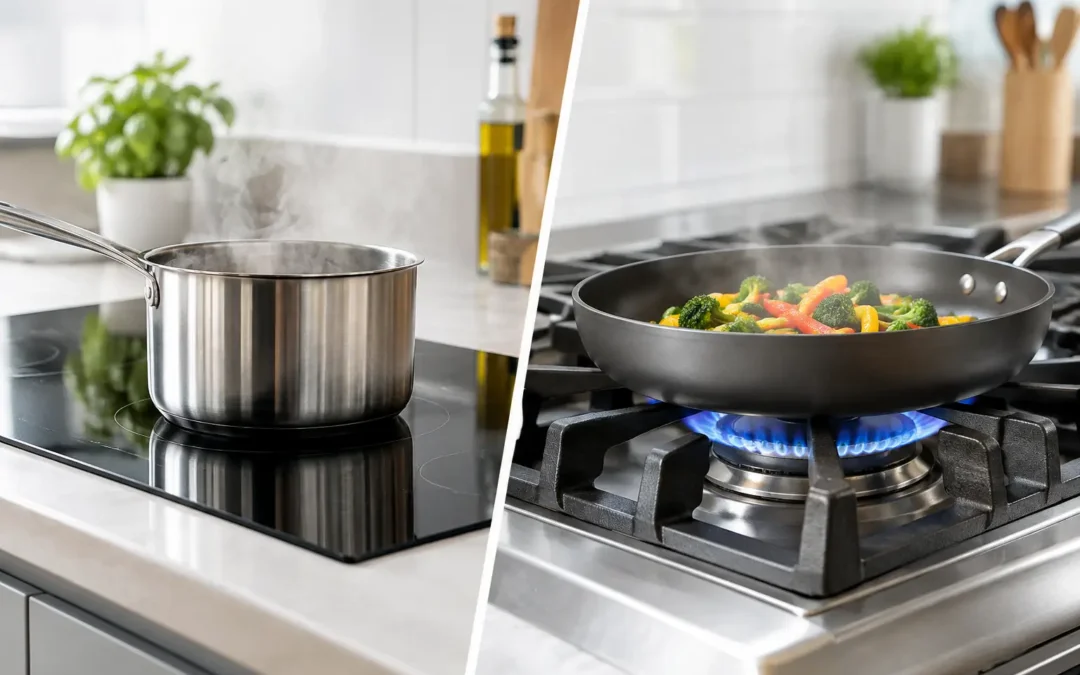
Gas hobs create heat with a flame beneath the pan. Turning the control adjusts the size of that flame, giving a visual cue that many experienced cooks know instinctively. The pan, surrounding air and hob supports all absorb some heat, so the cooking zone remains warm after use.
Induction works differently. Electromagnetic energy heats the pan itself, rather than heating the glass surface first. The area around the pan can still become warm from contact with a hot saucepan, but it cools much more quickly than a conventional gas hob once the pan is removed.
This difference shapes almost every part of the comparison. Induction is generally quicker to bring water to the boil and highly responsive when reducing heat. Gas remains exceptionally direct and familiar, particularly for cooks who prefer to judge the flame at a glance or use a round-bottomed wok over a suitable burner.
Cooking performance and control
Both options offer strong day-to-day performance, but they feel different at the hob. Induction provides precise, repeatable power settings and rapid changes in temperature. A large pan of pasta can reach boiling point quickly, while a low setting can be useful for melting chocolate or maintaining a gentle sauce without a large flame warming the kitchen.
Gas offers an immediate visual relationship with the heat. Many people enjoy that sense of control, especially when charring peppers, flambéing or cooking in a wok. Pan size is also less restrictive, provided it is safely supported by the pan supports and matched to the burner.
It is worth being honest about the small adjustments each choice may require. Induction can make a quiet hum, click or fan noise during operation, particularly at higher power levels, and some users need a little time to get used to its responsiveness. Gas burners need regular cleaning to keep ports clear and flames even. Neither issue should rule out a hob, but both are better understood before purchase rather than discovered after the kitchen is complete.
The pans you already own
Induction requires cookware with a magnetic base. Cast iron and many stainless-steel pans are suitable, while aluminium, copper and glass cookware may not be unless they have an induction-compatible base. A simple magnet test is useful: if it sticks firmly to the base, the pan is likely to work.
Gas is compatible with almost every type of pan, which can make it appealing for households with a well-loved collection of cookware. If changing to induction means replacing several saucepans, factor that cost into the wider kitchen budget. It may still be the preferred option, but the true cost should include more than the price of the hob.
Safety, cleaning and family life
Induction is often attractive in busy family kitchens because there is no naked flame and the surface around the pan cools relatively quickly. Many models include pan detection, child locks, timers and automatic safety shut-off functions. These features do not remove the need for sensible cooking habits, but they can provide welcome reassurance.
The flat glass surface is also straightforward to clean. Once it has cooled, spills can usually be wiped away without lifting pan supports or cleaning around burners. This can make a meaningful difference in an open-plan kitchen that works hard every day.
Gas hobs are perfectly safe when professionally specified, fitted and maintained, but they require more attention during cleaning. Pan supports, burner caps and the area beneath them need regular care, especially after sauces boil over. A flame can also heat handles and nearby surfaces more readily, so good layout planning remains important.
Gas cooking produces combustion by-products within the room, which is one reason effective extraction should be treated as a core part of the design rather than an afterthought. Whether you choose gas or induction, a well-specified extractor helps manage steam, grease and cooking odours. With gas, it is especially important to ensure the kitchen has suitable ventilation and that the extraction approach is considered alongside the hob.
Running costs and energy use
Induction transfers a high proportion of its energy directly into the pan, so less heat is lost to the room. This efficiency can make it economical to use, particularly for frequent cooking, but electricity tariffs and cooking habits will determine the actual household cost. It is not sensible to promise a fixed saving without looking at the individual home.
Gas prices, electricity prices, how often you cook and the type of food you prepare all influence the comparison. Someone who cooks large batches for a family most evenings will see a different pattern from a couple who mainly prepare quick meals. The value of a hob should also include longevity, ease of cleaning and whether it supports the way you genuinely live.
For homeowners planning a lower-carbon home, induction is often the more future-facing choice because it avoids burning gas at the point of use. However, a kitchen renovation is a long-term investment, and the existing energy supply may influence what is practical. A thoughtful design conversation can establish whether electrical capacity, ventilation routes and appliance choices work together before cabinetry is finalised.
What each hob means for kitchen design
Induction has a clean, minimal appearance that suits many modern kitchens. When switched off, the surface reads as a single sheet of black glass, allowing worktops and cabinetry to take centre stage. It can also work beautifully in a more traditional room when paired with considered materials, handles and lighting.
Gas offers visual detail and a more professional, tactile feel. Stainless steel, cast-iron pan supports and prominent controls can become a feature in a classic kitchen or a characterful contemporary scheme. Some homeowners simply prefer the ritual of lighting a burner and adjusting a real flame, and that preference matters.
The supporting services are crucial. An induction hob may require an appropriately rated electrical circuit, and some high-powered models need careful consideration of the home’s electrical load. A gas hob requires a gas supply and must be planned with appropriate clearances, ventilation and safety requirements in mind. These are not details to leave until the final stage, as they can affect cabinet specification, extractor selection and project costs.
Hob size deserves the same attention. A 60cm model may suit a compact kitchen, while 75cm or 90cm options give keen cooks more space between pans. Consider who cooks, how many pans are usually on the hob and whether the room has space for a wider extraction solution above it.
How to make the right choice
Start with your real routine, not an idealised version of it. If you value easy cleaning, quick boiling and a streamlined look, induction is likely to be a strong fit. If flame cooking, versatile cookware and a traditional cooking experience are priorities, gas may be the better choice.
Then look beyond the appliance. Consider the electrical supply or gas connection, the pans you own, the extraction needed, the style of the kitchen and the total budget. Seeing working displays and discussing your cooking habits can be more revealing than comparing specifications online.
At MBK Design Studio, kitchen planning begins with listening to how a household wants to use the room, from weekday breakfasts to larger family gatherings. The best hob is the one that feels natural to cook on and belongs comfortably within a kitchen designed to serve you well for years to come.