
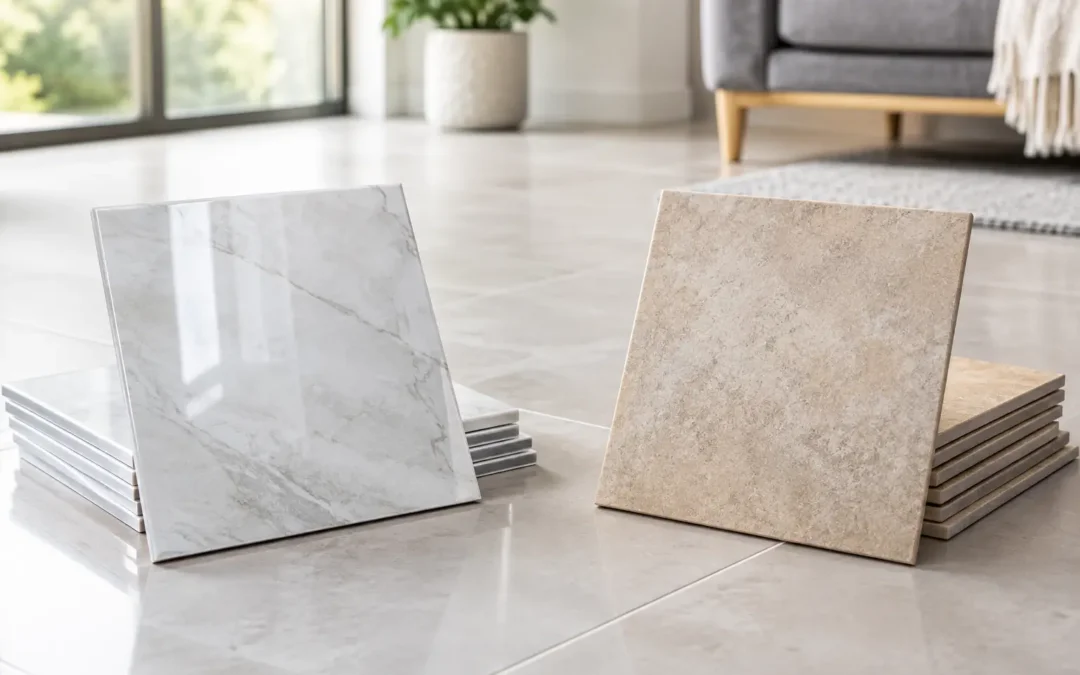
A floor tile can look perfect under showroom lighting and still be the wrong choice for the way your household lives. That is why the decision between porcelain versus ceramic floor tiles deserves more than a quick comparison of colours and price tags. Both can create a beautiful, practical finish, but they perform differently in busy kitchens, family bathrooms, entrance halls and utility rooms.
For homeowners planning a larger renovation, the right answer is rarely simply “porcelain is better”. It depends on the room, the subfloor, the tile format you love, how much foot traffic it will receive and the budget you want to allocate across the whole project. Understanding those trade-offs early helps prevent an expensive compromise later.
Porcelain versus ceramic floor tiles: the core difference
Porcelain and ceramic tiles are both made from clay and fired in a kiln, but porcelain is produced from a denser clay blend and generally fired at higher temperatures. The result is a tile with very low water absorption, typically less than 0.5 per cent. Ceramic tiles are more porous by comparison, although quality floor-grade ceramics remain a suitable and long-lasting choice in the right setting.
That density affects the practical qualities that matter in a home. Porcelain tends to be harder, more resistant to moisture and less likely to chip when something heavy is dropped. Ceramic is often lighter and easier to cut, which can make it a more economical option, particularly in rooms with straightforward layouts.
Do not assume that all tiles labelled porcelain or ceramic are equal. Thickness, manufacturing quality, surface finish, slip rating and suitability for floor use all matter. A well-chosen ceramic floor tile can outperform a poorly specified porcelain tile for the job.
Where porcelain earns its place
Porcelain is usually the stronger choice for areas that see water, mud, pets, children and regular footfall. Think of a family kitchen where chairs are moved daily, a boot room that catches Kent weather, or a hallway that deals with grit and wet shoes. Its low porosity makes it particularly dependable where spills and moisture are part of everyday life.
It is also an excellent material for bathrooms. Porcelain will not absorb water in the way a more porous tile may, which offers reassurance around showers, baths and basin areas. With correctly specified grout and careful detailing, it provides a surface that is easy to live with and designed for years of use.
Larger-format tiles are commonly available in porcelain, including realistic stone, concrete and timber-effect designs. These can create a calm, continuous look with fewer grout lines, which is especially appealing in open-plan kitchen-dining spaces. A wood-effect porcelain floor can provide the warmth of a natural timber appearance while coping better with splashes, scratches and changing temperatures.
There are practical considerations, however. Porcelain is hard and dense, so it requires appropriate preparation and skilled cutting. Large tiles demand an especially flat, sound floor; laying them over an uneven base can lead to lipping, hollow spots or cracking. The tile itself may be competitively priced, but the preparation, materials and workmanship required should be considered as part of the full budget.
Porcelain can also feel cool underfoot. In a sunny kitchen this may be welcome, while in a north-facing bathroom it can feel less inviting in winter. Underfloor heating works exceptionally well with tiled floors and can transform the comfort of either porcelain or ceramic, but it is an additional cost to plan from the outset.
Glazed or through-body porcelain?
Many porcelain floor tiles have a glazed decorative face, which gives manufacturers enormous freedom with colour, veining and texture. Others are through-body porcelain, meaning the colour or pattern runs further through the tile. Through-body options can be advantageous in very hard-working spaces because a small chip is less noticeable.
That said, a quality glazed porcelain is still highly durable for most homes. The more useful question is whether the surface has the right finish for the room. Highly polished tiles can look striking but may show water marks and be more slippery when wet. A matt, textured or structured finish is often a more sensible choice for bathrooms, entrances and homes with young children or pets.
When ceramic floor tiles make good sense
Ceramic should not be treated as the lesser option. It has an important role in well-considered interiors, particularly where the floor has moderate use and the design calls for a specific look. Ceramic tiles can offer beautiful glazes, rich colours and handcrafted character that suit traditional schemes, cloakrooms and lighter-use bathrooms.
Cost is often a genuine advantage. Ceramic floor tiles are commonly less expensive to buy than porcelain, and because they are generally easier to cut, there can be savings in labour and waste on more detailed layouts. If you are balancing a renovation budget across furniture, sanitaryware, worktops, lighting and flooring, this may make ceramic the right decision.
A ceramic floor can be a sensible choice in an en-suite, cloakroom or guest bathroom that does not face heavy daily traffic. It can also work in a kitchen with careful product selection, although a busy family kitchen will usually benefit from porcelain’s greater resilience.
The key is to choose a tile specifically rated for floor use. Wall tiles can be tempting because the range of colours and patterns is extensive, but they are often thinner and not designed to withstand foot traffic. A floor tile should have an appropriate wear rating and a finish suited to the risks of the space.
Comparing cost, maintenance and comfort
The purchase price is only one part of the comparison. Porcelain often costs more per square metre, particularly in large formats or premium stone-effect ranges. Ceramic can offer more room in the budget for a decorative layout, border or feature area. Yet a lower initial price is not automatically better value if the tile is not robust enough for the room.
Both materials are relatively straightforward to maintain. Regular sweeping or vacuuming with a suitable hard-floor attachment removes abrasive grit, while a damp mop and a pH-neutral cleaner will deal with everyday marks. Avoid harsh products that can leave residue or damage grout over time. Unlike natural stone, neither porcelain nor glazed ceramic normally needs sealing.
Grout deserves equal attention. Pale grout can look crisp but will need more frequent cleaning in kitchens and hallways, while mid-tone shades are often more forgiving. Modern grout options can offer better stain resistance, but no grout is entirely maintenance-free. Choosing the right grout colour is a small decision with a noticeable long-term effect.
In terms of comfort, both materials are firm and excellent at conducting heat from an underfloor heating system. Neither has the softness or sound absorption of carpet, vinyl or timber, so acoustic considerations matter in open-plan rooms. Rugs, curtains and upholstered furniture can reduce echo without hiding a floor you have invested in.
Choosing the right tile for each room
A bathroom needs more than water resistance. Look for a suitable slip rating and consider how the finish feels when wet. Small-format tiles can provide more grout lines for grip in a shower area, while a larger porcelain tile may suit the main floor beautifully. Matching wall and floor tiles can make a compact room feel more spacious, but contrast can add character if it supports the wider bathroom design.
In a kitchen, durability and cleanability tend to lead the decision. Porcelain is normally the practical favourite, particularly around food preparation areas and patio doors. If you prefer ceramic for its colour or style, choose a reputable floor-grade product and be realistic about the demands of the space.
For hallways and utility rooms, favour porcelain with a matt or lightly textured finish. These are the places where grit, damp and dropped bags test a floor first. A tile that disguises dust and water marks will often prove more satisfying than a very pale polished finish, however attractive it appears in a showroom display.
Bedrooms and low-traffic living areas allow more freedom. Ceramic may offer excellent value, while porcelain can continue through from a kitchen or hallway for a consistent visual flow. The decision can be driven more by the look you want and whether you are using underfloor heating.
See the tile in context before deciding
Tile samples are essential, but they should be viewed in the actual room where possible. Natural light changes throughout the day, and a grey tile that feels warm in a showroom may look blue in a particular home. Place samples next to cabinetry, paint colours, worktops or bathroom finishes and look at them in daylight and artificial light.
Also ask to see a full tile, not only a small cut sample. Pattern variation, grain direction and scale are easier to judge across a larger surface. This is particularly important with marble-effect, stone-effect and wood-effect porcelain, where the repeat and shade variation influence how natural the finished floor will feel.
At MBK Design Studio, we help homeowners make these choices as part of a wider kitchen or bathroom scheme, rather than treating flooring as an afterthought. A floor needs to work with the layout, cabinetry, lighting, wall finishes and daily demands of the household.
The best tile is the one that gives you confidence every time you walk into the room: practical enough for real life, comfortable with the rest of the design and chosen with the years ahead in mind.