A splashback may cover a relatively small area, but it has a considerable effect on how a kitchen looks, feels and performs day to day. This guide to kitchen splashback materials will help you make a choice that suits your cooking habits, worktop, cabinetry and budget, rather than simply selecting the first finish that catches your eye in a showroom.
The right material protects walls from water, heat and cooking splashes while creating a purposeful link between the different elements of the room. It is also one of the most visible finishes in the kitchen. A carefully chosen splashback can make a compact kitchen feel brighter, bring warmth to a contemporary scheme or give a traditional design a crisp, considered finish.
Start with how you use the kitchen
Before comparing colours and samples, think about the areas that need protection. Behind a hob, a splashback must cope with regular heat, grease and cleaning. Behind a sink, water resistance and easy care are usually the priorities. A full run behind the worktop creates a more continuous look, while a smaller upstand may be enough where the wall receives little use.
Your household matters too. A keen cook may value large, low-maintenance surfaces with minimal joins. A family kitchen that sees plenty of quick meals and activity may benefit from a hardwearing option that does not show every mark. If the kitchen is principally a place to entertain, visual impact may carry more weight.
It is rarely a question of one material being universally best. The strongest decision comes from balancing appearance, practical performance, budget and the detail of the overall design.
Tiles offer character and flexibility
Tiles remain popular for good reason. They are available in an exceptional choice of shapes, sizes, finishes and price points, from understated large-format porcelain to handmade-look ceramic and patterned decorative designs. This makes them particularly useful when you want a splashback to introduce colour or texture without changing the cabinetry.
Ceramic tiles are a versatile choice for many kitchens. They are easy to clean, suitably durable for wall use and can work equally well in a classic shaker kitchen or a more modern setting. Porcelain is denser and generally more resistant to moisture and staining, making it a sensible choice for busy areas.
The point to consider is grout. Grout lines form part of the look, so they can add welcome rhythm and detail. However, they need more attention than a single-sheet material, especially close to a hob. Choosing a good-quality grout and a sensible tile size helps. Larger tiles create fewer joins, while smaller tiles give a more decorative result but create more grout to maintain.
Natural stone tiles, such as marble, limestone or slate, introduce genuine variation and depth. No two pieces are identical, which is precisely their appeal. They do require the right sealing and care regime, however, and acidic foods or harsh cleaning products can be a concern with certain stones. Natural stone is best chosen with a clear understanding of its living finish rather than an expectation of flawless uniformity.
Glass creates a clean, light-reflecting surface
Toughened glass splashbacks are often chosen for their sleek appearance and uninterrupted surface. With no grout lines, they are simple to wipe down and can reflect light around a darker or narrower kitchen. They can be clear, coloured, printed or placed over wallpaper or a painted wall, offering plenty of scope for a more personal design.
A painted glass splashback can provide a precise block of colour, perhaps picking up a shade from the cabinetry, a feature wall or a favourite piece of furniture nearby. Pale shades keep the room light, while deeper colours can make a dramatic focal point behind a range cooker.
Glass does have some practical limitations. Although toughened for kitchen use, it should be measured carefully and cannot be altered once made. It can also show smears more readily in very dark or glossy finishes. That does not make it a poor choice, but it does mean the colour and finish should be considered in the context of everyday cleaning, not only under showroom lighting.
Quartz and stone create a continuous finish
Using the same quartz, granite or porcelain surface as the worktop for the splashback is one of the most effective ways to create a refined, cohesive kitchen. The eye travels from the horizontal work surface up the wall without a visual break, which can make the room feel more spacious and considered.
Quartz is non-porous, easy to clean and available in a wide range of colours and patterns. It is a strong option for homeowners who want the appearance of stone with reliable day-to-day maintenance. A lightly veined design can add movement to plain cabinetry, while a quieter surface allows painted doors, timber details or statement handles to take the lead.
Natural granite and marble offer distinctive beauty, but each comes with its own care requirements. Granite is highly durable when properly sealed. Marble has a softer, more characterful look, yet can be vulnerable to etching and staining. For some homeowners, those changes are part of the material’s charm. For others, a marble-effect quartz or porcelain provides a more predictable finish.
It is worth being realistic about cost. A full-height stone or quartz splashback generally sits at the higher end of the budget, particularly where there are cut-outs for sockets or where the pattern needs to be carefully matched. In return, it provides a premium, tailored look and a very practical surface with few joints.
Porcelain brings durability with design freedom
Large porcelain panels are increasingly used for kitchen splashbacks, especially in modern schemes. They can replicate marble, concrete, metal, timber and other natural finishes with impressive realism, while providing a hardwearing, low-porosity surface.
Their scale is a major advantage. Fewer joints create a clean appearance, and the material can be matched to a porcelain worktop for a continuous effect. Porcelain is also highly resistant to heat, scratches and staining, making it a compelling choice behind a hob.
As with any large-format surface, planning is essential. Panel sizes, joins, socket positions and the grain or veining direction all need to be resolved early. This is where experienced design guidance is particularly valuable: a beautiful material can lose impact if the details around it have not been considered.
Stainless steel and metallic finishes suit hardworking spaces
Stainless steel has long been associated with professional kitchens, but it can work well in a domestic setting too. It is heat resistant, hygienic and especially practical behind a range cooker. Its reflective quality can give a compact kitchen an industrial or contemporary edge.
The trade-off is that stainless steel can show fingerprints, water marks and fine scratches. Brushed finishes tend to be more forgiving than highly polished ones. Metallic-look tiles and panels can offer a softer interpretation if you like the character of metal without committing to a full stainless steel surface.
Copper, brass and aged metallic finishes can add warmth to dark blue, green or charcoal cabinetry. Their suitability depends on the product and protective finish, so ask how it will react to moisture, heat and cleaning products before making a final selection.
Budget choices can still look considered
Laminate splashbacks and acrylic panels can be cost-effective solutions, with many contemporary designs available. They can be easy to clean and offer a neat, consistent look when coordinated with a laminate worktop. They are particularly useful where you want a fresh update without allocating a large proportion of the budget to wall finishes.
These materials are not interchangeable with stone, glass or porcelain in every setting. Heat resistance, visible joins and long-term wear should be discussed honestly, especially behind a gas hob or where the splashback will receive heavy use. A well-chosen budget material in the right location is better than an unsuitable premium one.
Coordinate the splashback with the whole kitchen
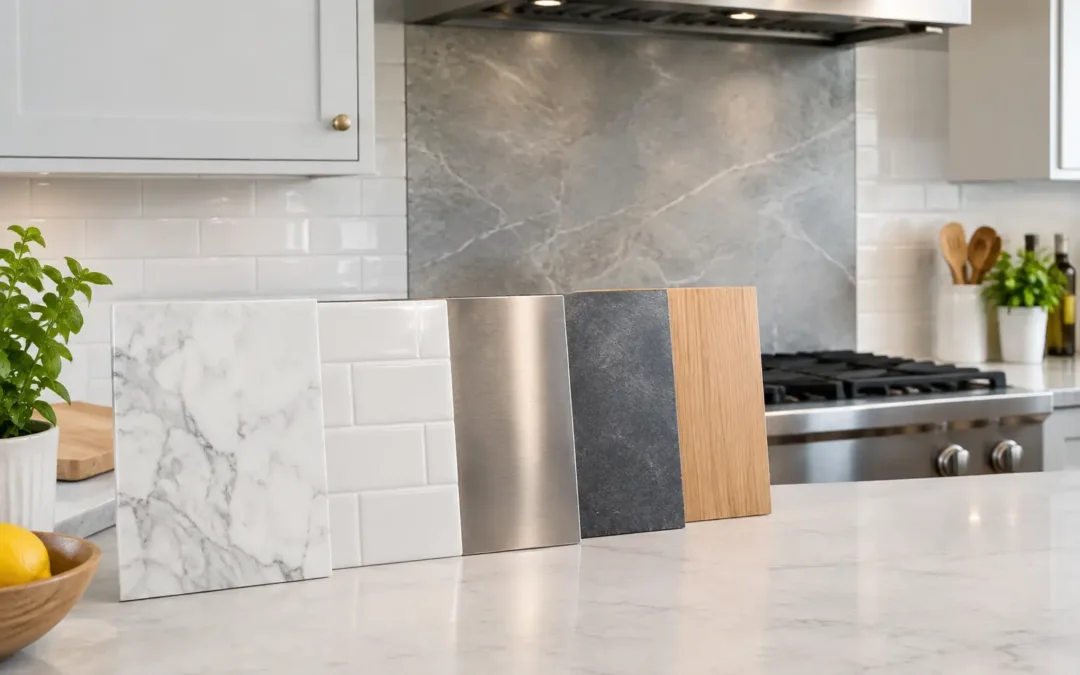
A splashback should not be chosen in isolation. Bring cabinet door, worktop, handle, flooring and paint samples together before committing. A patterned worktop may need a quieter splashback, while simple doors can carry a bolder tile or richly veined surface. Consider sheen as well as colour: pairing several glossy finishes can feel busy, whereas a mix of matt cabinetry and a reflective splashback often creates pleasing balance.
Lighting changes perception too. What appears soft grey in a showroom may look cooler in a north-facing kitchen or warmer under LED task lighting. Viewing samples in your own home, at different times of day, helps avoid surprises.
At MBK Design Studio, we encourage homeowners to treat this choice as part of the wider kitchen design conversation. The best results come from looking at how every surface works together and selecting materials that will still feel right after years of everyday use.
A splashback does not need to be the loudest feature in the room, but it should earn its place. Choose a material you will be happy to clean, live with and look at every morning, and it will quietly support the kitchen you have worked hard to create.