
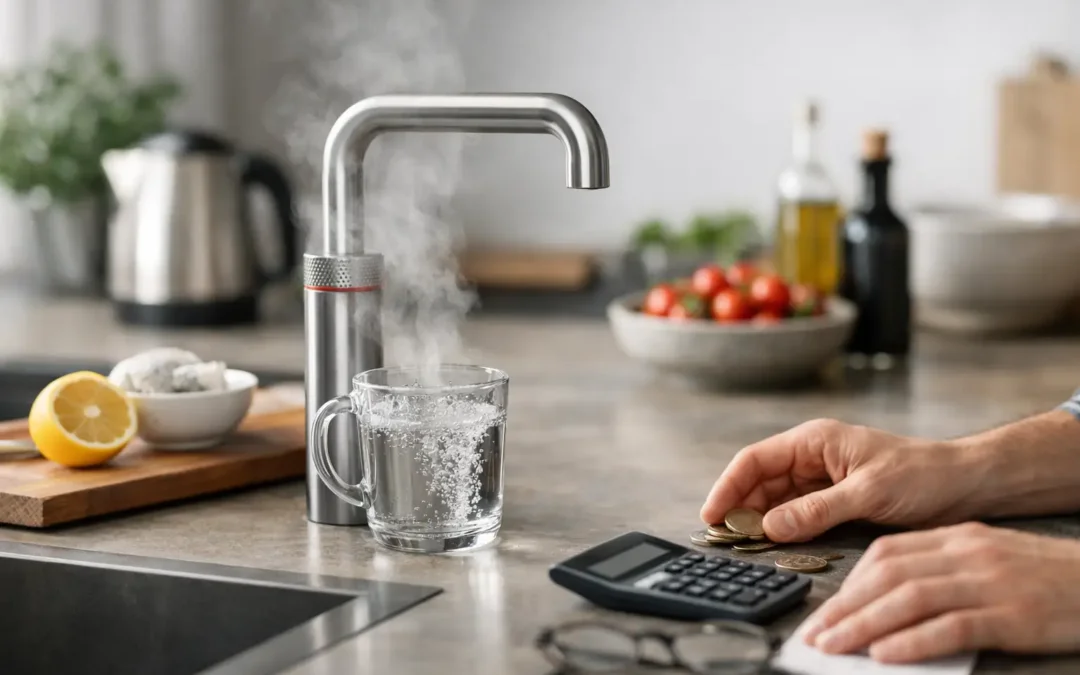
A boiling-water tap can seem like a luxury until you picture a weekday morning: porridge on the hob, tea for two, a pan to fill, and a kettle taking up valuable worktop space. So, is Quooker worth the money? For many households planning a well-designed kitchen, it can be – but only where its convenience, use and finish genuinely justify the higher upfront outlay.
A Quooker is not simply a faster kettle. It is an integrated kitchen appliance that changes how the sink area works, providing instant boiling water alongside everyday hot and cold water. The question is less about whether it is impressive – it is – and more about whether it is the right investment for the way you live.
What are you paying for with a Quooker?
Part of the price reflects the engineering behind the system. A Quooker combines a tap with an insulated reservoir beneath the sink, designed to keep water at temperature efficiently and dispense it when required. Depending on the chosen configuration, it may also provide filtered chilled and sparkling water through the same tap.
There is also the benefit of reducing visual clutter. In a carefully planned kitchen, removing a kettle and, potentially, a separate water filter or sparkling-water machine can make the worktop feel calmer and more useful. That matters particularly in compact kitchens, where every clear section of worktop earns its place.
The range of finishes and tap styles is another consideration. A tap is no longer a minor detail in a kitchen scheme. It sits in one of the most used areas of the room, often against a statement worktop, splashback or sink. Choosing a finish that works with your handles, lighting and appliances can help the whole design feel intentional rather than assembled.
Is a Quooker worth the money for everyday life?
The strongest case for a Quooker is frequent, varied use. If your household repeatedly boils the kettle for hot drinks, cooking, sterilising items or filling a pan with a small amount of boiling water, the time saved soon becomes noticeable. It is especially useful for busy families, keen cooks and people who work from home.
Instant hot water makes small kitchen tasks less interrupted. You can make a cup of tea without waiting, start pasta or vegetables more quickly, and add boiling water to a pan when preparing a meal. It will not replace the need to heat a full pan on the hob, but it can make the first stage of cooking more efficient.
For households where hot drinks are an occasional habit, the value is different. A good kettle remains quick, affordable and straightforward. If a Quooker would only be used once or twice a day, it may be hard to justify purely on practicality. In that situation, spending the budget on better cabinetry, a more durable worktop or improved internal storage may have a greater impact on daily enjoyment.
Convenience is valuable, but it is personal
Kitchen investments are often judged too narrowly by payback. Not every choice has to save money directly. A well-designed larder does not make a financial return every time you find the cereal, yet it can make the room noticeably easier to use for years.
The same is true here. Some homeowners value the clear worktop and instant access more than anything else. Others prefer the familiar simplicity of a kettle. Neither view is wrong. The key is to be honest about your habits rather than buying an appliance because it looked good in a showroom or a neighbour has one.
A Quooker can also be particularly worthwhile for households seeking an accessible kitchen. Not having to lift and pour a heavy kettle can be helpful for some users. However, it should always be specified with careful thought about the people using the kitchen, the position of the tap and the safety features that suit the household.
Safety and family use
Boiling water at the tap naturally raises sensible questions. Quooker systems are designed with safety mechanisms, including a childproof push-and-turn operation for boiling water and a controlled, aerated flow intended to reduce splashing. The tap itself is also designed so that the outside is not too hot to touch.
That does not remove the need for care. Any source of boiling water demands respect, particularly around young children. The benefit is that it removes the separate risk of a kettle being pulled from a worktop or carried across a busy kitchen. For many families, that feels like a considered improvement, provided everyone understands how the tap operates.
During kitchen planning, it is worth considering the sink position, tap reach and nearby circulation routes. The best layout supports safe use naturally, rather than relying on people to work around awkward design decisions.
Running costs and water use
A common concern is whether keeping water hot all day costs more than boiling a kettle. The answer depends on the reservoir selected, electricity tariff and, crucially, how much water your household would otherwise boil and waste. A conventional kettle is efficient when it is filled with only the amount needed. In real life, however, many people overfill it several times a day.
A Quooker reservoir is highly insulated and uses energy to maintain its temperature. It is not free to run, and it should not be presented as a guaranteed saving for every home. Its appeal is primarily convenience, with efficiency benefiting households that regularly boil more water than they need in a kettle.
If you choose chilled, filtered or sparkling-water functions, factor in the ongoing cost of filters and gas cylinders as well as the initial purchase. These additions can be excellent for a household that currently buys bottled sparkling water, but they are unnecessary if that feature will rarely be used.
The hidden factors: space, water quality and specification
Under-sink space needs attention. The reservoir, and any additional unit for chilled or sparkling water, needs room within the sink cabinet. This can affect waste arrangements, storage and the choice of sink. It is far easier to plan this from the beginning of a renovation than to force it into an already crowded cabinet later.
Water quality matters too. Kent has hard-water areas, and limescale should be considered when choosing and caring for any water-based appliance. The correct specification, appropriate filtration where needed and regular maintenance can help protect performance and preserve the appearance of the tap.
It is also worth deciding what you actually need. A boiling-water-only setup may deliver the greatest value for one household, while a model with chilled and sparkling water is ideal for another. Buying the most feature-rich option is not automatically the best choice. The right choice is the one that will be used often enough to earn its place in the kitchen.
When a Quooker may not be the right investment
There are good reasons to say no. If your renovation budget is tight, prioritise the parts of the kitchen that are difficult or disruptive to change later: layout, cabinetry, lighting, ventilation and worktops. A kettle can be upgraded at any time; correcting a poorly planned kitchen is more costly.
It may also be less suitable if under-sink storage is already at a premium, if you have very low demand for boiling water, or if you simply prefer a traditional kettle. There is no benefit in introducing a sophisticated appliance that does not suit your routine.
For homeowners preparing a long-term home, the calculation can be different. A quality tap system, specified well and cared for properly, can add pleasure to everyday routines and complement a kitchen designed for lasting use. That is where its value tends to be felt most clearly.
Making the decision during kitchen planning
The best time to decide is while the kitchen is being designed, not after the cabinets and sink have been chosen. At that stage, the tap can be considered alongside sink size, cupboard storage, worktop material, drinking-water preferences and the overall budget.
At MBK Design Studio, we encourage clients to assess products by how they will support real life, not by whether they are labelled a must-have. A Quooker can be a genuinely worthwhile addition to a considered kitchen, but only when it fits the brief as well as the budget.
Before making the final choice, imagine an ordinary Tuesday rather than a perfect dinner party. If instant boiling water, a clearer worktop and one well-chosen tap would make that day easier, it is likely an investment you will appreciate for years. If not, use the budget where it will make a more meaningful difference to your home.