A Victorian fireplace, original sash windows or a beautifully proportioned Edwardian room can make a house feel special. A bathroom, however, must work much harder than most period features were ever designed to. A successful period bathroom renovation respects the character of the property while providing the warmth, storage, water pressure and easy-clean surfaces that modern family life demands.
The aim is not to create a museum piece. It is to make considered decisions so the finished room feels as though it belongs to the house, yet performs properly every day.
Start with the building, not the bathroom suite
Before choosing taps, tiles or a freestanding bath, look carefully at the room itself. Period homes across Maidstone and Kent come in many forms, from compact Victorian terraces to larger Edwardian and Georgian properties. Their bathroom spaces can have high ceilings, awkward chimney breasts, uneven walls, timber floors and windows positioned exactly where you might prefer to put a shower.
These details are not necessarily problems. They are the starting point for a design that feels right. Retaining a deep window reveal, an original door or a feature fireplace can give the room a quality that a newly built bathroom cannot replicate. Equally, some elements may need careful alteration to make the room safe, practical and watertight.
Check what is original and what is workable
Not every old feature should be preserved at all costs. Timber flooring may be attractive but unsuitable beneath a poorly ventilated shower area. A historic-looking cast-iron radiator may not provide enough heat for a large, cold bathroom. Plaster walls that have suffered years of condensation may need attention before any decorative work begins.
A thorough survey should establish the condition of floors and walls, the available plumbing routes, ventilation options and electrical requirements. It is far better to understand these constraints before finalising a layout than to compromise the design halfway through the project.
If your home is listed or lies within a conservation area, check whether consent is required for external changes, replacement windows or alterations that affect protected historic fabric. Internal bathroom work is often more straightforward, but assumptions can be costly.
Make the layout earn its place
In a period bathroom renovation, layout is usually where the biggest practical gains are made. Older rooms were rarely designed around generous showers, concealed cisterns, underfloor heating or the amount of storage a household now needs.
Begin with how the bathroom will actually be used. A family bathroom may need a bath, a separate showering area, durable surfaces and storage that keeps daily clutter off the basin. An en-suite might benefit more from a spacious walk-in shower and a compact vanity unit. For a guest bathroom, visual impact may take greater priority, provided the essentials still work well.
Avoid forcing a large bath into a room simply because it looks traditional. A smaller roll-top bath, a carefully proportioned slipper bath or a fitted bath with period-style detailing may create a more balanced result. The same applies to showers. A generous shower enclosure can be excellent in a larger room, while a well-designed over-bath shower may be the sensible choice where space is limited.
Keep the room visually calm
Period bathrooms often have more architectural detail than newer homes. High skirting boards, panelled doors, chimney breasts and decorative cornices can all compete for attention. A strong layout gives those details room to breathe.
Where possible, place the main sanitaryware on the least visually intrusive wall and keep sightlines clear from the doorway. A vanity unit can provide welcome storage without looking overly modern if its proportions, finish and handles are chosen carefully. Concealed storage is particularly valuable in a traditional scheme, where too many bottles and accessories can quickly spoil the effect.
Choose period character without sacrificing performance
The most convincing traditional bathrooms combine authentic-looking elements with modern engineering. You do not need to accept cold rooms, temperamental taps or difficult cleaning in order to achieve a classic look.
A high-level cistern, traditional lever taps, a console basin or a freestanding bath can create the desired period reference. The important question is whether each item suits the way you live. For example, a wall-hung basin may make cleaning easier in a compact room, while a vanity basin offers more practical storage. Both can work within a heritage-inspired design when selected with care.
Tiles have a major influence on the finished feel. Metro tiles, geometric porcelain patterns, encaustic-style designs and simple white wall tiles are all popular choices, but scale matters. Small-format tiles can suit an intimate Victorian room, whereas a larger space may need a calmer treatment to avoid a busy appearance.
Natural stone is beautiful, but it needs appropriate sealing and ongoing care. Porcelain often gives the look of stone or encaustic tile with greater consistency and lower maintenance. Neither choice is automatically better. The right option depends on the room, the budget and how much maintenance you are happy to undertake.
Bring modern comfort in discreetly
A period appearance should not mean period levels of comfort. Bathrooms generate moisture, and older houses can be particularly vulnerable to condensation. Effective extraction is essential, especially where there is no opening window or where the bathroom is used by several people.
Heating deserves equal attention. Underfloor heating can be an excellent addition beneath tiled floors, taking the chill out of the room without filling walls with radiators. A heated towel rail offers useful everyday drying, but it may need support from underfloor heating or a separate radiator in a larger or poorly insulated space.
Lighting should be planned in layers. Ceiling lighting provides general illumination, while well-positioned task lighting at the basin makes shaving, skincare and make-up easier. Softer lighting can bring atmosphere to a freestanding bath or feature wall. All fittings must be selected for the appropriate bathroom zone, so this is a part of the design that should never be left to guesswork.
Water pressure is another issue worth resolving early. Traditional-style showers vary greatly in their requirements, and a beautiful shower valve will disappoint if the property cannot supply the performance you expect. Reviewing the existing system before products are ordered prevents expensive changes later.
Understand where the budget goes
Bathroom budgets are influenced by far more than the suite and tiles. In an older property, much of the value lies behind the finished surfaces: strengthening floors, correcting old pipework, improving electrics, waterproofing wet areas and preparing uneven walls.
Moving a toilet, basin or shower can transform a layout, but it may also increase labour and plumbing costs. Bespoke joinery, natural stone, large-format tiles and premium brassware add to the investment, as do specialist finishes such as aged brass or unlacquered metal. These can be worthwhile choices, but they should be made with a clear view of the total project cost rather than as last-minute additions.
It is sensible to include a contingency for an older home. Once walls or floors are opened up, hidden issues sometimes appear. Allowing for this from the outset gives you more control and reduces the pressure to make rushed compromises.
A clear design and detailed specification are among the best ways to protect a budget. They allow you to see where money is being spent, compare alternatives sensibly and prioritise the features that matter most to you.
Create a bathroom that belongs to the house
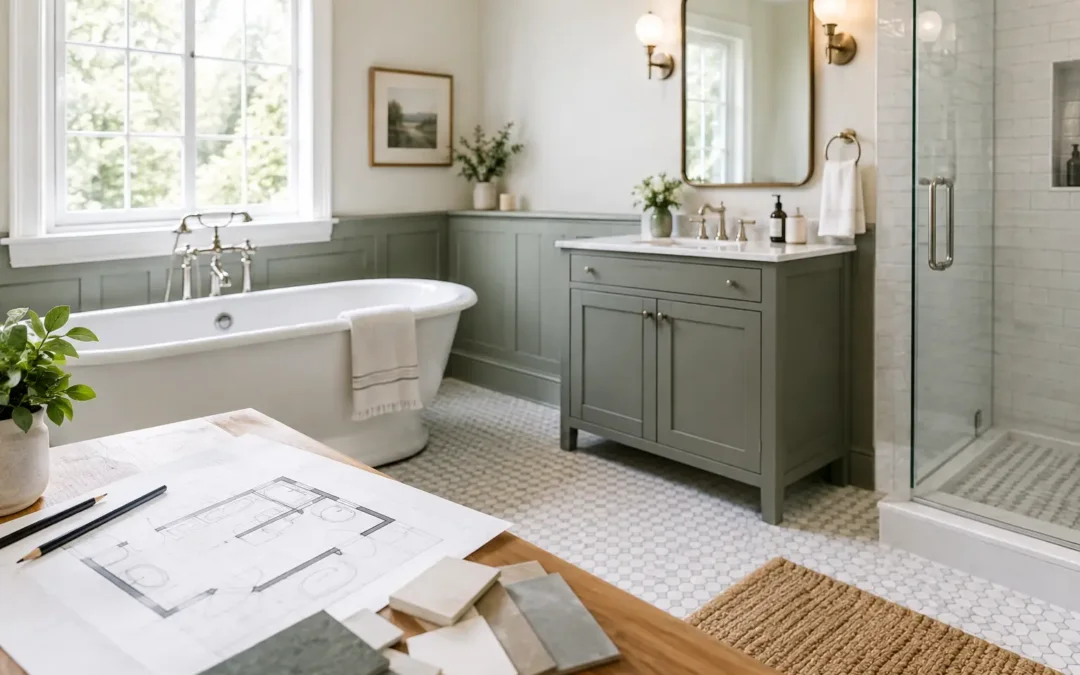
The best period bathrooms are not created by copying a single historical style item for item. They take cues from the age and architecture of the home, then interpret them for modern life. A Victorian house may suit darker tones, patterned floors and more decorative brassware. An Edwardian home might lend itself to softer colours, painted cabinetry and classic white sanitaryware. A Georgian property may call for a more restrained, symmetrical approach.
Colour is especially useful here. Deep greens, warm neutrals, dusty blues and rich burgundy tones can work beautifully, but natural light should guide the final choice. A north-facing room may need warmer finishes, while a sunny bathroom can carry more saturated colours. Samples should always be viewed in the actual space, not only under showroom lighting.
At MBK Design Studio, the most rewarding projects begin by listening to how a client wants the room to feel and function. With more than three decades of experience designing bathrooms, the focus is on combining that personal vision with practical decisions that will stand the test of time.
A well-planned period bathroom should feel settled from the day it is finished: characterful rather than contrived, practical rather than compromised, and enjoyable to use for many years to come.