
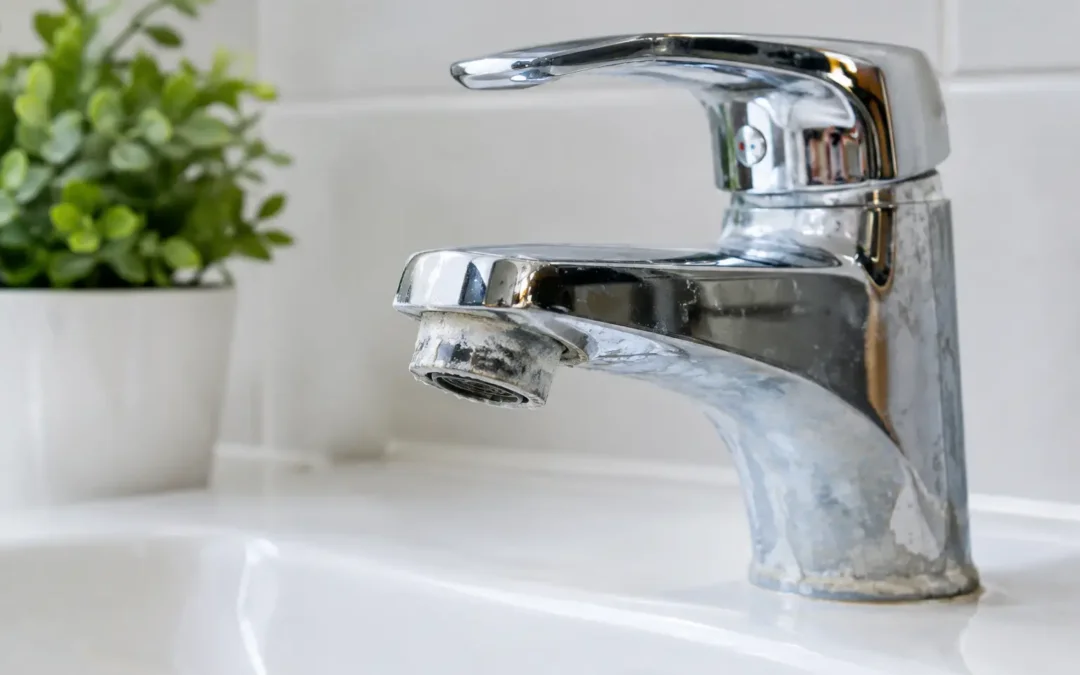
A newly fitted bathroom can look immaculate in the morning, then show pale rings around the tap base and white spotting on the spout a few days later. If you are asking why bathroom taps limescale up, the short answer is the water itself. The more useful answer is that water chemistry, everyday habits and the finish of the tap all affect how quickly those marks become noticeable.
Limescale is rarely a sign that a tap is poor quality or that a bathroom has not been cleaned properly. It is a normal consequence of living in a hard-water area, although the right cleaning routine and considered product choices can make a considerable difference to how your bathroom looks over time.
Why bathroom taps limescale up in hard-water areas
Limescale is the chalky mineral deposit left behind when water evaporates. Mains water naturally contains dissolved minerals, principally calcium and magnesium. In hard-water areas, there is more of these minerals in the water. Once droplets dry on a tap, shower screen, basin or tile, the water disappears but the minerals remain.
At first, the deposit may look like a faint haze or a few white dots. Left in place, it builds into a rougher, more visible crust. Around the base of a tap, limescale can collect where water sits after handwashing. On the end of a spout, it often forms around the aerator – the small fitting that shapes the flow of water. In time, that build-up can affect the appearance of the tap and make the water stream less even.
Homes across Kent can experience hard water, but the exact level varies by supply and location. That means two households can have very different experiences, even when they use the same tap finish and cleaning products.
The everyday habits that make deposits worse
Limescale needs water to be left on a surface, so small routines have a bigger effect than most people expect. A family bathroom used several times a day will naturally see more splashing, condensation and dried droplets than an occasional cloakroom. Hot water can also make mineral deposits appear more quickly because it evaporates faster.
Some bathroom layouts create practical trouble spots. A very shallow basin may encourage water to splash onto the spout and deck, while a wall-mounted tap can leave drips on the basin edge beneath. A tap positioned close to a tiled splashback may be harder to wipe around thoroughly. None of these details makes a design unsuitable, but they are worth discussing when choosing fittings for a bathroom that needs to work hard every day.
The finish matters too. Limescale can form on chrome, brushed brass, black, nickel and stainless-steel finishes alike. Chrome often shows white spotting clearly because of its reflective surface. Matt black can highlight pale residue, while brushed finishes may disguise minor marks better but still need careful cleaning. A darker or more distinctive finish is not automatically higher maintenance, but it does benefit from regular, gentle attention.
Is it limescale, soap scum or damage?
Not every mark on a tap is limescale. White, chalky deposits that feel slightly rough are usually mineral build-up. A cloudy film may be a mixture of limescale, soap residue and body-care products. Water marks that disappear when wiped with a damp microfibre cloth are often simply dried droplets.
Permanent dull patches, peeling, pitting or discolouration are different. These can indicate that an abrasive cleaner, scouring pad or strong chemical has damaged the tap’s protective finish. Once a plated surface has been compromised, repeated cleaning will not restore it. This is one reason it is better to remove light limescale frequently than to tackle a thick layer with aggressive products later.
If there is an orange-brown stain, particularly around joints or at the tap base, it may be related to rust from another component or staining in the water rather than limescale alone. Persistent leaks should also be checked promptly. Water left constantly around a tap base gives deposits more time to form and can affect surrounding sealant or worktop materials.
How to remove limescale from bathroom taps safely
For light deposits, start with the least aggressive method. Wipe the tap with a soft, damp microfibre cloth, then dry it fully with a second clean cloth. Regular drying is simple, but it prevents minerals being left to harden on the surface.
For more noticeable limescale, use a cleaner approved by the tap manufacturer and follow its contact-time instructions carefully. This is particularly important for brushed, coloured, black, brass-effect or PVD-coated fittings, as finishes vary between manufacturers. A product that works well on plain chrome may not be suitable for every decorative finish.
Household vinegar is often suggested as a limescale remedy. It can be effective on some surfaces, but it is acidic and should never be assumed safe for every tap, basin, worktop or grout line. It can be particularly risky near natural stone, certain plated finishes and delicate seals. If you choose to use a mild acidic cleaner where it is approved, avoid soaking the tap, keep the product off adjacent materials, rinse thoroughly and dry the surface afterwards.
Do not use wire wool, abrasive powders, scouring pads or a knife to scrape deposits away. They may remove the visible scale quickly, but fine scratches make a tap less reflective and can create a surface that holds onto future deposits more readily.
Do not forget the aerator
If the water flow has become irregular, the aerator may have collected scale. Many aerators can be unscrewed by hand or with the manufacturer’s key, then rinsed and cleaned according to the fitting guidance. Take care not to force it, and keep the small internal parts in order for reassembly. If the aerator is not designed for easy removal, or you are unsure about the fitting, it is better to seek advice than risk damaging the tap.
Preventing bathroom tap limescale from building up
Prevention does not require a lengthy cleaning routine. It is more about consistency. A quick wipe of the tap after use, especially around the base and spout, is often enough to stop droplets drying into obvious marks. Keeping a soft cloth nearby makes this far more likely to happen.
A weekly clean with a suitable non-abrasive bathroom cleaner deals with residue before it becomes stubborn. In a busy bathroom, a little more frequent attention may be needed. The best routine is the one that fits the household, rather than an unrealistic schedule that is difficult to maintain.
A water softener can reduce the minerals responsible for limescale, but it is a household investment rather than a universal answer. It may be particularly worthwhile where hard water is causing repeated issues across showers, screens, appliances and taps. It does not remove the need for cleaning, and it may not suit every property or budget, so it is sensible to consider the wider plumbing arrangement and ongoing costs first.
Good ventilation helps too. It will not change the mineral content of the water, but reducing lingering humidity can help surfaces dry more quickly and limit the mix of condensation, soap film and limescale that makes a bathroom look tired.
Choosing taps with long-term care in mind
When planning a new bathroom, it is easy to focus on the shape and finish of a tap, and rightly so. Taps are among the most frequently touched details in the room. However, ease of cleaning deserves equal consideration.
A design with fewer awkward grooves and tight joins is generally simpler to wipe down. A well-proportioned basin and tap combination can reduce splashing. Quality fittings from established manufacturers also tend to come with clearer care guidance and available replacement parts, which matters if an aerator, cartridge or seal ever needs attention.
At MBK Design Studio, bathroom planning is not limited to creating a good first impression in the showroom. It is about helping homeowners choose finishes and layouts that suit how they live, the level of maintenance they are comfortable with and the longevity they expect from a significant investment.
A few water marks should not put anyone off choosing the finish they genuinely prefer. A black tap can look striking in a contemporary scheme; brushed brass can bring warmth to a more classic space. The honest consideration is that both will need the right care in a hard-water home. Choosing with that knowledge means the finished bathroom can remain a pleasure to use, not another demanding job on the cleaning list.
A clean, dry cloth used little and often is usually the most effective defence against limescale – and the gentlest way to keep the details of a well-designed bathroom looking their best.