
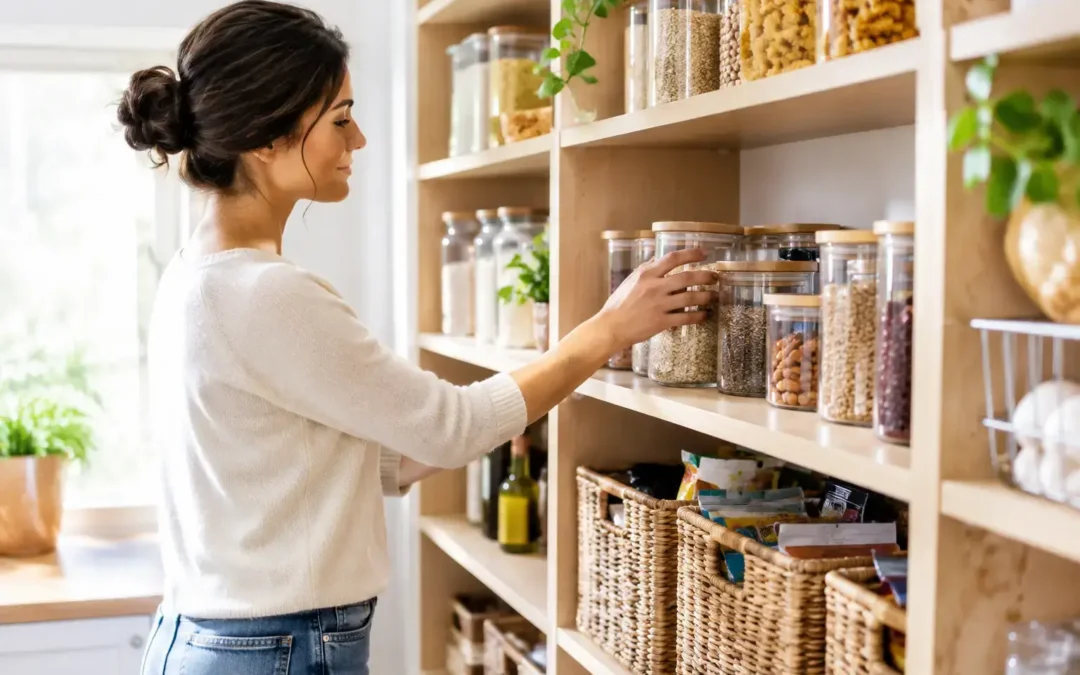
A pantry should make the busiest moments of the day easier, not turn making tea or packing lunchboxes into a search through half-open packets. Knowing how to organise pantry storage begins with looking at how your household actually shops, cooks and stores food – rather than copying a picture-perfect cupboard that may not suit your routine.
Whether you have a tall larder unit, a walk-in pantry or a few dedicated kitchen cupboards, good storage is about visibility, reach and sensible capacity. The aim is simple: every item should have a clear home, and that home should be easy to use.
Start by understanding what your pantry needs to hold
Before buying containers or rearranging shelves, take everything out. This is the point at which many homeowners discover duplicate jars, forgotten ingredients and packets that are already past their best. Check use-by dates, dispose of anything unsuitable, and group what remains into broad categories.
Most pantries need space for everyday dry goods, tins and jars, baking ingredients, breakfast foods, snacks, cooking oils, drinks and reserve supplies. Your categories may be different. A family with school-age children may need a snack section at a reachable height, while keen cooks may need more room for spices, flour and specialist ingredients.
Be honest about what you buy. There is little value in dedicating a large shelf to baking equipment if it is used twice a year, while your weekly tea, coffee and cereal are constantly competing for room. Storage should reflect your habits, not an idealised version of them.
How to organise pantry storage by zone
Once you know what you are storing, create zones based on frequency of use. Keep daily essentials between waist and eye level, where they can be seen and reached without bending or stretching. This is the most valuable area in any pantry.
Place heavier items such as multipacks, large jars and spare bottles on lower shelves. Lighter, less frequently used goods can go higher up, provided they remain safely accessible. If you need a step stool to reach a shelf, it is best reserved for occasional items rather than everyday food.
A practical pantry often includes these working zones:
- Breakfast items, including cereals, porridge, spreads and hot drinks.
- Cooking staples such as pasta, rice, tinned tomatoes, oils and stock.
- Baking ingredients, from flour and sugar to decorations and cake tins.
- Snacks and lunchbox food that children can identify and access independently.
- Back-up supplies, kept together so they do not crowd out the items currently in use.
Keeping duplicates behind or beside the open packet works well for many households. When one packet is finished, the replacement is already there. It also makes the weekly shop easier to plan, because gaps are more obvious.
Choose shelving that does not waste the depth of the cupboard
Deep shelves can look generous on a plan but become frustrating if goods disappear at the back. A standard shelf is often suitable for larger containers and appliances, yet tins, herbs and packets are easily lost when placed in several rows.
Pull-out shelves, internal drawers and baskets bring the contents towards you, so you can see what is available without unloading the front. They are particularly useful in tall larder cabinets, where fixed shelving can make the rear corners difficult to reach. This type of storage does cost more than basic shelving, so it is worth reserving it for the areas that will genuinely benefit from it.
For smaller pantries, shelf risers can create a second level for tins and jars, while shallow door racks may suit spices, condiments or wraps. Do not overfill them, however. A crowded door can be awkward to close and may place unnecessary strain on hinges.
When planning a new kitchen, consider the width and depth of the pantry as carefully as its appearance. A narrow pull-out can be useful for bottles and spices, but it may not be the best main food store for a household that buys larger packs. Wider larder cabinets with adjustable shelves or drawers tend to offer greater flexibility over time.
Decant selectively, not automatically
Matching containers can bring order to a pantry, especially for loose ingredients such as flour, pasta, rice and cereal. Clear, airtight containers help you see quantities at a glance and can protect food from moisture. They can also make a modest cupboard feel calmer and more considered.
That said, decanting everything is not always practical. It takes time, containers need washing, and original packaging often carries cooking instructions, allergy information and best-before dates. A sensible compromise is to decant the foods you use regularly and leave less frequently used products in their original packs.
If you decant, label each container clearly with the item name and best-before date. Labels are most useful when they are consistent and easy to read from the front, not when they are decorative but vague. For households managing allergies or dietary requirements, keeping ingredients clearly identified is particularly important.
Make the layout work for the people using it
The most organised pantry will not stay organised if it is too complicated for the household. Keep children’s snacks in one recognisable basket or drawer. Put ingredients used together near one another, such as pasta with sauces and pulses, or tea with mugs and biscuits if your kitchen layout allows.
Think about the route you take through the kitchen as well. Breakfast supplies near the kettle or toaster can save unnecessary trips across the room. Cooking oils and seasonings are best placed close to the hob, but far enough away from direct heat to protect their quality. Bulk storage may sit lower down or in a separate utility cupboard if it is not needed every day.
For a busy family kitchen, a small amount of empty space is useful. It gives you somewhere to place a new shop before putting it away and prevents every shelf becoming tightly packed. Order is easier to maintain when the cupboard has room to absorb normal life.
Build in a simple maintenance routine
Pantry storage is not a one-off project. A quick reset after the weekly shop is usually enough to keep it under control. Bring older products to the front, group new items with their category, and remove empty packets before they accumulate.
Every few months, wipe shelves, check dates and review whether the layout is still serving you. Seasonal changes can affect what you need: packed-lunch supplies may dominate during term time, while baking ingredients and entertaining items may need more space around Christmas.
Avoid buying organisers before measuring the space. Baskets that look ideal online can waste valuable room if they do not fit the shelf depth or prevent a cupboard door from closing properly. Measure the internal dimensions, including the space lost to hinges, before choosing accessories.
Plan pantry storage early in a kitchen renovation
A pantry works best when it is considered at the design stage rather than added as an afterthought. The right solution depends on available space, the number of people in the household, your cooking style and how much food you prefer to keep at home.
A compact kitchen may benefit from one well-designed larder cabinet with pull-out storage. In a larger room, a run of tall cupboards or a walk-in pantry may be appropriate. Neither option is automatically better. A walk-in pantry offers generous capacity, but it uses floor space and must be carefully lit and ventilated. A fitted larder can provide excellent organisation within a smaller footprint and keeps the kitchen visually streamlined.
At MBK Design Studio, kitchen planning starts with the way you want to live in the room. That means discussing the everyday details – from where the cereal goes to how often you entertain – alongside finishes, appliances and layout. These decisions are what make a new kitchen continue to feel useful long after the first few weeks.
A well-organised pantry does not need to look like a showroom display. It needs to make dinner preparation less stressful, make shopping easier to manage and give your kitchen a little more breathing room every day.