A bathroom can look impressive on a showroom visit, but the right choice at home usually comes down to how you live day to day. When clients ask about wet room vs shower enclosure, they are rarely choosing between two looks alone. They are deciding how they want the room to function, how much disruption they can take on, and what will still feel practical in five or ten years.
Both options can work beautifully. The better one depends on your layout, your budget, and who uses the bathroom most often.
Wet room vs shower enclosure: what is the difference?
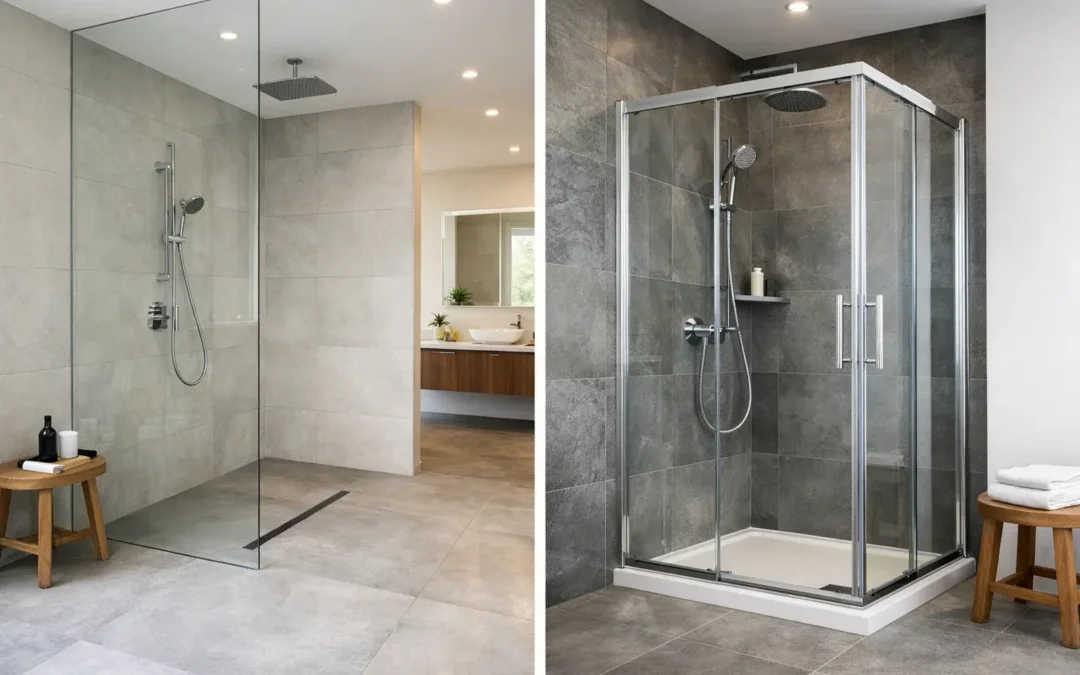
A shower enclosure creates a defined showering area with glass panels, a tray or tiled base, and clear separation from the rest of the bathroom. It keeps water contained, which makes it the familiar choice in many family bathrooms and en suites.
A wet room is more open. The floor is tanked and waterproofed beneath the tiles, the drainage is built into the floor, and the shower area often sits level with the rest of the room. Some wet rooms include a glass screen, but many keep the look as open as possible.
That difference affects far more than appearance. It changes the build process, the amount of waterproofing required, the way the room feels in use, and often the final budget.
Why homeowners are drawn to wet rooms
A well-designed wet room has a clean, contemporary feel that many people love. It can make a compact bathroom appear larger because there is less visual interruption. Large format tiles, a concealed drain and minimal framing all help create that uncluttered finish.
There is also a practical appeal. For anyone planning ahead for accessibility, a level-access shower area can be easier to use than stepping over the lip of a tray. That matters not only for older homeowners, but for families thinking long term about comfort and ease.
Wet rooms also suit awkward layouts surprisingly well. In some smaller bathrooms, removing the tray and enclosure can free up useful floor space and make circulation easier. That said, the room has to be planned carefully. Good falls to the drain, correct waterproofing and the right tile choices matter far more here than in a standard enclosure installation.
Why shower enclosures remain the popular choice
A shower enclosure is still the best fit for many homes, and not because it is the safe option. It is often the more practical one.
The biggest advantage is control. Water stays where it should, which reduces splash across the rest of the bathroom and makes the room easier to manage for busy households. If children use the bathroom, or if several people need it in quick succession each morning, that separation is useful.
Enclosures also offer flexibility in style and price. A framed, semi-frameless or walk-in design can give a very polished result without the structural changes a full wet room may require. In many refurbishments, this means the project is simpler, quicker and more cost-effective while still delivering a high-end look.
For period homes or more traditional bathroom schemes, shower enclosures can also sit more naturally with the overall design. A wet room tends to lean contemporary, while an enclosure can comfortably work in both modern and classic spaces.
Cost differences and where the budget goes
When comparing wet room vs shower enclosure, cost is usually one of the first deciding factors. In broad terms, a wet room often costs more to build properly.
That is because the investment is not only in what you see. Much of the cost sits beneath the surface – floor preparation, tanking, drainage formation, waterproof membranes and the labour needed to get every detail right. If the existing floor structure needs altering to achieve the correct fall, costs can increase further.
A shower enclosure can still be a premium installation, especially if you choose high-quality glass, brassware and tiling, but the underlying construction is usually more straightforward. That tends to make budgeting clearer from the outset.
The key point is this: a wet room is not the place to cut corners. If the waterproofing fails, the consequences can be expensive. For homeowners investing in a long-term renovation, quality of design and installation matters more than chasing the cheapest quote.
Space, layout and how the room feels
People often assume a wet room is always best for a small bathroom. Sometimes it is, but not always.
In a compact room, removing a bulky tray and enclosure can certainly make the space feel more open. The floor runs through continuously, sight lines improve, and the room can appear calmer and larger. However, if the room is very tight, the lack of separation can mean the whole bathroom gets wetter in use.
A shower enclosure can actually be the smarter choice in smaller family bathrooms because it contains spray and leaves the rest of the room dry. In a larger bathroom, either option can work well, but the balance changes. A spacious room often gives a wet room the breathing space it needs to feel luxurious rather than compromised.
This is where tailored planning makes the difference. The right answer depends on the exact dimensions, door position, window placement, heating, ventilation and who uses the room each day.
Cleaning and maintenance in real life
A wet room can look wonderfully minimal, but it is not automatically lower maintenance. There are fewer frames and edges than in some enclosures, which helps, yet more of the bathroom floor is exposed to water and regular mopping or wiping may be needed.
Drain design matters too. Linear drains can look sleek, but they need routine cleaning to keep water flowing properly. Slip-resistant tiles are often advisable in wet rooms, though some textured finishes require a little more effort to keep looking their best.
Shower enclosures have their own maintenance points, usually around glass, seals and metalwork. Limescale on glass panels is a common issue in hard water areas, so good ventilation and aftercare are important whichever route you choose.
In everyday terms, enclosures usually keep the mess more contained. Wet rooms are simpler visually, but they ask more of the whole room rather than one dedicated shower zone.
Which option suits your household?
For a couple creating a stylish en suite, a wet room can be an excellent choice. It offers a smart, spacious feel and works especially well where a calm, hotel-style finish is the priority.
For a main family bathroom, a shower enclosure often makes life easier. It gives more separation, keeps towels and toilet areas drier, and tends to cope better with rushed morning routines.
For anyone thinking about future-proofing the home, a wet room deserves serious consideration, provided the design is handled properly. Level access can add comfort and usability without making the bathroom feel clinical.
And for homeowners balancing style with budget, a well-specified enclosure can provide the best middle ground. It can still feel premium, especially with carefully chosen tiles, brassware and lighting, while avoiding some of the structural work associated with a wet room.
Wet room vs shower enclosure: the design details that matter most
The success of either option comes down to details more than labels. Drainage design, tile selection, heating, ventilation, storage and glazing all influence how the bathroom performs.
For wet rooms, floor gradient and tanking are critical. Get those wrong and the room will not work as intended. For enclosures, tray quality, glass thickness, door movement and ease of access are often the details that separate a decent result from one that feels genuinely well finished.
This is why showroom selection and proper design advice are so valuable. On paper, both solutions can sound straightforward. In practice, the small decisions shape how the room looks, feels and lasts.
At MBK Design, we often find that clients arrive with a strong preference, then refine that view once the layout, budget and practicalities are properly considered. That is usually a good sign. The best bathroom decisions are rarely about following a trend. They are about choosing a solution that suits the property and the people living in it.
If you are weighing up wet room vs shower enclosure, start with your everyday routine rather than the image in your head. Think about who uses the room, how much water containment you want, how long you plan to stay in the property, and what level of building work feels worthwhile. A good bathroom should look the part on day one, but it should feel right every morning after that.