
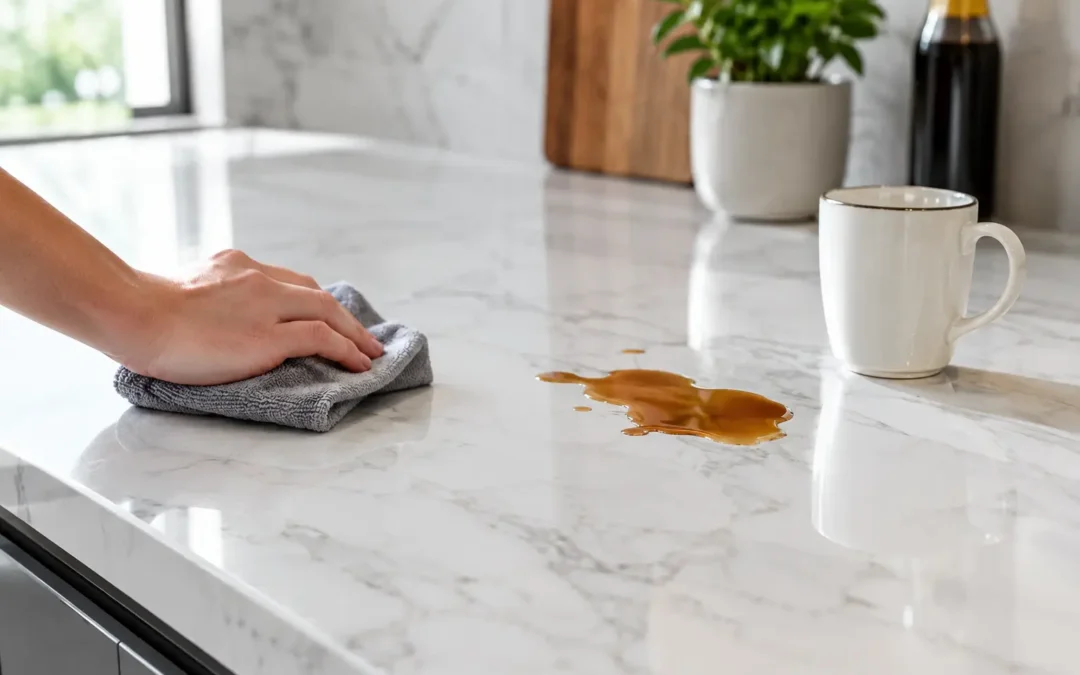
A glass of red wine tips over during dinner, turmeric finds its way onto the island, or a pan leaves a ring beside the hob. These are the moments that make homeowners ask: can porcelain worktops stain? The straightforward answer is that a quality porcelain worktop is highly stain resistant, but it is not completely immune to marks, residue or damage caused by poor care. Understanding the distinction helps you choose with confidence and look after the surface properly once your kitchen is in use.
Porcelain is one of the most practical choices for a busy family kitchen, particularly where a clean, contemporary look needs to stand up to everyday cooking. Its very low porosity means spills are unlikely to soak into the material in the way they can with some natural stones or timber. However, the right surface is always the one that suits how you cook, clean and live.
Can porcelain worktops stain in everyday use?
Porcelain worktops are made from natural mineral materials, compacted and fired at extremely high temperatures. This process creates a dense, hard surface with very little absorption. As a result, common kitchen culprits such as coffee, wine, oil, lemon juice and coloured sauces generally remain on the surface rather than penetrating it.
In practical terms, that means you do not need to panic if a child spills squash or a sauce splashes during a Sunday roast. Wipe the spill away promptly with a soft cloth, warm water and a mild detergent, and it should leave no trace.
That said, “stain resistant” should not be confused with “maintenance free”. A worktop can appear stained when a substance has dried onto it, especially on a textured or matt finish. Grease, hard-water deposits, soap residue and heavily pigmented food can all leave a visible film if they are allowed to build up. This is normally a surface-cleaning issue rather than a permanent stain in the porcelain itself.
What can leave marks on porcelain?
Most apparent marks are removable, but a few situations deserve extra care. Metal objects, for example, can leave grey scuff marks on lighter porcelain surfaces. These are often metal deposits from pan bases, utensils or appliance feet, rather than damage to the worktop. A suitable non-abrasive cleaner will usually remove them.
Dried-on residue can also be mistaken for staining. Cooking oils, limescale around a tap, grout haze after fitting, silicone smears or adhesive residue may need a more targeted cleaning product. The key is to identify what has caused the mark before reaching for a strong cleaner.
Very dark dyes, permanent marker ink and highly concentrated colourants should be wiped away as soon as possible. Porcelain performs exceptionally well against these household spills, but leaving any strong pigment in contact with a surface for hours or days is unnecessary risk, particularly where there is a textured finish.
There is also a difference between a stain and physical damage. Porcelain is hard wearing, but sharp impact on an exposed edge can chip it. Dragging rough ceramic bases, unglazed cookware or abrasive cleaning pads across the surface can cause scratching or leave a mark. These are not stains, and no amount of cleaning will correct a chip or deep scratch.
Are light porcelain worktops harder to keep clean?
Not necessarily. Pale porcelain can be an excellent choice because its low-porosity surface resists the absorption that makes light-coloured materials difficult to live with. It can show crumbs, dark scuffs and a build-up of everyday residue more readily than a dark, patterned design, but it is usually simple to clean.
A heavily veined or darker porcelain may disguise daily marks better, while a plain pale surface can make a kitchen feel larger and brighter. This is a design decision as much as a maintenance one. In a showroom, it is worth viewing samples in natural light and asking how matt, polished and textured finishes will look in your own kitchen.
Porcelain compared with other worktop materials
Every material has strengths and compromises. Porcelain’s main advantage is its combination of stain resistance, heat resistance and very low water absorption. It is particularly appealing for households that want the visual impact of natural stone with less concern about sealing and routine upkeep.
Natural stone offers depth, individuality and a timeless character that many homeowners love. However, some stones are more porous and may require sealing to reduce the risk of staining. Acidic foods can also affect certain natural stone surfaces, particularly marble.
Quartz is another popular low-maintenance option. It is generally stain resistant, although it is resin-based and can be less tolerant of direct heat than porcelain. Timber brings warmth and texture, but needs more regular care and can mark if water or spills are left standing. Laminate has improved enormously in appearance and offers value, yet it is less resistant to heat, cuts and edge damage.
Porcelain is not automatically the best answer for every kitchen. Its hard, crisp appearance may not suit a traditional scheme, and its fabrication requires experienced handling due to the material’s density and potential for chipping at edges if treated carelessly. A well-planned kitchen should balance appearance, budget, usage and long-term care rather than focusing on a single headline benefit.
How to clean porcelain worktops safely
For everyday cleaning, use warm water, a soft microfibre cloth and a small amount of pH-neutral washing-up liquid. Drying the surface afterwards is helpful in hard-water areas because it prevents mineral deposits from dulling the finish around sinks and taps.
If a mark remains, start gently. Use a non-abrasive cleaner recommended for porcelain and follow the manufacturer’s guidance for the particular worktop brand and finish. Allow the cleaner time to work if advised, then rinse thoroughly and dry the surface.
Avoid treating every mark with the strongest product in the cupboard. Harsh scouring powders, steel wool and highly abrasive pads can affect the appearance of some finishes or leave behind residue. Strong chemicals may also damage silicone joints, tap finishes or nearby cabinetry even if the porcelain itself tolerates them.
When choosing cleaning products, take particular care with anything containing hydrofluoric acid or highly aggressive compounds. These are not appropriate for porcelain worktops. If you are uncertain about a product, test it on an inconspicuous sample first or ask your worktop supplier for advice.
Do porcelain worktops need sealing?
In most cases, no. Unlike many natural stone worktops, porcelain does not normally need sealing because its low porosity already provides excellent protection against moisture and staining. This is one of the reasons it suits homeowners looking for a premium surface without an ongoing sealing routine.
The joins, edges and surrounding materials still need sensible care. Keep standing water away from joints where possible, clean up spills around undermounted sinks, and use a chopping board rather than cutting directly on any worktop. Porcelain can resist scratches well, but knives will blunt quickly against such a hard surface.
Good habits that protect the finish
The best care routine is simple and realistic. Wipe spills before they dry, clean cooking grease regularly, use trivets for very hot cookware where the manufacturer advises it, and avoid dropping heavy pans on exposed edges. A chopping board protects both the worktop and your knives.
It is also sensible to use felt pads beneath small appliances that are moved frequently. Coffee machines, mixers and air fryers can trap crumbs or grit underneath, which may scuff a surface when dragged. These small habits make a greater difference than buying an elaborate collection of specialist cleaners.
For homeowners planning a new kitchen in Maidstone or the surrounding Kent area, samples are invaluable. Seeing porcelain beside cabinet finishes, flooring and lighting helps reveal whether a particular colour and texture will remain practical as well as attractive. At MBK Design Studio, the conversation starts with how you want to use the room, because the most successful worktop is one that feels right years after the project is complete.
When should you seek professional advice?
If a mark does not lift with gentle cleaning, do not keep escalating to more abrasive products. Take a clear photograph, note what caused the mark and ask the supplier or fabricator for product-specific guidance. The correct solution may be straightforward, while an unsuitable cleaner can make a small issue more noticeable.
Porcelain worktops are among the most forgiving kitchen surfaces available, but their performance still depends on sensible daily care and a quality specification. Choose a finish that fits your household, treat the surface with the same consideration you would give any premium part of your home, and it should continue to look composed through the spills, celebrations and everyday meals that make a kitchen truly lived in.