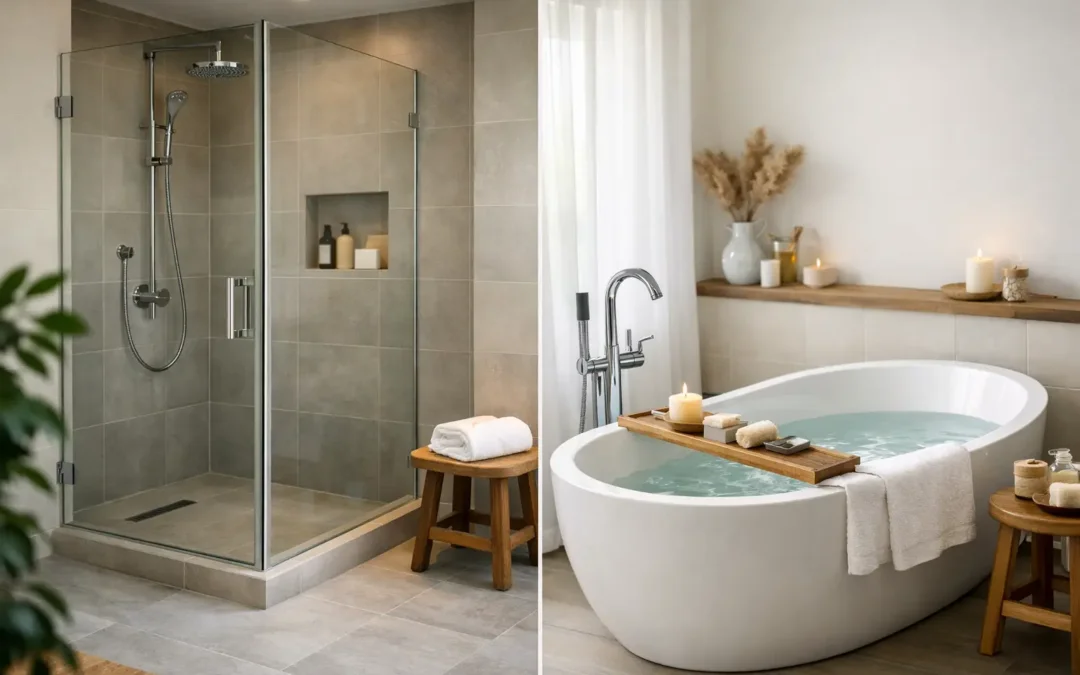
A bathroom decision often looks simple on paper and much harder in real life. A walk in shower or bath can both work beautifully, but the right choice depends on how you live, who uses the room and what you want from the space over the next ten years, not just the next ten months.
For some homeowners, the answer is obvious. If you rarely soak in a bath and want the room to feel more open, a walk-in shower makes sense. If you have young children, enjoy a proper bath at the end of the day, or want flexibility for family life, keeping a bath can be the wiser move. Most of the time, the best answer is not about trends. It is about fit.
How to choose between a walk in shower or bath
The first thing to look at is your routine. Bathrooms work best when they suit the people using them every day. If your morning is a quick shower before work, a large walk-in enclosure with easy access and practical storage may improve daily life far more than a bath that is used twice a year. If your household includes children, dogs, or anyone who values a long soak for comfort, a bath still earns its place.
Space matters too, but not always in the way people expect. A small bathroom does not automatically mean shower only. In some layouts, a well-planned bath with shower over it is actually the most efficient solution. In others, replacing an unused bath with a walk-in shower transforms the room, giving better movement, cleaner lines and more usable wall space.
There is also the question of how long you plan to stay in the property. If this is your long-term home, it is sensible to think ahead. A low-threshold or level-access shower is often easier to use as needs change. If resale is part of the picture, keeping at least one bath in the home can still appeal to a broad range of buyers, particularly families.
The case for a walk-in shower
A walk-in shower is often the favourite for homeowners who want a bathroom to feel more spacious and contemporary. Without the visual bulk of a bath, the room can seem larger, lighter and easier to move around in. That can make a real difference in en suites, compact bathrooms and awkward layouts where every centimetre counts.
Practicality is another strong point. A walk-in shower is quick to use, easier for many people to access and simpler to keep clean when the design is done properly. Large format tiles, minimal framing and quality glass all help create a finish that looks smart without becoming high maintenance.
From a design point of view, walk-in showers offer a lot of flexibility. You can create a clean modern scheme with slimline trays and understated brassware, or a softer, more traditional look with classic tiles and warmer finishes. The best results come from planning the whole room together, so drainage, storage, lighting and ventilation all work as one.
That said, a walk-in shower is not always the easy option. It needs careful detailing to avoid splashing, poor drainage or a cold, exposed feel. In some older properties, floor construction can also affect what is possible, especially if you want a flush or near-flush finish. This is where good design advice makes a difference.
When a walk-in shower is likely to be the better choice
If you want easy access, cleaner sightlines and a bathroom that feels calm and current, a walk-in shower is often the stronger option. It can also be the right answer if mobility is a concern, if the bath is never used, or if you want the room to support ageing in place without looking clinical.
For many households in Maidstone and the wider Kent area, it is also a practical upgrade that improves day-to-day comfort. The key is to make sure it is designed around the room rather than simply removing the bath and filling the gap.
The case for keeping a bath
A bath still has clear advantages, and not just for family homes. For some people, it offers a level of comfort and relaxation that a shower simply cannot replace. It is also useful in a guest bathroom or main family bathroom where different users have different needs.
If you have young children, a bath can feel almost non-negotiable. Bath time is easier, quicker and less messy than trying to manage everything in a shower enclosure. For pet owners, a bath can be just as useful. These everyday realities matter as much as appearance.
There is also a property angle. While not every buyer insists on a bath, removing the only one in the house can narrow appeal. If you already have a second bathroom or en suite with a shower, the risk is lower. If it is the only bathroom, the decision needs a bit more thought.
Design-wise, baths have moved on. Modern freestanding and back-to-wall options can look elegant without dominating the room, while shower-bath combinations are now much better proportioned than older versions. A bath does not have to make the space feel dated if the rest of the design is considered properly.
When a bath may still be the smarter choice
If your home only has one bathroom, keeping a bath often preserves flexibility. It can also be the right move if several people use the room, if resale is on your mind, or if your household genuinely uses a bath regularly. A good bathroom should reflect real habits, not just showroom trends.
Can you have both?
In larger bathrooms, yes, and when the space allows, having both can be the best of both worlds. A separate bath and walk-in shower gives the room a more luxurious feel and covers different needs without compromise. It is especially effective in principal bathrooms where layout is generous enough to avoid crowding.
The caution is that squeezing both into a room that is too small can leave you with neither done properly. A narrow shower, a cramped bath and not enough circulation space will usually feel like a poor trade. It is often better to do one thing well than two things badly.
Budget, installation and the hidden practicalities
Cost is rarely just about the product you choose. A walk-in shower or bath can both vary widely depending on tiling, brassware, screens, storage, lighting and the amount of plumbing or structural work involved. A simple bath replacement may be relatively straightforward. A fully tanked walk-in shower with drainage alterations and bespoke glass can be more involved.
This is why early planning matters. Homeowners are often surprised that the visible item is only part of the budget. Preparation behind the walls and beneath the floor is what supports a bathroom that lasts. Waterproofing, ventilation and accurate installation are not the glamorous parts of the project, but they are the parts that prevent problems later.
A managed approach also reduces stress. Coordinating products, trades and timings sounds simple until deliveries move, layouts need adjusting or existing pipework is not where you expected. Working with an experienced design and installation team helps keep decisions joined up from the start.
Design details that influence the decision
Sometimes the final choice comes down to the feel you want from the room. Walk-in showers tend to create a cleaner, more open look. Baths can add softness, comfort and a sense of retreat. Neither is automatically better. It depends on the character of the property and how you want the space to work.
Storage should also be part of the conversation. Shower rooms often benefit from recessed niches, fitted vanity units and uncluttered surfaces. Bathrooms with baths may need practical ledges, family storage and durable finishes that cope with heavier daily use. The right layout supports the look, not the other way around.
Lighting makes a difference too. A walk-in shower can feel striking under well-placed task and ambient lighting, while a bath area often benefits from softer, more restful layers of light. These details may seem secondary at first, but they shape how comfortable the room feels every day.
The best choice is the one that suits your life
There is no universal winner in the walk in shower or bath debate. The right answer comes from a clear view of your space, your routine, your budget and your plans for the future. That is why thoughtful bathroom design matters so much. It turns a broad question into a practical solution that feels right long after the work is finished.
If you are weighing up the options, start with how the room needs to perform, not just how you want it to look. A well-designed bathroom should make everyday life easier, more comfortable and more enjoyable, and that is always the decision worth making.