
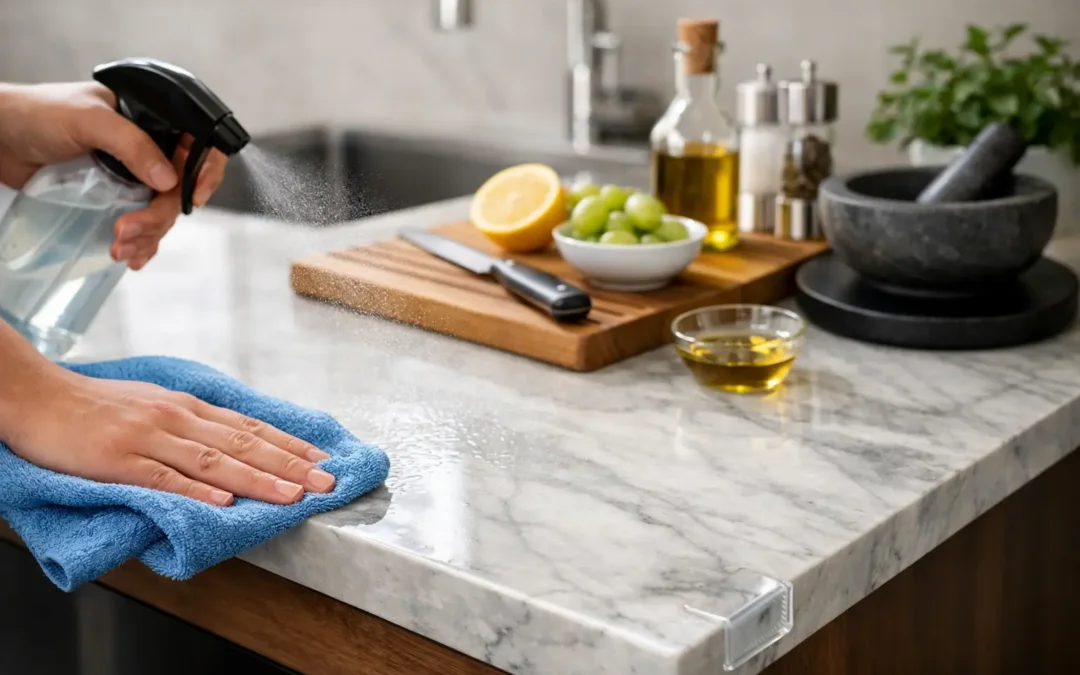
A stone worktop can be one of the hardest-working surfaces in your home. It takes hot pans, hurried breakfasts, splashes from the hob and sink, food preparation and the occasional red-wine mishap. Good stone worktop protection is not about making a kitchen precious or difficult to use. It is about choosing the right care for the material, then following a few sensible habits that preserve its finish for years.
The first rule is simple: not all stone worktops need the same treatment. Quartz, granite, marble and sintered stone may look equally at home in a well-designed kitchen, but they react differently to moisture, heat, acids and cleaning products. Treating every surface as though it were identical is where many avoidable marks begin.
Start with the stone you have
Before buying a protector, sealant or specialist cleaner, confirm exactly what your worktop is made from. A supplier should be able to advise, but it is worth understanding the broad differences yourself, particularly if you are planning a kitchen refurbishment and weighing up materials.
Quartz worktops
Quartz is an engineered surface, made from natural quartz particles bound with resins. Its low-porosity finish means most quartz worktops do not require sealing. Day-to-day protection is therefore mainly about preventing surface damage rather than trying to add a coating.
Use a soft cloth, warm water and a small amount of mild washing-up liquid for regular cleaning. Wipe spills promptly, especially strong-coloured liquids and cooking oils, and use a chopping board rather than preparing food directly on the worktop. Although quartz is highly durable, it is not indestructible. Very high heat can damage the resin content, so pans and oven trays should always sit on a trivet or heat-resistant mat.
Avoid abrasive pads, oven cleaner, bleach-based products and highly alkaline or acidic cleaners unless the worktop manufacturer specifically permits them. A product may seem to remove a stubborn mark quickly, but repeated use can dull the surface or affect its finish.
Granite worktops
Granite is a natural stone, and each slab has its own mineral pattern and level of porosity. Many granite worktops are sealed before fitting, but that protective seal can wear over time. The purpose of sealing is to reduce absorption, giving you longer to wipe away liquids before they can leave a stain.
A simple water test can indicate whether a granite surface may need attention. Place a few drops of water in an unobtrusive area and leave them for around 10 minutes. If the water beads on the surface, the seal is generally doing its job. If the stone darkens as it absorbs the water, it may be time to seek advice on resealing.
This is not a reason to panic or assume the worktop has failed. Granite is naturally resilient, and a professional-grade treatment can often renew protection effectively. The timing depends on the particular stone, the existing finish and how heavily the kitchen is used. A family kitchen used every day will place different demands on its surfaces than a rarely used entertaining space.
Marble, limestone and other calcareous stone
Marble and limestone have a character that many homeowners love: natural veining, soft variation and a finish that develops gently over time. They also require the most considered approach. These stones are sensitive to acids, including lemon juice, vinegar, wine, fruit juice and some descaling products.
Acidic spills can cause etching, which is a change in the surface sheen rather than a conventional stain. On a polished marble worktop, it can look like a dull or pale patch. Sealing helps with stain resistance, but it does not stop acid etching. This is an essential trade-off to understand before choosing natural marble for a busy kitchen.
For some homeowners, the gradual patina is part of the appeal. For others, particularly those who prefer a consistently pristine surface, quartz or a sintered stone may be a more practical choice. Neither preference is wrong – the best material is the one that suits how you genuinely live.
Everyday stone worktop protection that works
The most effective care routine is usually the least complicated one. Clean up spills promptly, use boards for chopping, place hot cookware on trivets and avoid leaving wet cloths or bottles in one place for long periods. These small actions prevent most common problems without turning routine cleaning into a major task.
Do not use the worktop as a storage area for harsh household chemicals. Drain unblockers, limescale removers and oven cleaners can cause lasting damage if they leak or are left in contact with stone. The same applies to products containing strong solvents. Keep them in a cupboard rather than beside the sink.
Take care around tap bases, drainer grooves and joints. These areas receive repeated water exposure and can collect soap residue or limescale, particularly in hard-water areas of Kent. Wiping the worktop dry after cleaning is a simple habit that keeps the finish clearer and reduces build-up around fixtures.
For textured, honed or leathered stone, use a soft brush where needed rather than an abrasive scourer. These finishes are attractive because they have more tactile depth, but their texture can hold residue more readily than a high-polish surface. Gentle, regular cleaning is better than occasional aggressive scrubbing.
When sealing and specialist treatments are worthwhile
Sealing is appropriate for many natural stone worktops, but it should not be treated as a universal cure. A sealant is designed to improve resistance to water and oil-based staining. It cannot repair chips, remove existing etching or make an unsuitable cleaning product safe to use.
The correct product and method matter. Applying an unsuitable sealant, leaving excess product to dry on the surface or sealing over contamination can create patchiness and haze. Stone with a polished finish, a honed finish or a more open texture may each need a different approach.
Professional stone protection is especially worthwhile when a worktop is new, when its existing seal has become less effective, or when you are unsure what treatment has been applied previously. It can also be useful after a deep clean, renovation or repair, when the aim is to return the surface to a well-protected starting point.
MBK Design Studio can advise homeowners on protecting stone surfaces as part of a considered kitchen project, including the balance between appearance, maintenance and everyday practicality. Honest material guidance at the selection stage is often the best form of protection, because it prevents expectations from being set too high or too low.
Responding calmly to spills, stains and marks
If a spill happens, blot it rather than rubbing it across the surface. Then clean with water and a mild, stone-appropriate cleaner. Rubbing a gritty spill can scratch a polished finish, while scrubbing with the wrong product can make a small issue more noticeable.
Oil, tea, coffee and strongly coloured foods may leave stains on unsealed or lightly sealed natural stone if they are left for a long time. Do not reach immediately for bleach or a supermarket multipurpose spray. The appropriate remedy depends on the stone and the nature of the mark. A specialist can identify whether you are dealing with a surface residue, absorbed stain, etching or a change in the seal itself.
Chips and cracks also deserve early attention. A small edge chip may be repairable and far less noticeable once treated, whereas continued impact in the same area can worsen it. Never assume that a crack is merely cosmetic, particularly near a sink cut-out, hob or joint.
Choosing a worktop with care in mind
When planning a new kitchen, protection begins long before the worktop arrives. Think honestly about your household. Do children regularly help with baking? Is the kitchen used for large family meals? Do you want the forgiving consistency of quartz, or does the individuality of natural stone matter more to you?
There is no need to avoid marble or granite because they ask for more understanding. Equally, there is no benefit in choosing them if you will worry about every water ring and citrus spill. The right decision brings together colour, thickness, edge detail, budget, maintenance expectations and the way the room will be used.
A well-chosen stone worktop should be enjoyed, not guarded. With the right surface, appropriate treatment and a few everyday habits, it can remain a defining feature of your kitchen while supporting the busy life that happens around it.