
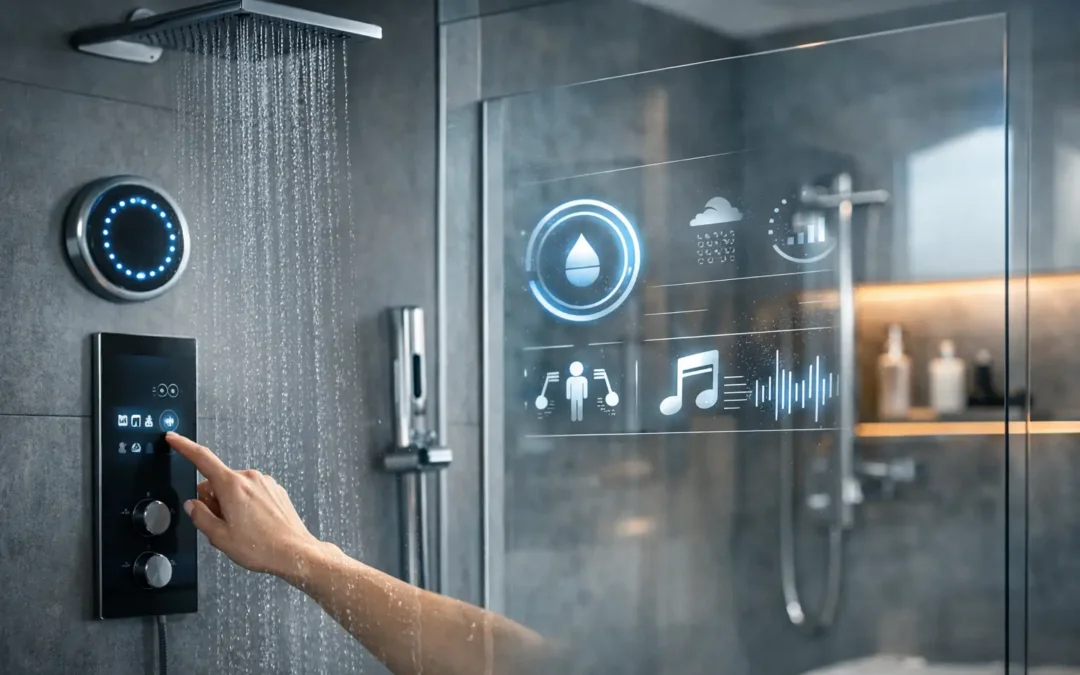
A shower is no longer just a practical corner of the bathroom. For homeowners planning a refurbishment, shower technology trends 2027 point towards an experience that is more personal, more water-aware and easier to live with day after day. The best ideas are not necessarily the ones with the most buttons. They are the features that improve a busy morning, create a calmer evening routine and continue to make sense long after the novelty has worn off.
For a bathroom that is designed to last, technology needs to earn its place. That means considering your water pressure, household routines, cleaning preferences, electrical requirements and budget before choosing a digital control or a spa-style shower head.
Shower Technology Trends 2027: Smarter, Not More Complicated
The strongest direction for 2027 is purposeful smart control. Digital showers have been available for some time, but their appeal is becoming more practical than theatrical. Rather than fiddling with separate controls for temperature and flow, homeowners can select a preferred setting and have it delivered consistently.
A digital valve, often positioned away from the wet area, mixes water to the chosen temperature before it reaches the shower outlet. The visible control can be a simple dial, push button or compact panel. Some systems also offer remote start, allowing the water to reach temperature before you step in.
This can be particularly useful in family bathrooms, where different users have different preferences. One person may want a warmer, gentler shower, while another prefers a brisker flow. Stored profiles can reduce daily adjustment and help avoid the familiar burst of cold water when another tap is used elsewhere in the house.
There are sensible limits. Remote activation must be specified with safety and water-use considerations in mind, and any app-based function should remain easy to operate manually. Technology should never leave you dependent on a phone for a basic shower. A well-planned system gives you convenience without making the bathroom complicated.
Personalised Water Experiences
The traditional overhead shower and hand shower remain central to most schemes, but the way they are combined is changing. Homeowners are increasingly choosing two or three water outlets with different purposes: an overhead rainfall head for full coverage, a hand shower for flexibility and cleaning, and perhaps body jets or a separate drench outlet for a more immersive effect.
The important question is not how many outlets you can fit on the wall. It is whether your water system can support them. A generous ceiling-mounted shower head may look impressive in a showroom, but it needs adequate flow and pressure to perform properly. In some homes, a pump, booster arrangement or carefully selected shower valve may be needed. In others, a more efficient shower head will provide a better everyday result than a large head that lacks power.
Expect to see greater interest in adjustable spray patterns. Fine mist, soft aerated spray, concentrated massage settings and wide rain coverage let a shower feel different according to the moment. For households with young children, pets or mobility needs, a well-positioned hand shower still offers one of the most useful forms of flexibility.
Ceiling Showers Need Thoughtful Planning
A ceiling shower can create a clean, architectural look, particularly in a walk-in enclosure. However, it needs early planning for pipework, ceiling depth and access. It may also require a larger showering area to keep splashes under control.
This is where experienced bathroom design matters. The location of the valve, the fall of the floor, the glass screen position and the direction of the spray all affect whether the finished room feels indulgent or simply wet. A layout should be considered as a whole, not assembled from individual features.
Water Saving Without a Compromise in Comfort
Water efficiency will shape many shower technology trends 2027, particularly as households become more conscious of utility costs and water use. The encouraging news is that lower consumption no longer has to mean a disappointing shower.
Modern shower heads can use air induction, precisely designed nozzles and flow regulation to create a fuller-feeling spray with less water. Thermostatic controls also reduce waste by getting to the desired temperature quickly and holding it more reliably. These are practical choices, not just environmental gestures.
Some digital systems can display usage information or set time and volume limits. For a large family, this may help encourage shorter showers without constant reminders. Yet usage displays are not right for everyone. If the bathroom is intended as a place to relax, a prominent timer can feel at odds with the atmosphere. The better approach is to decide whether your priority is awareness, control or escape, then choose features to suit.
Water-saving products should always be matched to the property. Homes with gravity-fed systems, combi boilers or unvented cylinders can have very different performance characteristics. A design consultation that starts with the existing plumbing and hot-water capacity will prevent expensive disappointment later.
The Spa Bathroom Becomes More Considered
Spa-inspired bathrooms are moving away from dramatic excess and towards comfort that feels believable in a Kent home. Warm finishes, natural textures, recessed lighting and a generous showering space are often more successful than trying to recreate a commercial spa in a compact room.
Lighting is playing a larger role in shower design. Discreet LEDs in niches, ceiling zones or shower controls can create a softer atmosphere at night. Where lighting is incorporated within the shower area, it must be selected and positioned correctly for a wet environment. It is also worth choosing a warm, flattering colour temperature rather than harsh blue-white light.
Steam functions may appeal to homeowners who want a genuine wellness feature, but they bring extra considerations. The enclosure needs to be suitable, ventilation must be carefully planned, and the room requires finishes that can handle regular moisture. A steam shower is a significant investment and can be excellent in the right setting, but it is not a feature to add simply because it sounds luxurious.
For many households, a spacious enclosure, excellent extraction, underfloor heating and a reliable thermostatic shower will deliver more lasting enjoyment than a complex wellness system.
Cleaner Technology Is a Real Luxury
The most appreciated innovations are often the least visible. Anti-limescale nozzles make it easier to wipe mineral deposits away. Easy-clean glass treatments help reduce residue on shower screens. Concealed fixings and fewer awkward gaps around controls can make day-to-day cleaning less demanding.
Limescale is a real consideration in many areas, so finish choice matters too. Matt black, brushed brass and other coloured brassware can be striking, but they may show water marks differently from polished chrome. This does not mean avoiding them. It means choosing with honest expectations and understanding the recommended cleaning routine before making a decision.
Wall panels and large-format porcelain are also increasingly popular around showers because they minimise grout lines. Large tiles require precise setting out and suitably prepared walls, while panels can offer a quicker route to a clean, contemporary look. Both can work beautifully when chosen to suit the room and the level of maintenance you are comfortable with.
Controls That Work for Every Household Member
Accessibility is becoming a more natural part of good bathroom design rather than an afterthought. Easy-grip handles, clear temperature markings, shower seats, low-threshold trays and hand showers on adjustable rails can make a room more comfortable for all ages.
Digital controls may help here, especially where a simple start-stop button and pre-set temperature are easier to manage than conventional controls. However, analogue thermostatic valves remain an excellent option. They are familiar, reliable and straightforward to use. The right choice depends on who will use the bathroom now and how you expect the home to serve you in the years ahead.
A future-ready shower does not have to look clinical. Thoughtful planning can combine discreet support features with refined brassware, beautiful surfaces and a layout that feels generous rather than restrictive.
What to Decide Before Choosing Shower Technology
The most successful shower projects start with the practical questions. Consider the available water pressure and hot-water supply, where pipework can run, whether there is adequate ventilation and how much space is genuinely available for the enclosure. Then think about daily life: who uses the room first in the morning, whether you prefer a quick shower or a longer wind-down, and how much cleaning you are willing to take on.
Budget should also be discussed openly. Premium controls, multiple outlets and specialist lighting can increase both product and project costs, particularly where existing services need altering. It is often wiser to invest in the quality of the valve, showering performance, waterproofing and extraction before adding secondary features.
At MBK Design Studio, bathroom planning begins by listening to how you want the space to work, not by pushing a fixed set of products. Viewing finishes and controls in person can also make a real difference. You can assess the weight of a handle, the spray pattern of a shower head and the true tone of a finish before committing.
The shower of 2027 should feel reassuringly simple when you use it. Choose technology that supports your routine, specify it around the realities of your home, and leave room for the small details that make every morning feel better.