
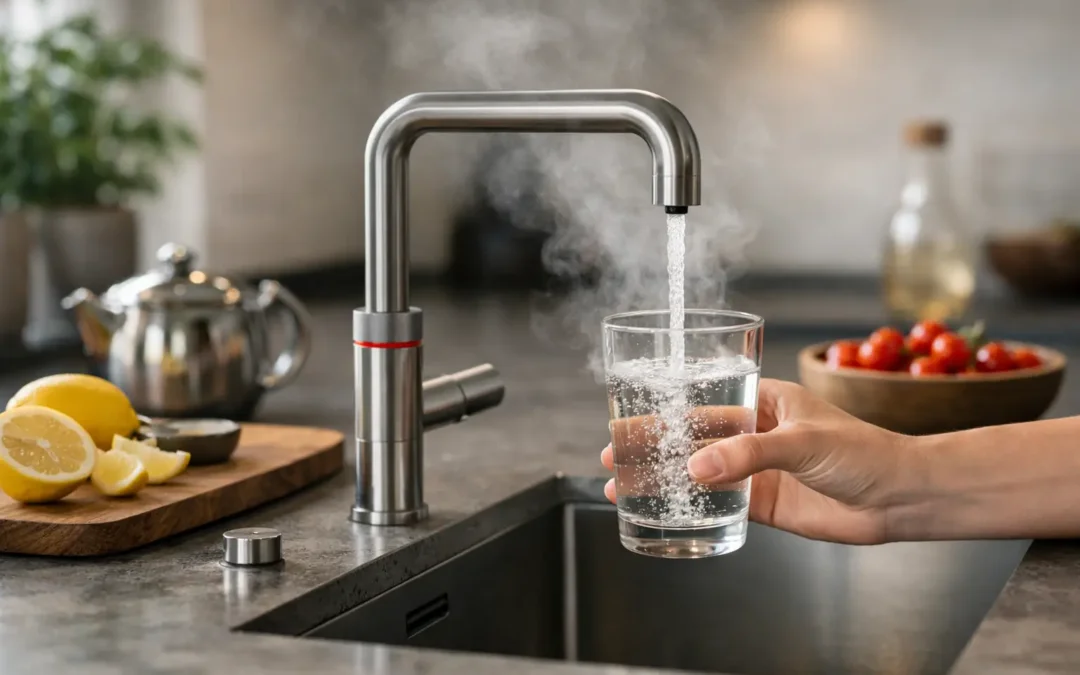
A kettle, a hot-water tap and a cold-water tap can occupy more of a kitchen worktop than most homeowners realise. A Quooker brings those jobs together at the sink, providing instant boiling water from a dedicated tank beneath the worktop. But this is a premium kitchen investment, not simply a clever replacement for a kettle. In this Quooker tap review, we look at where the system earns its place, where the compromises lie and who is likely to find it worthwhile.
What is a Quooker tap?
Quooker is a boiling-water tap system designed to provide filtered cold, standard hot and cold, and near-instant boiling water from one tap, depending on the model selected. Some options can also dispense chilled sparkling water through an additional accessory.
The key difference is the insulated tank installed inside a base cabinet. This stores water at a high temperature, ready when you need it, rather than heating a full kettle every time. It is a tidy, purposeful solution for busy kitchens, particularly where the kettle is constantly in use for tea, cooking, blanching vegetables or preparing hot drinks.
There are several tap styles to suit different layouts and tastes. A Fusion combines boiling, hot and cold water in one tap. A Flex adds a pull-out hose, which can be useful for rinsing large pans or cleaning the sink. Traditional and contemporary finishes are available, so the tap can be considered as part of the wider kitchen design rather than as an afterthought.
Quooker tap review: the everyday benefits
The strongest case for a Quooker is convenience that genuinely changes daily routines. Filling a saucepan with boiling water for pasta, making a hot drink or sterilising a chopping board can be quicker and less cluttered. You only draw the amount of water required, which feels particularly useful in a household where the kettle is repeatedly boiled for one or two cups.
It also frees up the worktop. In a compact kitchen, removing the kettle can make a surprising difference to how open and organised the room feels. This is especially valuable when planning a new kitchen, where clear work surfaces and well-positioned preparation zones make the room more enjoyable to use.
For keen cooks, the tap can save time at several points in a meal. Starting vegetables, stock, gravy or pasta with boiling water speeds up the process, even though a pan will still need time to return to the boil on the hob. It is not magic, but it removes a familiar wait.
The design benefit should not be overlooked. A carefully chosen Quooker can reduce visual clutter around the sink and complement a modern handleless kitchen just as comfortably as a more traditional Shaker scheme. As with any prominent fixture, finish matters. Chrome is versatile, while black, stainless steel, brass-toned and other finishes can make the tap a deliberate part of the room’s character.
Safety is thoughtfully considered
Boiling water at the sink understandably raises safety questions. Quooker taps use an intentional push-and-turn action to activate boiling water, rather than allowing it to run from the normal lever. The water is delivered as an aerated spray rather than a solid jet, helping to reduce splashing.
These measures make a meaningful difference, but they do not remove the need for care. The water remains extremely hot and should be treated with the same respect as a boiling kettle. Families with young children may appreciate the controlled activation, while still making sensible decisions about supervision and kitchen habits.
The cost: where the decision becomes personal
A Quooker is considerably more expensive than a standard kitchen tap and kettle. The final cost depends on the chosen tap, finish, tank capacity, whether chilled or sparkling water is included, cabinet adaptations and installation requirements. It is best considered as part of the overall kitchen budget, not as a standalone impulse purchase.
For some homeowners, the price is easy to justify because the tap is used many times each day and contributes to a cleaner, better-functioning kitchen. For others, especially households that boil a kettle once or twice a day, the return may feel less compelling. Convenience is valuable, but its value is personal.
It is also worth being realistic about energy use. The tank uses electricity to maintain its temperature, although it is highly insulated. A Quooker may avoid the repeated overfilling and reboiling that often happens with a kettle, but it is not automatically cheaper to run in every home. Usage patterns, electricity tariffs and the size of the household all influence the result.
A well-planned kitchen renovation is about investing where the difference will be felt. If you enjoy cooking, entertain regularly or want the worktop space back, a Quooker can be one of those upgrades used and appreciated every day. If your priority is reducing upfront spend, a quality conventional tap and kettle may be the more proportionate choice.
Installation considerations before choosing one
The appeal of an all-in-one tap should not obscure the practical requirements beneath the sink. The tank needs cupboard space, a suitable power supply and correctly planned water connections. If you are choosing a Flex model, the pull-out hose also needs room to operate without catching on pipes, waste fittings or stored cleaning products.
This is why it is preferable to decide on the tap early in a kitchen project. Cabinet layouts, sink choice, plumbing and electrics can then be coordinated properly. Retrofitting is possible in many kitchens, but it may involve more compromises where the sink cabinet is already crowded.
Think carefully about the size of the tank too. A smaller tank can suit a couple or a compact kitchen, while a larger household may value greater capacity when several people are preparing drinks or cooking at once. The right choice is not always the largest one. It should reflect how the kitchen is actually used.
Water quality deserves attention in Kent homes. Hard water can contribute to limescale over time, affecting taps, appliances and the appearance of a sink area. Depending on your water supply and Quooker configuration, filters or scale-management measures may be advisable. This is a practical point worth discussing before installation, rather than after performance begins to decline.
Maintenance and long-term ownership
Quookers are built as premium appliances, but they are still appliances. Filters, where fitted, will need replacing at the recommended interval, and maintenance requirements vary according to the system and local water conditions. The exterior needs routine cleaning too, particularly on darker or brushed finishes where water marks can be more visible.
Before purchasing, ask clear questions about warranty, servicing, filter replacement, call-out arrangements and what is included in the installation. A dependable product is only one part of a successful kitchen feature. Good planning, correct fitting and accessible aftercare matter just as much over the years ahead.
Is a Quooker right for your kitchen?
A Quooker is at its best in a kitchen where the sink is a hardworking hub. It suits people who make frequent hot drinks, cook regularly, want less worktop clutter and appreciate well-considered details. It can be particularly effective in an open-plan space, where a kettle’s steam, noise and visual presence can feel more intrusive.
It may be less suitable where under-sink storage is at a premium, where the household rarely needs boiling water, or where the project budget would be better allocated to essentials such as cabinetry, worktops, lighting or appliances. There is no benefit in choosing a premium tap if it forces compromises elsewhere that you will regret every day.
At MBK Design, we find that the best kitchen choices are rarely about following a trend. They come from understanding how you live, what frustrates you in your current room and which improvements will continue to earn their keep long after installation.
A Quooker can be an excellent investment when it solves real daily problems rather than simply adding another feature to the specification. See it in person if possible, consider the space beneath your sink and choose the model that fits your household – then it has every chance of becoming one of the most-used details in your new kitchen.