A worktop can look perfect in a showroom and still be the wrong choice once real life starts happening on it. Hot pans, school bags, coffee rings, baking sessions, red wine, sharp knives and everyday cleaning all put a kitchen surface to the test. That is why knowing how to choose kitchen worktops is less about picking a colour you like and more about finding the right balance between appearance, durability, maintenance and budget.
For most homeowners, the decision comes down to two questions. First, how do you want your kitchen to look and feel? Second, how do you actually use it day to day? A family kitchen that sees packed lunches, homework and regular cooking will need something different from a quieter space used mainly for entertaining. The best choice is the one that suits both the design of the room and the way you live in it.
How to choose kitchen worktops for real life
Start with use before style. It is tempting to fall in love with a dramatic veined surface or a warm timber finish, but the practical side matters just as much. If you cook often, you will want a surface that stands up well to wear, wipes down easily and copes with spills. If your kitchen is more of a social space, you may be happier prioritising appearance and texture.
Budget should also be set early. Worktops can vary significantly in price, not just by material but by thickness, edging, cut-outs, upstands and installation requirements. A surface that seems affordable at first glance may become less so once fabrication and fitting are included. Equally, paying more upfront can make sense if it gives you better longevity and lower maintenance over time.
It also helps to think about continuity across the room. Worktops do not sit in isolation. They need to work with your cabinetry, flooring, wall colour and lighting. In a traditional kitchen, softer patterns and natural textures often feel more comfortable. In a contemporary space, cleaner lines and more consistent finishes may be the better fit.
Popular kitchen worktop materials
Quartz
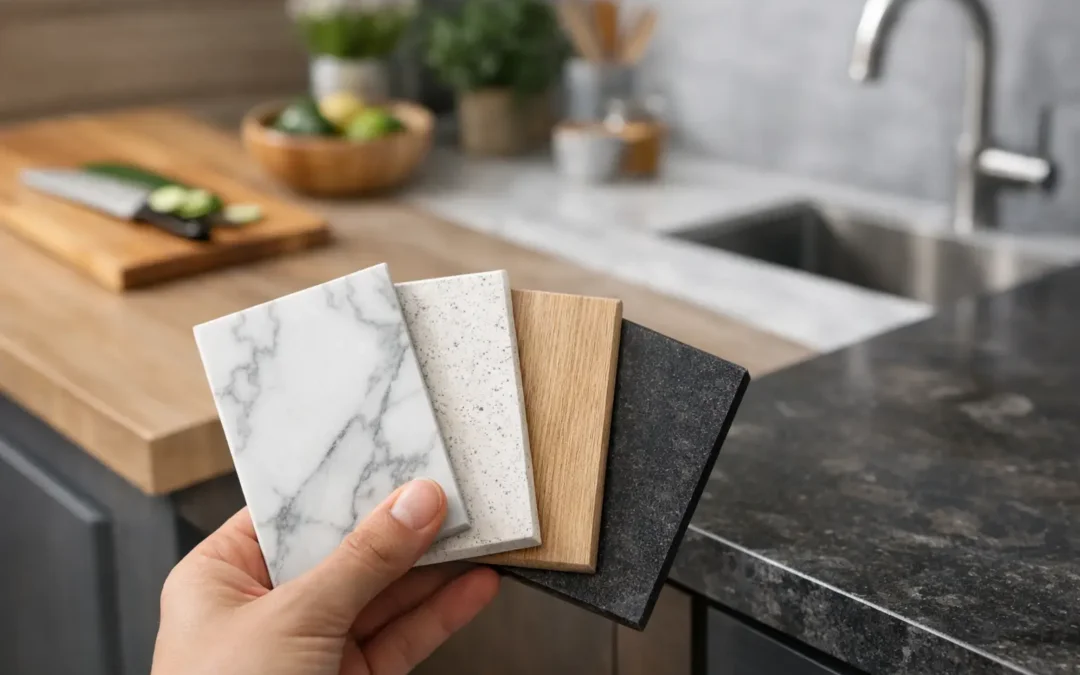
Quartz is one of the most popular choices for good reason. It offers a polished, high-end look while also being hardwearing and relatively low maintenance. Because it is engineered, it comes in a wide range of colours and patterns, from subtle neutrals to bolder marble-style finishes.
For busy households, quartz is often a very practical option. It resists staining well and does not need regular sealing in the way some natural stones do. The main consideration is cost, as it tends to sit at the higher end of the market, and care is still needed with extreme heat.
Granite
Granite remains a strong choice for homeowners who want natural character and durability. Each slab is unique, which appeals to people who prefer a less uniform finish. It is tough, copes well with everyday use and can suit both classic and modern kitchens depending on the colour and edge detail chosen.
The trade-off is maintenance. Granite usually needs sealing to help protect it, and because it is a natural product, variation is part of the appeal. That means the sample you see will not tell the whole story. For some homeowners, that individuality is exactly the point. For others, it can feel less predictable.
Solid wood
Timber worktops bring warmth that stone and engineered materials cannot quite replicate. They can make a large kitchen feel more welcoming and are especially effective in shaker or country-style designs. Wood also ages in a way many people find attractive, developing character over time.
That said, wood asks more of you. It needs regular care to protect the surface, and it is more vulnerable to scratches, water marks and staining if neglected. Some people are happy with that natural patina. Others want a surface that stays looking newer for longer with less attention.
Laminate
Laminate has improved enormously over the years. It is available in a wide variety of finishes, including convincing stone and wood effects, and it can be a sensible option when budget is a key factor. It is also easy to clean and can work well in utility spaces, rental properties or family kitchens where value matters.
Its limitations are worth understanding. Laminate is generally less resistant to heat and impact than premium materials, and damaged sections are not as easy to repair attractively. Still, when chosen carefully, it can offer very good visual results for the price.
Porcelain and ceramic
Porcelain worktops are becoming more popular in high-spec kitchens. They are highly resistant to heat, scratches and UV light, which makes them particularly appealing in bright open-plan spaces. They can also create a sleek, architectural look that suits modern interiors.
Installation is more specialist, and costs can be higher. Some thinner profiles also create a different visual effect from the chunkier look homeowners expect, so it is important to see full displays rather than relying on a small sample.
Style matters, but so does finish
Once you have narrowed down the material, think carefully about colour, pattern and surface finish. Pale worktops can brighten a room and help smaller kitchens feel more open. Darker tones can look striking and sophisticated, but they may show dust, fingerprints or water spots more readily depending on the finish.
A highly polished surface reflects light and can feel more formal. A matt or textured finish is often softer and more understated. Neither is better in every case. It depends on the kitchen design, the light in the room and your tolerance for visible marks.
Veining and pattern need thought too. A dramatic slab can become the centrepiece of the room, but it works best when the rest of the design gives it space. If the cabinetry, flooring and splashback are already busy, a calmer worktop may create a more balanced result.
Practical questions to ask before you decide
A good way to narrow your options is to ask practical questions that relate to everyday use. Do you regularly place hot cookware on the surface? Are you happy to keep up with ongoing maintenance? Do you want a completely uniform appearance or something more natural and varied? Are you designing for a long-term family home or refreshing the kitchen with resale in mind?
You should also think about how the edges, sink area and drainer details will work. Some materials allow for more tailored fabrication than others. An undermounted sink with a stone worktop can look clean and elegant, while a timber top around a sink needs more care and planning.
If you are including an island, consider whether you want the same worktop throughout or a contrast. Mixing materials can work beautifully when done with purpose. For example, a quartz perimeter with a timber breakfast bar can combine practicality with warmth.
Why samples and showroom visits matter
Worktops are one of the hardest kitchen elements to judge from a photo alone. Light changes them. Room size changes them. Even the door colour next to them changes them. A sample is useful, but a larger display is better because it lets you see scale, pattern movement and finish more realistically.
This is where experienced guidance earns its place. In a showroom, you can compare materials properly, understand where price differences come from and discuss what works for your layout and habits. For homeowners planning a full renovation, that joined-up advice often prevents expensive mismatches later.
For example, a beautiful surface may not be the right choice if your preferred sink style, hob arrangement or cabinet run creates awkward joins or weak points. These are not problems to discover after ordering.
Cost, lifespan and value
The cheapest worktop is not always the most economical choice, and the most expensive is not always the best value. A lower-cost surface may be absolutely right if it suits the project, the timescale and the expected level of wear. Equally, investing more in a premium material can be worthwhile when the kitchen is a long-term part of the home.
Think in terms of value over time. How long do you expect the kitchen to last? How much maintenance are you realistically willing to do? How important is it that the worktop still looks excellent years from now? Honest answers usually point towards the right bracket.
At MBK Design, this is often where homeowners gain the most confidence – by weighing appearance, practicality and budget together rather than treating them as separate decisions.
Choosing a worktop is not about finding the single best material on paper. It is about choosing the one that makes your kitchen easier to live with and more enjoyable to spend time in, every ordinary day as well as on the occasions when you want it to impress.