
A pale worktop can look flawless in the showroom, then face coffee rings, cooking oil and red wine in a busy family kitchen. Protection matters, but it needs to be the right protection for the surface. Quartz and granite sealer stain proof original is a phrase that often appears when homeowners are looking for a dependable way to guard an expensive stone worktop. The key question is not simply which sealer to buy. It is whether your particular surface needs one at all.
For natural granite, a quality impregnating sealer can be a sensible part of long-term care. For engineered quartz, sealing is usually unnecessary and may be unsuitable. That distinction can save money, prevent avoidable residue on the surface and help your new kitchen or bathroom stay looking as intended.
Why the surface type changes the answer
The word “quartz” is used for two very different materials. Natural quartzite is a natural stone, formed in the earth and cut into slabs. Engineered quartz is a manufactured worktop material, typically made from crushed quartz bound with resin and pigments. They may share a name, but their care requirements are not the same.
Most engineered quartz worktops are non-porous or very low-porosity. The resin-bound surface is designed to resist day-to-day staining without a penetrating sealer. Applying one can leave a hazy film, alter the finish or make cleaning more difficult, particularly if it is allowed to dry on the surface. Always follow the worktop manufacturer’s care guidance rather than assuming that a product labelled for quartz is suitable for every quartz worktop.
Granite is different. It is natural stone and its porosity varies considerably by colour, mineral composition and finish. Some dense granites are naturally resistant; others absorb liquids more readily, especially around cut-outs, drainer grooves and unpolished edges. A sealer does not make granite invincible, but it can give you more time to wipe away a spill before it becomes a stain.
This is why broad product searches can be misleading. A sealer’s suitability should be judged against the precise material in your home, not the category name on a worktop quotation.
Where Quartz and Granite Sealer Stain Proof Original fits
Stain Proof Original is generally understood as a premium penetrating, or impregnating, sealer for porous natural stone and similar mineral surfaces. Rather than forming a visible coating on top, this type of treatment is intended to penetrate below the surface and reduce the uptake of water and oils while allowing the stone to breathe.
That makes the approach particularly relevant for natural granite, quartzite, marble, limestone and some porcelain or grout applications, subject to the product instructions and a suitability test. It is not a substitute for good material selection or regular cleaning. Nor should it be applied automatically to engineered quartz simply because the worktop contains quartz minerals.
For a granite kitchen worktop, the potential benefits are practical. Cooking oils, curry, wine and cosmetics are less likely to sink in immediately. In a bathroom, sealing can help protect natural-stone vanity tops and tiled areas from toiletries, soap residue and water marks. The treatment is especially worthwhile when the stone is pale, honed or known to be more absorbent.
There is a trade-off. A penetrating sealer is designed to reduce staining, not prevent scratching, chipping, etching or heat damage. Acidic liquids can still dull some natural stones, particularly marble and limestone. A sealed surface still needs a prompt wipe-down after spills.
How to tell whether granite needs sealing
The most useful starting point is the stone supplier’s recommendation. They know the slab, finish and any factory treatment already applied. If that information is unavailable, a simple water test can indicate whether further protection may be useful.
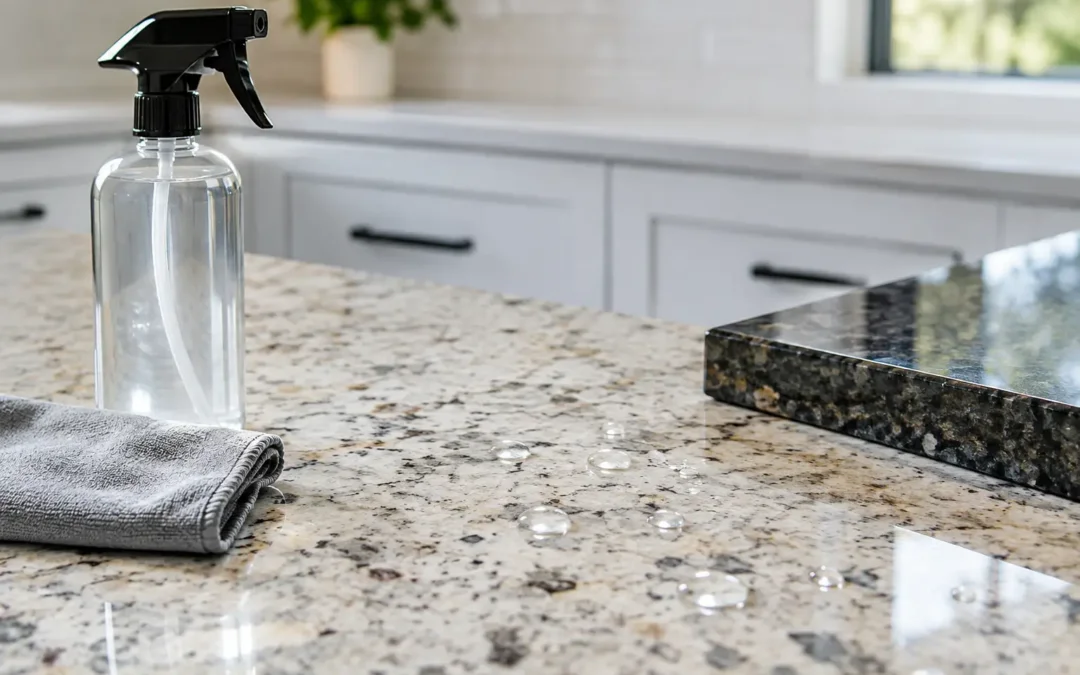
Clean and dry a discreet area thoroughly, then place a few drops of water on it. Leave them briefly, following the guidance provided by your stone professional, and watch whether the water beads on the surface or darkens the stone as it absorbs. If it beads, the existing protection may still be effective. If a darker patch appears quickly, the stone may benefit from sealing.
Treat this only as an indicator, not a laboratory result. Darker or strongly patterned granite can make changes harder to see, and residues from cleaning products may affect the result. Oil is more relevant than water for kitchen staining, but it should never be used for a casual test on a valuable worktop. When in doubt, ask a stone-care specialist to assess it.
Preparation is more important than the bottle
A sealer applied over dirt, old polish, limescale or an existing stain can lock the problem in or produce uneven results. The stone must be clean, dry and free from residues before treatment. This is particularly important in a kitchen where silicone, grease and cleaning sprays can collect around sinks and hob areas.
Use a cleaner approved for natural stone. Avoid strong acidic, abrasive or bleach-based products unless a specialist has confirmed they are appropriate. These can damage certain stones, strip existing treatments or leave the surface looking dull. Once cleaned, allow adequate drying time. Moisture within the stone can prevent a sealer from penetrating properly.
Before treating the whole worktop, test a small inconspicuous area. Check for changes in colour, sheen or feel once the product has cured. This is not a step to rush on a large island or a highly visible vanity unit.
Applying a penetrating sealer carefully
Exact application times, coverage rates and ventilation requirements vary, so the product label and technical instructions must lead the process. In broad terms, the sealer is applied evenly to a manageable area, allowed to dwell for the stated period, then all surplus is buffed away before it dries on the surface.
The removal stage matters. Leaving excess product behind can create streaks or a tacky residue that attracts marks rather than repelling them. Work methodically, use clean lint-free cloths and keep a close eye on edges, joins and areas around sink cut-outs. A professional application may be worthwhile for large stone surfaces, heavily used kitchens or stone with existing staining concerns.
Do not assume that more coats are always better. A very dense granite may accept little product after the first application. Repeated coats can be wasteful and may increase the risk of residue. More porous stone may need a second coat, but only where the product guidance supports it.
Everyday habits still protect stone best
A sealed granite worktop is easier to live with, not maintenance-free. Use chopping boards rather than cutting directly on the stone, place hot pans on trivets and wipe spills promptly with a soft cloth. A pH-neutral stone cleaner or mild washing-up liquid used sparingly is usually preferable to a cupboard full of aggressive sprays.
Avoid leaving wet bottles, plant pots or metal containers in one place for long periods. Water marks and mineral deposits are often confused with stains, particularly near taps. In hard-water areas of Kent, regular drying around sinks and polished stone surfaces helps prevent limescale building up in the first place.
If a mark does appear, identify it before choosing a remedy. Oil, limescale, dye and surface etching need different treatments. Scrubbing blindly with an acidic cleaner can turn a small problem into a permanent dull patch.
Choose protection as part of the wider design
Stone care should be considered before a worktop is fitted into the rhythm of daily life. A pale honed natural stone beside a busy family hob can be beautiful, but it calls for realistic expectations and a little more care than engineered quartz. Conversely, engineered quartz may be the more practical choice for households wanting a highly consistent, low-maintenance finish, provided its limits around heat and impact are understood.
At MBK Design Studio, material choices are best made by looking at samples, discussing how you cook and live, and considering the finish alongside the layout. The right worktop is not simply the one that looks best on day one. It is the one whose appearance and care requirements make sense for your home for years to come.
A good sealer is valuable when it is matched to the right natural stone and applied properly. Start with the material, follow the manufacturer’s guidance and treat regular, sensible care as the protection that no bottle can replace.