Trends come and go, but a bathroom renovation is not something most homeowners want to revisit in five years. That is exactly why modern classic bathrooms remain such a popular choice. They give you the freshness and practicality of contemporary design, with enough timeless character to feel settled, elegant and right for the long term.
For many homeowners, that balance is the hardest part to get right. Lean too far into ultra-modern styling and the room can feel cold or quickly dated. Go too traditional and it may lose the crispness people now expect from a well-designed bathroom. The appeal of this look is that it sits comfortably between the two.
What defines modern classic bathrooms?
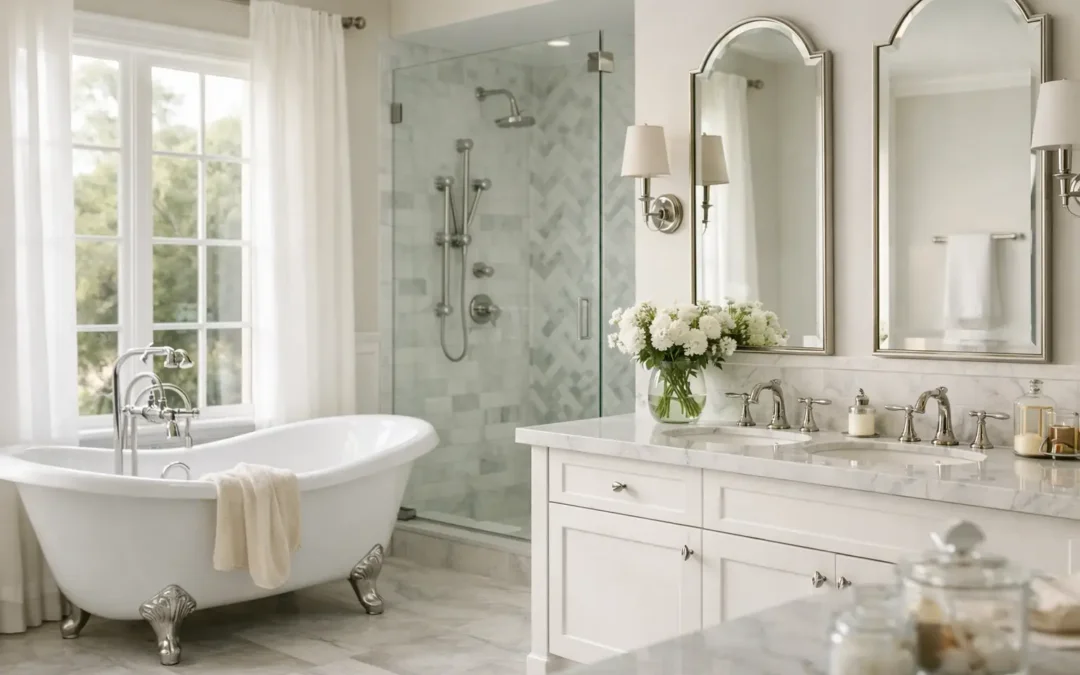
Modern classic bathrooms combine clean lines, strong proportions and up-to-date practicality with details that have lasting decorative appeal. Think framed vanity units rather than slab-front furniture, polished chrome or brushed brass fittings instead of overly industrial finishes, and tiles with texture or pattern used with restraint.
The key is discipline. A modern classic scheme is rarely loud. It relies on a few well-chosen features working together – perhaps a freestanding bath, marble-effect porcelain, wall panelling, or a vanity in a muted painted finish. None of these elements has to dominate. In fact, the best results usually come when each detail supports the overall feel rather than competing for attention.
This style also works across a wide range of homes. In a period property, it can respect the character of the building without turning the bathroom into a pastiche. In a newer home, it adds warmth and permanence that purely minimalist schemes sometimes lack.
Why this style works so well in real homes
Bathrooms need to cope with daily use, changing family needs and plenty of moisture, heat and wear. That makes them very different from rooms designed mainly to be looked at. A successful bathroom has to look good, but it also has to function properly every day.
That is where modern classic bathrooms have a practical advantage. Their design language tends to favour sensible layouts, quality fittings and materials with broad appeal. If you are making a significant investment, it is reassuring to choose a scheme that is unlikely to feel tired too quickly.
There is also a property value consideration. While no style suits every buyer, a bathroom that feels timeless and well resolved generally has wider appeal than one built around a very specific trend. If you are renovating with one eye on the future, that matters.
Start with the layout, not the finishes
It is easy to get carried away by tile samples and brassware, but the layout should always come first. A beautiful room will still frustrate you if the basin is too cramped, the shower lacks storage, or the bath sits awkwardly in the space.
In modern classic bathrooms, layout tends to be calm and ordered. Symmetry often helps, especially around vanity areas, mirrors and wall lighting. That does not mean every room must be perfectly balanced, but the space should feel considered.
If the room is compact, a walk-in shower with a fixed glass panel may create a cleaner look than an enclosure with heavy framing. If you have space for a bath, think carefully about whether a freestanding design genuinely suits the room or whether a fitted bath with tiled surround will offer easier cleaning and better use of floor area. There is no single right answer. It depends on the room and how you live.
Storage should be part of the plan from the beginning. Clutter is one of the quickest ways to undermine a carefully designed bathroom. A vanity unit with useful drawer space, a recessed niche in the shower, or mirrored cabinetry can make a significant difference without affecting the overall style.
Choosing colours that feel timeless
Colour is one of the main reasons some bathrooms date faster than others. Strong fashion shades can look impressive at first, but they do not always have staying power. Modern classic schemes usually lean towards softer, steadier palettes.
Whites, warm neutrals, greys, taupes and muted greens are popular because they create a calm backdrop and allow materials and fittings to stand out. Darker colours can work beautifully too, particularly on vanity furniture or feature walls, but they tend to be most effective when balanced with lighter surfaces and good lighting.
Natural-looking tones are especially useful if you want the room to feel luxurious without becoming overdesigned. They also make future updates easier. Changing mirrors, lighting or accessories is far simpler than replacing a colour scheme that has become too specific.
Materials and finishes that earn their place
The most convincing modern classic bathrooms use materials that look refined but can handle everyday life. Porcelain is often a strong choice for floors and walls because it offers the look of stone or marble with less maintenance concern. For busy households, that balance of beauty and practicality matters.
Brassware deserves careful thought. Chrome remains a dependable option because it is versatile, easy to live with and less vulnerable to changing fashion. Brushed brass can add warmth and character, but it should be used with confidence and consistency. Mixing too many metal finishes often weakens the scheme.
Furniture finishes are equally important. Painted timber-style vanity units in shades such as soft grey, inky blue or warm stone work well because they introduce detail without fuss. A handle choice can subtly shift the whole mood – a simple knob or pull in a classic finish usually feels more enduring than anything too ornate.
Tiles are another area where restraint pays off. Metro tiles, large-format stone-effect porcelain, subtle patterned floors and panelled wall treatments can all suit this style. The issue is not whether a material is classic or modern in isolation, but whether the combination feels coherent.
The details that shape the look
A modern classic bathroom is often won or lost in the finer points. Lighting, mirrors, taps and accessories may seem secondary, yet they do much of the work in giving the room its finished feel.
Wall lights positioned either side of a mirror can soften the space and create a more tailored appearance than a single central fitting. Mirror shapes matter too. Arched or framed mirrors can introduce a hint of traditional character, while keeping the rest of the scheme clean and contemporary.
Sanitaryware should feel elegant rather than fussy. Softly curved basins, well-proportioned WCs and bath designs with simple profiles usually sit comfortably within this style. Rimless WCs, quality shower valves and easy-clean surfaces bring the practical standards people now expect, without disturbing the overall look.
Then there are the quiet details people notice after installation. Grout colour, tile edge trims, radiator choice, towel storage and even the height of switches all influence how polished the room feels. These are often the decisions that separate a bathroom that looks expensive from one that simply includes expensive products.
Budgeting for a style that lasts
Modern classic does not have to mean excessive, but it does reward sensible investment. If you are deciding where to spend and where to hold back, prioritise the elements that are hardest to change later. Layout, waterproofing, plumbing quality, furniture construction and installation standards matter more than fashionable extras.
It can be tempting to trim the budget by choosing lower-grade fittings that look similar from a distance. Sometimes that works, but often the difference shows up in daily use – handles loosen, finishes mark, drawers feel lightweight, and shower controls become frustrating. A bathroom is one of the most used rooms in the house, so reliability has real value.
That said, not every room needs premium everything. You may choose to invest in a high-quality vanity and brassware, then keep wall tiles simpler. Or you might create impact with flooring and lighting while using more understated sanitaryware. Good design is often about knowing where a feature will count most.
Why professional planning makes a difference
A style like this looks effortless when it is done well, but it takes careful planning to achieve. Proportion, spacing, finish coordination and practical use all need to be considered together. What looks straightforward on a moodboard can be surprisingly difficult to translate into a real room.
That is why many homeowners prefer to work with an experienced bathroom specialist rather than trying to coordinate every detail themselves. In areas such as Maidstone and the wider Kent area, where property styles vary from newer developments to older family homes, a bathroom often needs a tailored approach rather than an off-the-shelf formula.
A good design process helps you make confident decisions early, avoid expensive changes later and create a room that fits both your home and your routine. It also gives you a clearer understanding of what is possible within your budget.
Modern classic bathrooms are popular for a reason. They do not chase attention. They earn it quietly, through balanced design, thoughtful detail and the kind of everyday practicality that still feels right years later.