A kitchen floor usually earns its keep the hard way. It deals with muddy shoes, dropped pans, chair legs, cooking splashes and the odd leaking appliance, all while needing to look right with the rest of the room. That is why laminate vs tiled kitchen flooring is such a common decision during a renovation – and why the right answer depends on how you use your kitchen day to day.
Both options can work well in a well-designed kitchen. Both can also disappoint if chosen for the wrong reasons. The better choice is not simply the one that looks best in a sample board. It is the one that suits your household, your budget and the level of wear your kitchen sees every week.
Laminate vs tiled kitchen flooring: the core difference
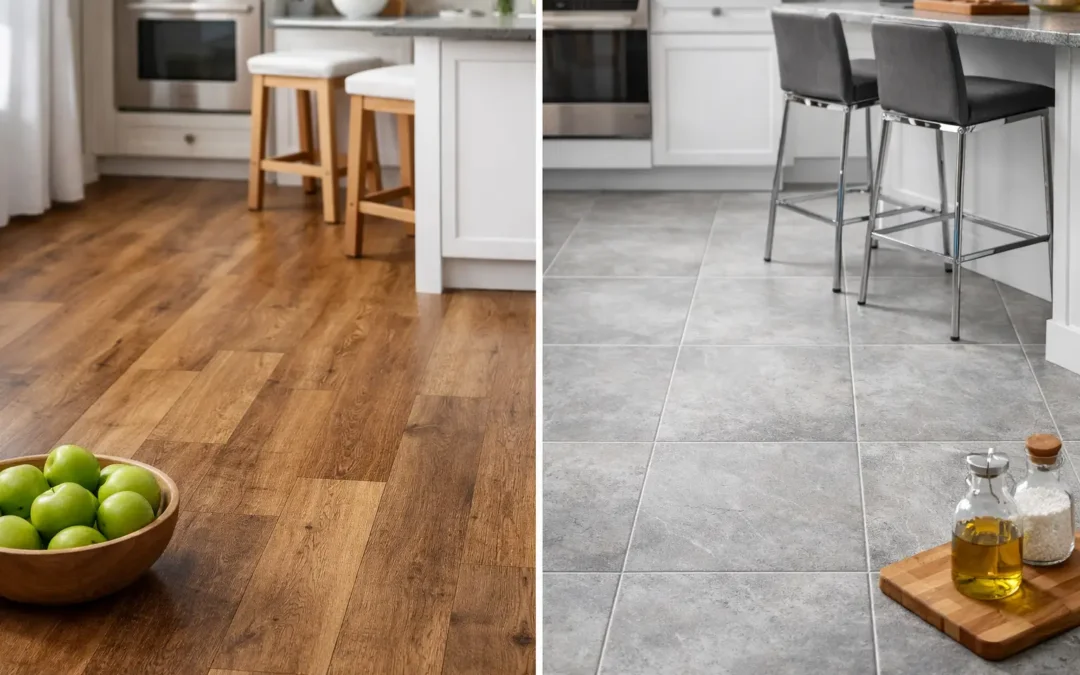
Laminate flooring is designed to give the look of timber, stone or other finishes in a more cost-conscious and often faster-to-fit format. It is made in layers, with a printed decorative surface and a protective top layer. Modern laminate has improved considerably, and some products are far more convincing than many homeowners expect.
Tiled flooring, by contrast, is a harder, more permanent surface. In kitchens this usually means porcelain or ceramic tiles, with porcelain often preferred for its durability and lower porosity. Tiles tend to feel more architectural and long-lasting, and they sit comfortably in both classic and contemporary schemes.
The practical difference comes down to performance. Laminate is generally warmer and softer underfoot, while tiles are tougher against moisture and heavy wear. One often wins on comfort, the other on resilience.
How each flooring type handles real kitchen life
The kitchen is not a gentle room. If you have children running in and out, pets coming back from the garden or a household where the kitchen doubles as a dining space and social hub, flooring needs to cope with a lot more than appearance.
Laminate performs well against general foot traffic and everyday scuffs, especially if you choose a good-quality product. It is often easier on the legs if you spend long periods cooking, and it can create a visually warmer room, particularly in open-plan kitchens where you want a more relaxed feel. The weakness is moisture. Many modern laminate floors offer improved water resistance, but they are still not as forgiving as tile if water sits on the surface or gets into joints over time.
Tiles are much stronger in this area. Spills, splashes and wet weather brought in from outside are simply less of a concern when the floor has been fitted and grouted properly. If your kitchen opens onto the garden, utility or patio, tiled flooring often makes practical sense. It is also less likely to be damaged by heavy appliances, dining chairs dragged back and forth or a dropped utensil.
That said, tiles are not indestructible. A hard impact can crack an individual tile, and poor installation can lead to movement or grout problems. Material matters, but so does the quality of the preparation beneath it.
Cost is not just the price per square metre
Many homeowners begin with the material cost, and on that basis laminate can look like the obvious winner. It is often less expensive to buy and usually quicker to install, which can reduce labour costs as well.
But kitchen flooring should be judged over time, not just on the initial invoice. If a cheaper laminate starts to swell at the edges or show wear too early, replacing it can become the more expensive route in the long run. A better-grade laminate in a lower-risk kitchen may still offer very good value, but it needs to be the right product in the right setting.
Tiled flooring usually comes with a higher upfront cost. The tiles themselves may cost more, and proper installation is more labour-intensive. Subfloor preparation, adhesive, grout and finishing details all matter. Yet when fitted well, a tiled floor can last for many years with very little loss of performance. For homeowners planning a long-term renovation rather than a quick cosmetic update, that can make the investment easier to justify.
Style, character and how the floor supports the design
Flooring should never be chosen in isolation. It needs to support the cabinetry, worktops, wall colours and the overall character of the kitchen.
Laminate often appeals when the goal is a softer, more lived-in look. Wood-effect laminate can work particularly well in shaker kitchens, family kitchens and open-plan spaces where you want the room to feel less formal. It can also help bridge the visual gap between a kitchen and an adjacent living or dining area.
Tiles offer a broader sense of permanence. Large-format porcelain tiles can give a kitchen a clean, contemporary finish with fewer grout lines and a more spacious feel. Patterned tiles can add character in traditional homes, while stone-effect finishes provide texture without the maintenance associated with some natural materials.
This is where showroom comparison becomes valuable. A sample held in your hand is one thing. Seeing flooring next to cabinet doors, worktops and paint finishes gives a much clearer picture of whether the whole scheme feels balanced.
Laminate vs tiled kitchen flooring for comfort and noise
This is the part of the decision that people sometimes overlook until after installation.
Laminate is generally more comfortable underfoot. It has a little more give, usually feels warmer than tile and can make a busy kitchen less harsh acoustically. In homes where the kitchen is used constantly, that softer feel can make a genuine difference.
Tiles feel harder and cooler. Some homeowners love that crisp, solid quality, especially in bright kitchens or warmer rooms. Others find it less comfortable for long periods of standing. Underfloor heating can change the picture considerably. A tiled floor paired with underfloor heating is a very attractive combination because tile conducts heat efficiently and feels far more comfortable year-round.
Without underfloor heating, tiles can feel quite cold in winter, particularly in older properties. That is not always a deal-breaker, but it should be considered honestly.
Cleaning, maintenance and long-term upkeep
Both options are relatively straightforward to maintain, but the type of maintenance differs.
Laminate is easy to keep looking tidy with regular sweeping and careful mopping. The key word is careful. Too much water is a risk, and harsh cleaning methods can shorten its lifespan. If part of the floor is damaged, repair can be awkward depending on the click system and the position of the affected boards.
Tiles are very easy to wipe clean, and porcelain in particular is well suited to kitchen mess. Grout lines are usually the main maintenance issue. Lighter grout may show staining over time if not looked after properly, although there are ways to reduce this through product choice and sealing where appropriate. A well-installed tiled floor tends to be very low-fuss for everyday living.
Which option suits your home best?
If you want a kitchen that feels warm, approachable and cost-conscious, laminate may be the better fit. It suits households where spills are cleaned promptly, where the kitchen is not exposed to frequent wet traffic and where comfort underfoot matters as much as durability.
If you are investing in a full renovation and want a floor that copes confidently with moisture, heavy use and long-term wear, tiles are often the safer choice. They are especially effective in busy family kitchens, garden-facing spaces and homes where durability is a priority from the outset.
There are also middle-ground situations. A high-quality water-resistant laminate may be perfectly suitable in some kitchens, particularly where budget needs to stretch across cabinetry, worktops, appliances and lighting. Equally, tiled flooring may be worth prioritising if the kitchen is the hardest-working room in the house.
At MBK Design, we often find the right answer becomes clearer once homeowners stop asking which flooring is best in general and start asking which is best for their layout, lifestyle and plans for the home. The most successful kitchens are the ones where practical decisions support the overall design rather than fight against it.
If you are weighing up laminate and tile, think beyond the brochure image. Picture winter mornings, muddy entrances, dropped utensils, family meals and the look you want to enjoy for years. The right kitchen floor should not just finish the room – it should make daily life easier every time you walk across it.