
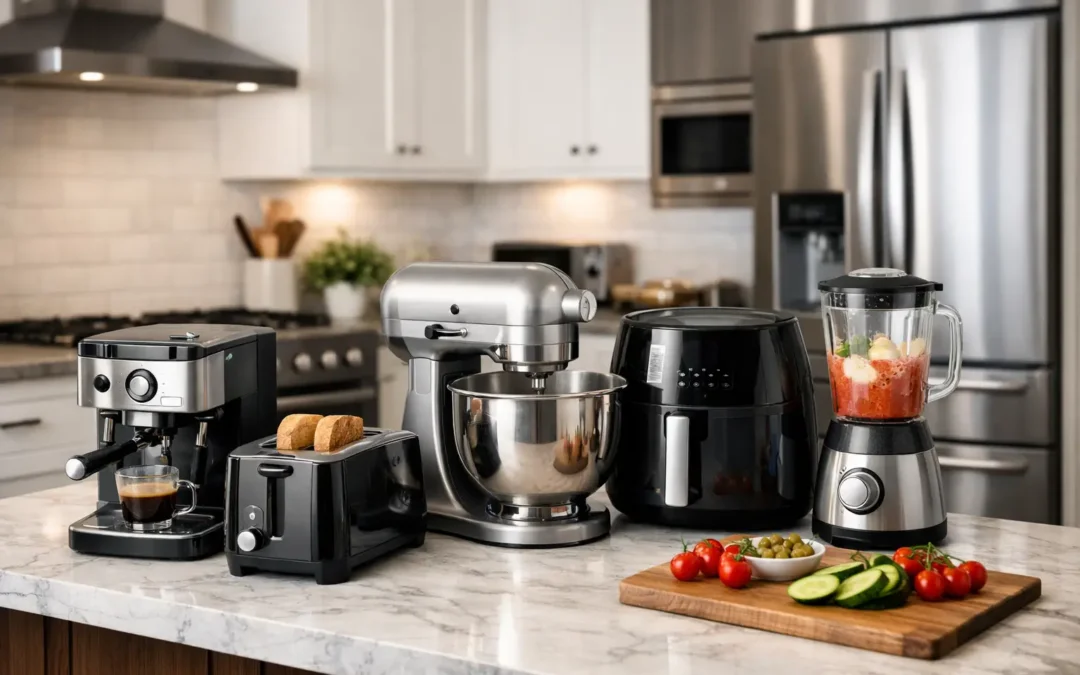
A beautiful kitchen can be let down by appliances that are noisy, awkward to use or costly to replace after only a few years. This kitchen appliance brands review is designed to help homeowners look beyond a familiar badge and choose appliances that suit how they genuinely cook, live and entertain.
The right brand is not automatically the most expensive one, nor is it necessarily the one with the longest feature list. A well-planned kitchen should bring together appliance performance, cabinet design, available space and a realistic budget. The aim is a room that feels considered on day one and continues to work well long after the novelty of a renovation has passed.
Kitchen Appliance Brands Review: Start With Your Priorities
Before comparing manufacturers, decide what matters most in your household. A busy family may value a generous-capacity dishwasher, a hard-wearing induction hob and an oven that can cope with several dishes at once. A keen home cook may put precise temperature control, steam cooking or a flexible refrigeration layout higher on the list. For some homeowners, quiet running is essential, particularly in an open-plan kitchen-living space.
It is also worth separating useful features from features that simply sound impressive. Wi-Fi controls can be convenient when they allow you to check a programme or preheat an oven on the way home. They are less valuable if the basic controls are complicated or the appliance does not perform its core job well. Equally, a pyrolytic oven-cleaning function can save considerable effort, while a long list of automatic programmes may go largely unused.
The best choice depends on the balance you need between performance, style, longevity and cost. This is why appliances should be discussed early in the kitchen design process, rather than selected at the very end.
Understanding the Main Appliance Brand Tiers
Kitchen appliance brands are often grouped into broad price and performance tiers. There is some overlap, and each manufacturer has stronger and weaker products, but these categories can make the initial decision clearer.
Premium brands
Premium appliance brands tend to offer refined engineering, durable materials, quieter operation and more advanced cooking technology. They often provide excellent results for homeowners who cook regularly and expect their kitchen to perform at a high level for many years.
Brands in this space can be particularly appealing for statement kitchens, where an elegant built-in coffee machine, full-height refrigeration or a bank of matching ovens contributes to the overall design. The trade-off is clear: higher purchase prices, potentially more specialised servicing and, in some cases, a feature set that will only be fully appreciated by enthusiastic cooks.
Premium does not mean every appliance must come from the same manufacturer. A high-performance oven may be the right investment, while a mid-range dishwasher offers everything a household needs. Mixing brands carefully can protect the budget without making the kitchen feel mismatched.
Established mid-range brands
This is where many homeowners find the strongest all-round value. Well-known mid-range brands commonly offer dependable ovens, hobs, dishwashers and refrigeration with sensible warranties, familiar controls and a wide choice of sizes.
Their ranges are often designed to suit standard cabinet dimensions, which gives greater flexibility when planning a fitted kitchen. There may be fewer specialist functions than on premium models, but the everyday essentials are usually very well covered. For many Kent households, this level represents a practical investment in quality without pushing every part of the project budget upwards.
When comparing models, look closely at the specifications rather than relying on the brand name alone. One dishwasher may have a better drying system, more adjustable baskets and a lower noise rating than another at a similar price. Those details affect daily life far more than a headline saving.
Entry-level and value brands
Value-focused brands can be a sensible option for smaller projects, rental properties, utility rooms or homeowners who need to keep a close eye on costs. Basic functions are often good, and the initial purchase price can be attractive.
The compromise may be found in noise levels, internal finish, energy use, programme choice or expected lifespan. That does not make these appliances unsuitable. It simply means they should be chosen with open eyes. Spending less on an appliance that is used occasionally is very different from choosing the least expensive dishwasher for a household that runs it every day.
Compare Appliances by Type, Not Just by Brand
No manufacturer is automatically best across every category. A brand known for excellent ovens may not offer the refrigeration format you prefer, while another may be particularly strong on quiet dishwashers or flexible induction hobs. Comparing like for like produces a more useful result.
Ovens and cooking appliances
For ovens, consider cavity size, cooking functions, shelf positions, cleaning method and how intuitive the controls feel. If you often cook for family gatherings, two compact appliances may be more useful than one large oven: for example, a main oven paired with a combination microwave or steam oven.
Induction hobs are popular because they are fast, responsive and easy to clean, but they require compatible magnetic cookware. Gas remains a preferred choice for some cooks, although ventilation, cleaning and the visual impact of pan supports should all be considered. A demonstration in a showroom can make the difference between choosing a hob that looks good and one that feels right to use.
Dishwashers
Dishwasher capacity is not just about the number of place settings. Look at the flexibility of the racks, the space for tall glasses, the cutlery arrangement and whether the machine opens automatically at the end of a cycle to aid drying. Noise matters greatly in open-plan rooms, where a few decibels can make a noticeable difference during an evening meal or while watching television.
Energy labels are useful, but use them alongside expected running patterns. A slightly higher-priced dishwasher may be more economical over time if it uses less water and electricity across frequent cycles.
Refrigeration
Refrigeration should be planned around shopping habits. A couple who shops little and often may prefer a tidy integrated fridge freezer. A larger household may benefit more from extra fridge capacity, a separate freezer or a tall larder fridge combined with a tall freezer.
Integrated appliances create a calm, uninterrupted kitchen aesthetic, while freestanding refrigeration can offer greater capacity and a stronger visual statement. Neither is universally better. The decision depends on layout, storage needs and the style of the room.
Extractors and ventilation
An extractor is easy to overlook, yet it has a major effect on comfort, cleaning and kitchen longevity. The right model should be suited to the hob size and the room volume, not selected purely because it is discreet or inexpensive.
Recirculating extraction can be a useful solution where external ducting is impractical, but it needs good-quality filters and ongoing maintenance. Ducted extraction is generally more effective at removing moisture and cooking odours where the layout allows it. This is a decision best made before cabinetry and ceiling details are finalised.
Warranties, Service and Spare Parts Matter
A warranty is reassuring, but it should not be the only measure of quality. Check what is covered, how long labour is included and whether registration is required. It is also sensible to ask about local service arrangements and the availability of replacement parts, particularly for premium or highly specialised appliances.
Kitchen appliances are built into the rhythm of everyday life. When an oven, fridge or dishwasher fails, a quick and straightforward repair matters. Choosing established brands with a good support network can provide reassurance beyond the initial purchase.
Why Appliance Choices Need to Work With the Kitchen Design
Appliances influence more than the cooking experience. They affect cabinet widths, ventilation requirements, electrical planning, worktop space and the visual balance of the room. An impressive American-style fridge freezer, for example, needs sufficient clearance for doors and drawers to open properly. A flush-fitting induction hob may need specific space beneath it. A tall housing for built-in ovens changes the available storage elsewhere.
At MBK Design Studio, appliance selection is considered alongside the wider kitchen plan, helping clients weigh up design ambition against the practical realities of their room and budget. This approach avoids expensive late changes and makes sure the finished space feels cohesive rather than assembled from separate decisions.
A showroom visit is especially valuable when you are torn between models. Opening doors, testing controls and seeing finishes beside cabinets and worktops gives a far more accurate sense of quality than photographs alone.
Make the Choice You Will Still Appreciate in Five Years
The strongest kitchen appliance decision is usually not the most fashionable one. It is the appliance that fits the way you live, has the capacity and functions you will use, and comes from a brand that offers confidence in its support and build quality.
Give priority to the appliances that carry the greatest daily workload, be honest about which extras you will use, and allow the kitchen design to guide the final selection. A thoughtful choice now can make every breakfast, family supper and weekend gathering feel easier for years to come.