A pan of pasta boiling over, a sauce needing gentle heat and children moving through the kitchen are the moments that reveal whether an appliance genuinely suits family life. This induction hob review looks beyond the polished showroom surface to explain how induction cooking feels day to day, where it excels and where it may ask you to compromise.
For many kitchen renovation clients, an induction hob is the natural choice for a clean, contemporary scheme. It offers fast response, a cool-looking glass surface and a less visually intrusive alternative to a gas hob. Yet the right decision still depends on how you cook, the pans you own, your preferred kitchen layout and the electrical work your project requires.
Induction hob review: the real cooking experience
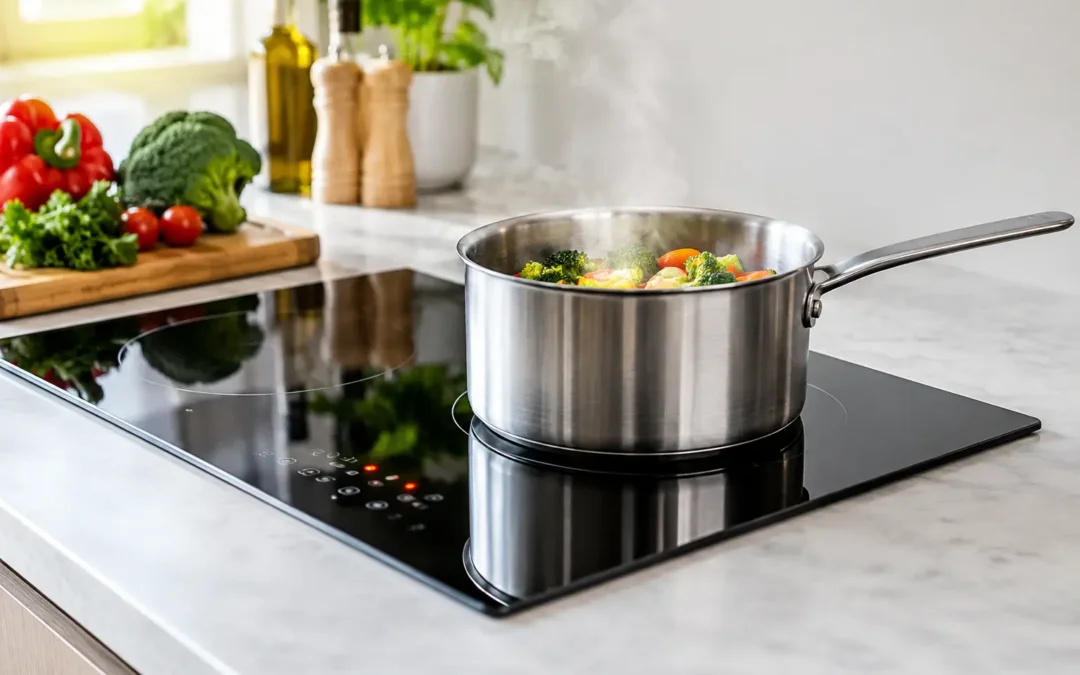
Induction does not heat the glass in the same way as a ceramic electric hob. Instead, electromagnetic energy heats the base of a compatible pan directly. The pan becomes hot very quickly, while the surrounding glass stays comparatively cool. There will still be warmth where a hot pan has been sitting, but spills are far less likely to bake onto the surface.
The immediate benefit is control. Water can reach boiling point rapidly, and a good induction hob responds quickly when the setting is reduced. This makes it particularly useful for everyday cooking: bringing a large pan to the boil, frying at a steady temperature or stopping a sauce from catching before it becomes a problem.
That responsiveness can take a little adjustment if you are used to gas. With gas, the visual flame gives constant reassurance. Induction relies on touch controls, displays and sometimes a faint operating sound rather than something you can see. Most homeowners adapt quickly, but it is worth trying the controls in a showroom before choosing a model. The difference between a clear, responsive control panel and a frustrating one matters when you are cooking every evening.
Speed is useful, but precision is the bigger advantage
Fast boiling is often the headline feature, although precise low-level control is where induction can be just as valuable. On well-designed models, melting chocolate, keeping food warm and gently simmering become easier because the settings are repeatable. Features such as a timer, pause function and automatic pan detection can also make a busy kitchen more manageable.
Not every hob performs equally at the lower end, however. Some entry-level models can feel less refined when simmering, cycling on and off more noticeably. A detailed induction hob review should therefore never judge a product on boost speed alone. Consider how it performs across the full range of cooking tasks.
The advantages for a well-planned kitchen
The easy-clean surface is a compelling reason to choose induction. Without pan supports, burner caps and awkward edges, a damp cloth is often enough after cooking. This is especially welcome in an open-plan kitchen, where the hob is always visible and cleaning time competes with family time.
Safety is another genuine benefit. Because the heat is generated in the pan, an induction hob is generally a more comfortable choice for households with young children or anyone concerned about an exposed flame. Most models have a child lock and automatically switch off when no suitable pan is detected. These features do not remove the need for sensible care around hot cookware, but they do reduce some everyday risks.
Induction also supports a calm, uncluttered design. A black glass hob can sit almost flush with the worktop, allowing a large island or run of cabinetry to remain visually simple when the kitchen is not in use. It works equally well in a modern handleless scheme or a more traditional kitchen where the worktop and cabinetry take centre stage.
Energy use is often part of the conversation. Since heat is directed into the pan rather than broadly around it, induction can be an efficient way to cook. Actual running costs will still depend on your electricity tariff, cooking habits and pan choice, so it should not be treated as a guaranteed saving. Its practical efficiency is easier to appreciate: less waiting for heat, less excess warmth in the room and less residue to clean afterwards.
The compromises worth considering
The first question is pan compatibility. Induction needs cookware with a magnetic base. Cast iron and many stainless-steel pans work well, while aluminium, copper and glass pans usually need an induction-compatible base. A simple magnet test is helpful: if a magnet sticks firmly to the bottom of the pan, it is likely to work.
Replacing a few favourite pans can be a modest cost. Replacing an entire high-quality collection can make a noticeable difference to the overall kitchen budget. It is best to check this early, rather than discovering it after the new kitchen is complete.
Noise is another consideration that is sometimes overlooked. Induction hobs may make a quiet fan noise, clicking sound or low hum, particularly on higher power settings or with certain pans. This is normal, not a fault, but a very quiet open-plan room can make it more noticeable. Better-quality cookware and a well-made hob tend to reduce the issue, rather than eliminate it entirely.
There is also the question of power supply. Induction hobs can have higher electrical demands than some alternatives, particularly larger models with several zones used at once. This needs to be assessed as part of the wider kitchen plan, alongside the oven, extractor, lighting and other appliances. Clear planning at the outset avoids unwelcome changes to specification or cost later in the project.
Choosing the right size, zones and controls
A 60cm hob suits many kitchens and can be an excellent choice for couples or smaller households. Families, keen cooks and anyone planning a large kitchen island may benefit from 80cm or 90cm models. The extra width gives more room between pans, which is often more useful than simply having another cooking zone.
Flex zones are worth considering if you regularly use a griddle, fish kettle or oversized casserole. These allow two areas to work together as one larger heated space. They are practical, though they can add to the price, and their value depends entirely on your cookware and cooking style. If most meals involve two saucepans and a frying pan, conventional zones may be all you need.
Controls deserve close attention. Slider controls are quick once familiar, while individual controls for each zone can be simpler for households that prefer a more direct approach. Look at display visibility, the ease of cleaning around the control area and whether the model gives useful feedback if a pan is too small or incorrectly positioned.
A built-in extractor is another option for islands or layouts where an overhead hood would interrupt the view. It can create a striking, open result, but it requires careful consideration of cabinetry space, ducting options and maintenance. The most attractive solution is not automatically the most practical one for every property.
What to compare in a showroom
Seeing an induction hob in person helps turn broad specifications into an informed choice. Rather than focusing solely on brand or appearance, consider the details that will affect use over many years. Check whether your largest pans sit comfortably, how clearly the controls are marked and whether the zone layout makes sense for the meals you actually cook.
Ask about the power level, safety functions, warranty and the cleaning guidance for the glass. It is also sensible to discuss the hob alongside the worktop material, extractor choice and appliance housing plan. A kitchen works best when these decisions are coordinated rather than selected in isolation.
At MBK Design Studio, kitchen planning begins with listening to how a household lives, cooks and uses its space. That approach matters with induction because the best model is rarely just the most feature-packed one. It is the hob that fits your worktop, budget, cookware and daily routine without creating avoidable compromises.
An induction hob is a strong choice for homeowners who want speed, control, straightforward cleaning and a refined kitchen appearance. Before making the final selection, picture a typical Wednesday evening in your finished kitchen: the pans you use, the people moving around you and the meals you make most often. That is usually the clearest route to a choice you will continue to appreciate long after the renovation is complete.