A tap is one of the smallest items in a bathroom, yet it is touched more than almost anything else in the room. It needs to feel right in the hand at 7am, suit the basin perfectly, cope with your water pressure and still look considered years after the renovation. Knowing how to choose bathroom taps means looking beyond the finish on a showroom display and considering how the whole room will work.
For a bathroom refurbishment, taps should be selected alongside the basin, bath, furniture and layout – not as an afterthought. A beautifully designed tap that splashes over a shallow basin, or one that does not perform with your plumbing, soon becomes an everyday frustration.
Start with the basin, bath and tap position
The first decision is not colour or handle style. It is where the tap will sit and what it needs to serve. Basin taps are commonly deck-mounted on the basin or worktop, while wall-mounted taps create a cleaner, more architectural look. Bath taps may sit on the bath rim, on a surrounding deck, on the wall or as a floor-standing feature beside a freestanding bath.
Each option affects the bathroom design, plumbing requirements and cost. Wall-mounted taps can make a compact vanity area feel less cluttered and make cleaning easier, but the valve and pipework must be accommodated within the wall. This is simplest to plan before tiling and during the wider refurbishment. A deck-mounted tap is often more straightforward and offers a broad choice of styles.
Pay close attention to the tap spout projection. The water should land near the basin waste, rather than hitting the back slope or the front edge. This is particularly important with countertop basins, where the height of the tap and the depth of the bowl must work together. A tall tap may look elegant beside a vessel basin, but only if its spout reaches far enough and the water flow is controlled.
For a family bathroom, a basin mixer with a sensible spout height is often the most practical choice. In a cloakroom, where space is limited, a compact basin and shorter projection can prevent splashing while keeping the room comfortable to use.
Match the tap to your water pressure
A tap can only deliver the performance your water system allows. Before falling in love with a particular design, establish whether your property has a gravity-fed system, a combi boiler, an unvented cylinder or a pump, and check the available water pressure.
Many contemporary taps require a minimum pressure to provide a satisfying flow. Low-pressure systems can still work very well, but they need taps specified for that purpose. Choosing a model with a higher minimum pressure than your system can provide may result in a weak trickle rather than the smooth, confident flow you expected.
This is where professional planning earns its place. Water pressure is not always consistent across every outlet, and a larger bathroom scheme may include a shower, bath filler and several basin taps competing for supply. The right solution depends on the existing plumbing, the scope of work and how the household uses the bathroom. It is better to establish this early than to compromise after your preferred products have been chosen.
Choose a tap style that belongs in the room
Taps should support the wider character of the bathroom rather than compete with it. Clean-lined lever taps tend to suit contemporary furniture, large-format tiles and minimal detailing. Crosshead, ceramic lever or traditional-style taps can bring warmth and character to a period property or a classically inspired scheme.
That does not mean every item must be from the same range. A carefully balanced bathroom can mix modern shapes with softer materials, or traditional influences with simpler furniture. The key is repetition. If your tap has rounded edges, consider echoing that curve in the basin, mirror or accessories. If it has a crisp, angular form, choose other fittings with the same confidence.
Handle choice also matters in daily use. Lever handles are generally easy to operate with wet or soapy hands and are a practical choice for busy family homes. Crosshead handles offer a more decorative look but may take a little more effort to clean. Touchless taps are useful in some settings, although they require power planning and are not automatically the best answer for every domestic bathroom.
Select a finish with realistic expectations
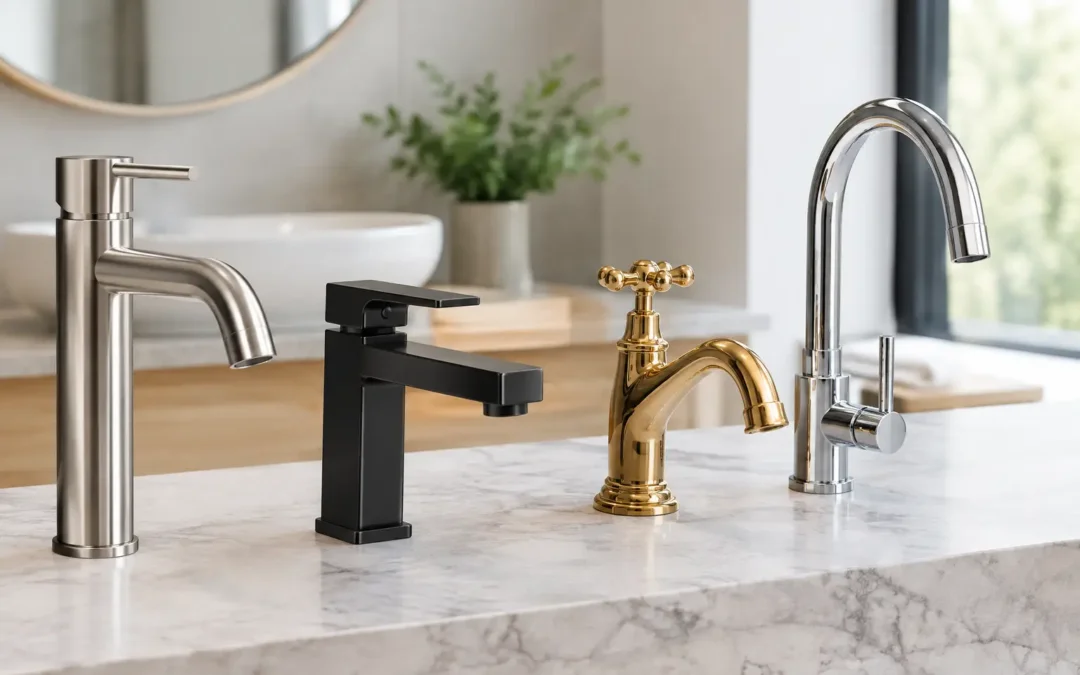
Chrome remains popular for good reason. It is versatile, reflective, widely available and sits comfortably with most bathroom styles. It can show water marks, particularly in hard-water areas, but regular wiping keeps it looking smart.
Brushed nickel, brushed brass, black and bronze finishes can give a bathroom more depth and personality. They are especially effective when the finish is repeated on shower controls, wastes, towel rails, mirror frames or cabinet handles. However, consistency is not guaranteed simply because two products are described as ‘brass’ or ‘black’. Finishes vary between manufacturers, and even subtle differences can be noticeable when fittings sit close together.
For that reason, choose the principal brassware range first, then coordinate the remaining details around it. Viewing samples in a showroom is valuable because a finish can look very different under bathroom lighting than it does on a screen. Natural light, warm LED lighting and the tone of surrounding tiles all affect the final impression.
Hard water deserves a practical mention. Around Maidstone and much of Kent, limescale can be a regular part of household maintenance. A darker or matt finish may disguise fingerprints better than polished chrome, but it still needs correct care. Avoid abrasive cleaners and follow the manufacturer’s cleaning guidance, particularly on specialist plated finishes. Good-quality brassware and sensible maintenance will always matter more than chasing a finish that promises to be entirely maintenance-free.
Do not overlook the valve and waste
The visible tap is only part of the specification. For concealed shower valves and wall-mounted basin taps, the valve behind the wall is a critical component. Choose a quality valve with accessible servicing arrangements and make sure the trim, controls and outlet configuration suit the way you want to use the shower.
A basin waste also needs to be compatible with the basin. If a basin has an overflow, it usually requires a slotted waste; without an overflow, it needs an unslotted version. It sounds like a small technical point, but the wrong waste can cause problems and delay completion.
Think, too, about whether a click-clack waste, traditional plug and chain, or concealed waste control suits the design and user. In an accessible bathroom or a household with young children, easy operation may be more valuable than a particular visual detail.
Set the budget where it matters most
Bathroom taps are available at very different price points. The least expensive option can be tempting when there are tiles, furniture, lighting and labour to fund, but brassware is not a category where buying purely on appearance is wise. Internal components, cartridge quality, warranty support, finish durability and the availability of spare parts all influence long-term value.
This does not mean the most expensive tap is always right. A well-made, appropriately specified tap from a reliable supplier is often a better investment than a statement design with features you will never use. A guest cloakroom may justify a simpler tap, while the main family bathroom benefits from durable controls that will be used repeatedly every day.
When comparing quotations, make sure you are comparing like for like. The apparent price of a tap may exclude the waste, valve, mounting kit or required accessories. For wall-mounted and freestanding options, the concealed components can be a significant part of the total. Clear product schedules avoid unpleasant surprises later in the project.
See and test your choices before committing
Photographs are helpful for inspiration, but they cannot tell you how a handle feels, how high a spout appears in person or whether a brushed finish works beside your chosen tile. Visiting a bathroom showroom gives you the chance to compare proportions, operate the controls and see coordinated products together.
At MBK Design Studio, the most successful bathroom selections are usually made when the brassware is considered as part of the complete design, not chosen in isolation. With experience drawn from thousands of completed projects, the focus is on balancing the look you want with the practical realities of your home, budget and daily routine.
Bring measurements, photographs of the existing room and any tile or paint samples to your appointment. A few well-considered decisions at this stage can protect the finish, function and enjoyment of your bathroom for many years. Choose the tap that feels right for your space, but make sure it is also built and specified to earn that place every single day.