
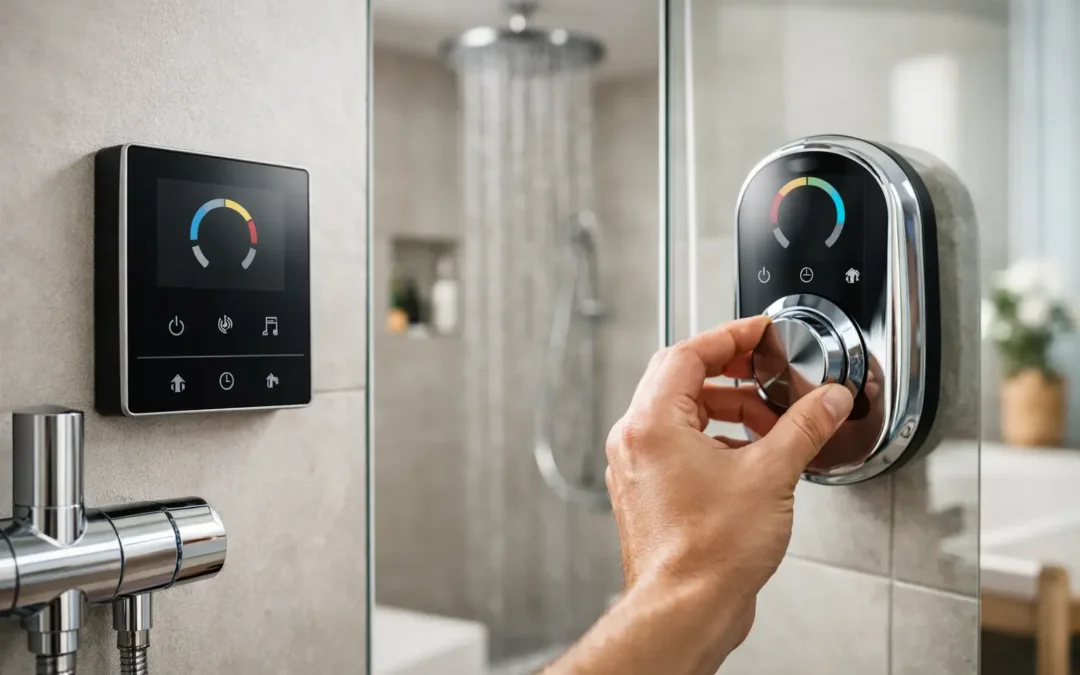
The difference is usually felt at 7am, not in a showroom. When two people need the bathroom, the water pressure varies and everyone has a preferred temperature, a digital shower can make the daily routine calmer and more predictable. This digital shower comparison looks beyond the appealing control panel to help you decide whether the technology suits your bathroom, household and budget.
A digital shower is not automatically the right answer for every refurbishment. It can offer excellent temperature control, flexible positioning and a particularly clean look, but the best result depends on the water system behind the walls, the chosen showering experience and how the room is planned from the outset.
Digital shower comparison: what is actually different?
A conventional thermostatic mixer shower mixes hot and cold water at the valve, using a mechanical thermostat to maintain the chosen temperature. A digital shower uses an electronic control and a digital valve, which may be located away from the visible shower controls. You select temperature and flow from a compact controller, then the valve manages the water supply.
This arrangement can be valuable where visual simplicity matters. The shower controls can sit within easy reach, while the main valve may be concealed in a loft space, airing cupboard or suitable service area. It can also make it easier to have controls outside the showering area, so the water can be started before stepping in.
The description can be confusing because products vary. Some use a wired controller; some offer wireless controls, remote activation or app-based settings. Others add coloured lights, preset programmes or voice-control compatibility. These features are not equal in day-to-day value. Reliable temperature, suitable flow and straightforward operation should come before novelty.
Controls and everyday convenience
Digital controls are often the strongest reason to choose this type of shower. Many households appreciate being able to set a preferred temperature precisely and return to it each day. A clear display can be easier for children, older users and guests than interpreting an exposed mixer handle.
A remote on/off control can also reduce the chilly wait at the start of a shower. This is especially useful in larger bathrooms where the shower enclosure is set away from the entrance, or where a walk-in shower has been designed with a generous open layout.
However, consider who will use it. A simple control with clear buttons is usually a better long-term choice than a feature-heavy interface. Touch controls may look refined, but they should be responsive with wet hands and intuitive without a manual. If anyone in the household prefers familiar mechanical controls, a high-quality thermostatic shower may feel more comfortable.
The look of the room
Because the valve can often be positioned remotely, a digital shower can support a pared-back scheme with a slim controller, ceiling-fed head and separate handset. This is particularly effective in contemporary bathrooms where uninterrupted tiling and clean lines are part of the design.
That said, concealed does not mean maintenance-free. Access to the valve and associated components must be considered during the design stage. A beautifully tiled wall should never leave essential equipment impossible to service later. Good bathroom planning accounts for the parts you see and the parts you do not.
Water pressure and system compatibility
The most important part of a digital shower comparison is compatibility with your existing hot-water system. A shower can only perform as well as the water supply allows.
Homes with a combi boiler, an unvented cylinder or a gravity-fed system have different pressure and flow characteristics. Some digital showers are designed for high-pressure supplies, while others are made for pumped or low-pressure arrangements. Choosing the wrong version can lead to disappointing flow, unstable performance or avoidable additional work.
Before choosing a model, establish the type of boiler or cylinder you have, the available pressure, the incoming mains flow rate and whether other outlets are likely to run at the same time. A large drencher head may look impressive, but it needs enough water to deliver the experience promised. In a busy family home, a shower that remains enjoyable while someone uses a basin tap or runs a bath is more useful than an oversized head on a marginal supply.
There is also a practical question of location. The digital valve needs a suitable, accessible place with the required power supply and pipe runs. In some properties this is straightforward; in others, routing services through floors, ceilings or solid walls affects the scope and cost of the project. This is why product selection should follow a proper survey and bathroom layout, rather than being based on appearance alone.
Flow, water use and running costs
Digital does not necessarily mean more economical. A digital controller can help by making temperature selection more accurate and reducing the time spent adjusting the controls. Some products also offer timed settings or flow options. But total water use still comes down to the flow rate, shower head and length of each shower.
A wide rainfall head can use a considerable volume of water, particularly when paired with a powerful supply. For many homeowners, the best compromise is a quality main head for the everyday shower, combined with a handset for rinsing, cleaning and more focused use. If water efficiency is a priority, look for a configuration that delivers a satisfying spray without simply maximising litres per minute.
Hot-water demand matters too. A family bathroom may need more stored hot water or stronger boiler performance if several longer showers are expected each morning. It is sensible to discuss this early, particularly when replacing a bath with a large walk-in shower. The new arrangement can alter how the household uses hot water.
Reliability, servicing and power
A thermostatic mixer is mechanically simple and has a long-established reputation for dependable operation. A digital shower introduces electronics, a control unit and usually a power connection, so there are more components to consider over its lifetime.
That does not make it unreliable. Well-chosen products from established manufacturers can provide years of excellent service. It does mean that access, warranty terms, spare-part availability and local support are worth discussing before committing. In hard-water parts of Kent, limescale management is also relevant for any shower. Regular cleaning of heads and handsets will help preserve spray quality, whichever technology you select.
A power cut may affect a digital shower, depending on the product and how it is configured. For most households this is an occasional inconvenience rather than a deciding factor, but it is a genuine trade-off. Those who prefer the simplest possible system may favour a thermostatic mixer. Those who value precision and preset control may find the electronic option well worth it.
Cost: where the budget really goes
Digital showers generally cost more than a comparable exposed thermostatic mixer, and the difference is not limited to the visible controller. The valve, power provision, plumbing layout, compatible shower heads and access requirements can all affect the final figure.
The bathroom itself also influences the budget. Moving a shower position, creating a stud wall, fitting large-format tiles, adding a recessed niche or building a low-profile walk-in enclosure can cost more than the shower technology. A digital shower may be the right finishing element in a carefully planned room, but it should not consume funds needed for waterproofing, ventilation, quality brassware and durable furniture.
It is worth being honest about priorities. If your existing shower pressure is poor, spending on the correct water-system solution will usually bring more benefit than choosing the most sophisticated controller. If the supply is already strong and the bathroom is being fully refurbished, digital controls can add genuine comfort and visual refinement.
Choosing the right option for your bathroom
Choose a digital shower when precise settings, a minimal visual finish and convenient controls are high on your list, and your water system can support the selected model. It is particularly well suited to households with regular shower routines, accessible-bathroom considerations or a desire to start the shower before entering the enclosure.
Choose a thermostatic mixer when you want excellent temperature safety and performance with fewer electronic components, or when the project budget is focused on other parts of the room. A well-specified thermostatic shower is far from a compromise and can be an excellent choice for both traditional and contemporary bathrooms.
At MBK Design Studio, the most successful bathrooms begin with how people actually live, not with a single product choice. Bring your shower routine, water-system details and wish list into the conversation early. The right shower should feel effortless every morning, while still making sense behind the walls and within the wider investment in your home.