
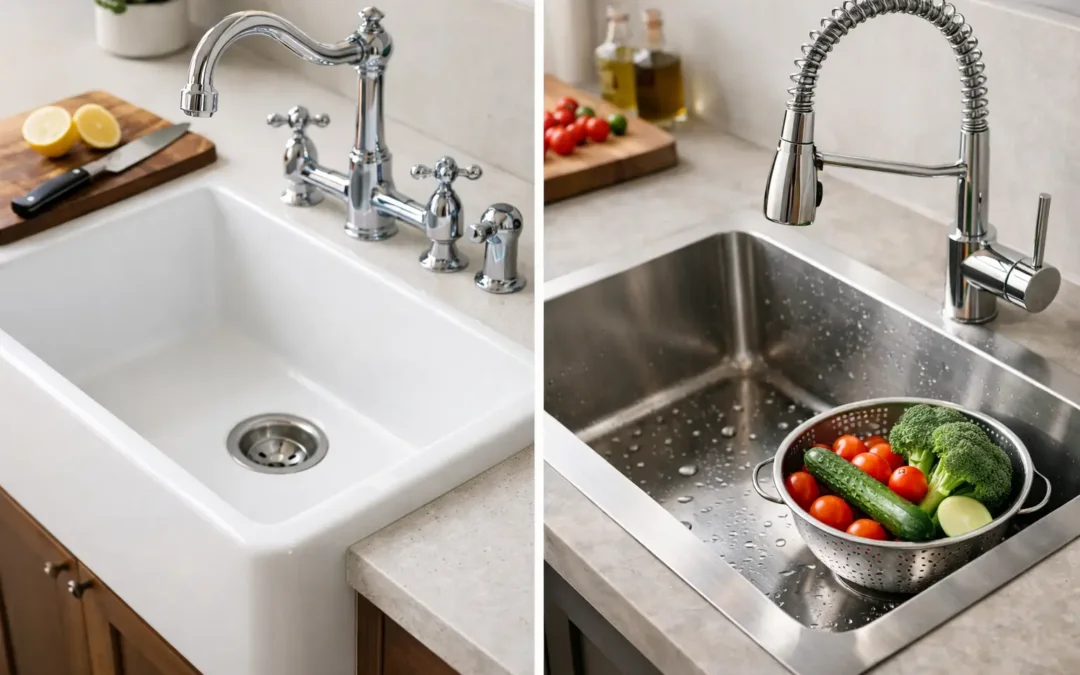
The sink is one of the hardest-working items in a kitchen, yet it is often chosen after the worktop, cabinetry and appliances. A ceramic sink vs stainless steel decision deserves more thought than a quick choice based on colour. It affects how your kitchen looks, how easily it cleans, the noise it makes during busy family mealtimes and, importantly, how well it suits the way you live.
For some homeowners, a deep white ceramic Belfast sink is the finishing touch in a traditional kitchen. For others, a clean-lined stainless steel undermount sink makes a modern worktop feel uncluttered and practical. Neither is automatically better. The right choice depends on your kitchen design, household routine, budget and appetite for maintenance.
Ceramic sink vs stainless steel: the essential differences
Ceramic sinks are generally made from fireclay or glazed ceramic, fired at very high temperatures to create a hard, smooth surface. They are substantial, visually distinctive and available in styles ranging from classic Belfast and butler sinks to more streamlined inset designs.
Stainless steel sinks are lighter, more adaptable and widely used in contemporary kitchens. They can be inset into the worktop, fitted beneath it for a flush finish, or incorporated into a worktop with drainer grooves. Their neutral metallic finish works particularly well with modern cabinetry, timber, stone and darker worktops.
The key distinction is not simply traditional versus modern. Ceramic creates a more prominent feature, while stainless steel can either be a deliberate design detail or fade discreetly into the wider scheme.
Appearance and kitchen style
A ceramic sink has visual weight. A white Belfast sink paired with shaker cabinetry, brass taps and a timber or stone-effect worktop can give a kitchen a warm, established character. It also works beautifully in country, period and farmhouse-inspired homes, which are common across Kent villages and older properties.
That said, ceramic does not have to look old-fashioned. A simple rectangular ceramic sink with crisp edges can sit comfortably in a contemporary kitchen, especially when used with handleless cabinetry or a pared-back tap design. The important consideration is proportion. A large apron-front sink makes a statement, so it needs enough surrounding worktop and cabinetry to support it visually.
Stainless steel is the more flexible option when the kitchen has a modern or architectural feel. It complements quartz, granite and solid surface worktops, and its reflective quality can lift darker colour schemes. An undermount stainless steel sink is especially popular where homeowners want the worktop, rather than the sink itself, to be the focal point.
If you enjoy a kitchen that feels softer and more decorative, ceramic is often the more satisfying choice. If you prefer clean lines and a less fussy finish, stainless steel is likely to suit you better.
Durability in everyday family life
Both materials are durable, but they respond differently to knocks, heat and heavy use.
Ceramic has a tough glazed finish that resists staining well and does not scratch as easily as many people expect. It is also highly resistant to heat, so hot pans and roasting tins are less of a concern than they are with some composite materials. However, ceramic is not indestructible. A dropped cast-iron pan, heavy cookware or sharp impact can chip or crack the surface. Repairs may be possible for small chips, but they are not always invisible.
A ceramic sink is also significantly heavier. This matters during installation because the base cabinet must be suitable and properly supported. A large Belfast sink may require a purpose-built cabinet and careful coordination between the kitchen fitter, worktop supplier and plumber. It is a detail best resolved during the design stage, rather than once cabinets have been delivered.
Stainless steel is exceptionally forgiving when it comes to impact. It will not crack if a pan is dropped into it, making it a sensible choice for busy kitchens, utility rooms and households that put their sink through constant use. It can scratch, particularly when new, but fine scratches tend to blend into the finish over time. A good-quality sink with a thicker steel gauge will feel sturdier, flex less and generally offer better sound insulation.
For pure resistance to accidental impacts, stainless steel has the advantage. For a hard-wearing, stain-resistant surface that stays looking refined with considerate use, ceramic performs extremely well.
Consider the tap and accessories too
The sink should not be selected in isolation. A heavy ceramic bowl paired with a tall pull-out spray tap may need more clearance behind it, especially beneath a window. Stainless steel sinks can be easier to match with integrated accessories such as colanders, chopping boards and drainer trays.
It is also worth considering the tap finish. Chrome and brushed steel are easy partners for stainless steel, while ceramic can take chrome, antique brass, brushed brass or darker finishes depending on the wider kitchen scheme. Choosing these elements together produces a more considered result.
Cleaning, water marks and maintenance
Ceramic is usually straightforward to keep clean. Its smooth glaze means food residue and everyday marks wipe away easily with warm water, washing-up liquid and a soft cloth. It is a particularly good option for people who dislike the appearance of fingerprints and water spotting.
The main caution is to avoid abrasive scourers and harsh chemicals, which can dull the glaze over time. Tea, coffee and strongly coloured foods should not normally stain a quality ceramic sink if wiped away promptly, although regular cleaning remains important around the waste and overflow.
Stainless steel needs little specialist care, but it shows water marks more readily, particularly in hard-water areas. In and around Maidstone, limescale can leave a cloudy finish if water is allowed to dry on the surface. Wiping the sink dry after use will keep it looking brighter, and a non-abrasive stainless steel cleaner can restore its finish when needed.
Avoid leaving wet cloths, cans or cast-iron cookware in a stainless steel sink for long periods. These can cause surface marks or, occasionally, rust-coloured staining from transferred particles. This is not usually corrosion of the sink itself, but it can be frustrating if you expect a permanently spotless appearance.
If your priority is a sink that conceals everyday water marks, ceramic is usually easier to live with. If you are happy to give the sink a quick wipe after washing up, stainless steel remains a very practical choice.
Noise and comfort when using the sink
This is a small detail that can make a noticeable difference. Ceramic naturally absorbs sound, so running water, cutlery and crockery are quieter. It has a solid, reassuring feel that many homeowners value in an open-plan kitchen where the sink is used while others are relaxing or working nearby.
Stainless steel can be noisier, especially in thinner and lower-cost models. Better-quality sinks often include sound-deadening pads or coatings beneath the bowl, which reduce the metallic echo of water and dishes. If you are considering stainless steel, ask about the material thickness and acoustic treatment rather than judging by appearance alone.
Cost and installation considerations
Purchase price is only one part of the comparison. Entry-level stainless steel sinks can be very affordable, while premium undermount designs, larger bowls and integrated drainers can increase the cost considerably. Ceramic sinks also vary widely, with traditional Belfast styles and high-quality branded models typically costing more than a basic inset option.
Installation can be the deciding factor. An inset stainless steel sink is often comparatively simple to fit into laminate, timber or stone worktops. Undermount stainless steel requires accurate fabrication and proper sealing, particularly with natural stone, quartz or solid surfaces.
Ceramic sinks may involve additional cabinet support, bespoke sizing and more careful handling because of their weight. If you are replacing a sink rather than renovating the whole kitchen, check the existing cabinet dimensions, worktop cut-out and plumbing arrangement before falling in love with a particular model.
A well-planned kitchen budget should account for the sink, tap, waste kit, plumbing alterations, worktop fabrication and installation together. This avoids a seemingly affordable sink becoming an unexpected extra later in the project.
Which sink is right for your kitchen?
Choose ceramic if you want a strong design feature, prefer a quieter sink and like the timeless appeal of a glazed finish. It is particularly well suited to traditional, shaker and classic kitchens, although modern ceramic styles can work just as well in a more contemporary scheme. Be prepared for the additional weight and take care with heavy cookware.
Choose stainless steel if you want a durable, adaptable and low-risk option for a hard-working kitchen. It is an excellent fit for contemporary layouts, utility spaces and busy family homes, particularly where an undermount installation will create a clean worktop line. Opt for a thicker, sound-insulated model if feel and noise matter to you.
The most successful choice is the one that works with the cabinet layout, worktop material and daily routine, rather than simply following a trend. At MBK Design, these practical details are considered alongside the finishes you see in the showroom, helping turn a kitchen idea into a space that remains enjoyable long after installation day.
Before making your final decision, place a sample of your worktop next to the sink and tap finish, then imagine the washing-up after a Sunday roast, not just the first photograph. That small test often makes the right material clear.