A kitchen can look beautiful in a brochure and still frustrate you every single day. The reason is usually not the door style or worktop finish. It is the layout. If you are working out how to plan a kitchen layout, the real goal is not simply fitting units into a room. It is creating a space that feels easy to use, comfortable to move around in and practical for the way your household lives.
That sounds straightforward, but good kitchen planning is full of small decisions that affect the end result. Where the fridge sits, how far the sink is from the hob, whether an island is genuinely useful or simply takes up space – these choices shape how the room performs for years.
How to plan a kitchen layout around daily life
The best layouts begin with habits, not catalogues. Before choosing cabinets or colours, think about how the kitchen is actually used. Some households need space for two people to cook at once. Others need a family-friendly room where children can do homework while dinner is prepared. Some want a calm entertaining space with seating and sightlines into the garden. Others simply want better storage and less clutter.
This is where many costly mistakes begin. Homeowners often focus first on appearance, then try to make the room work afterwards. In practice, the sequence should be reversed. If the layout supports your routine, the design choices become much easier.
Start by asking simple questions. Do you cook from scratch most evenings, or is the kitchen used more lightly? Do you need space for small appliances to stay out? Is a dining table essential, or would a breakfast bar suit you better? Do you need wider walkways for ease of movement? These details help shape the room far more effectively than following trends.
Measure the room properly before planning anything else
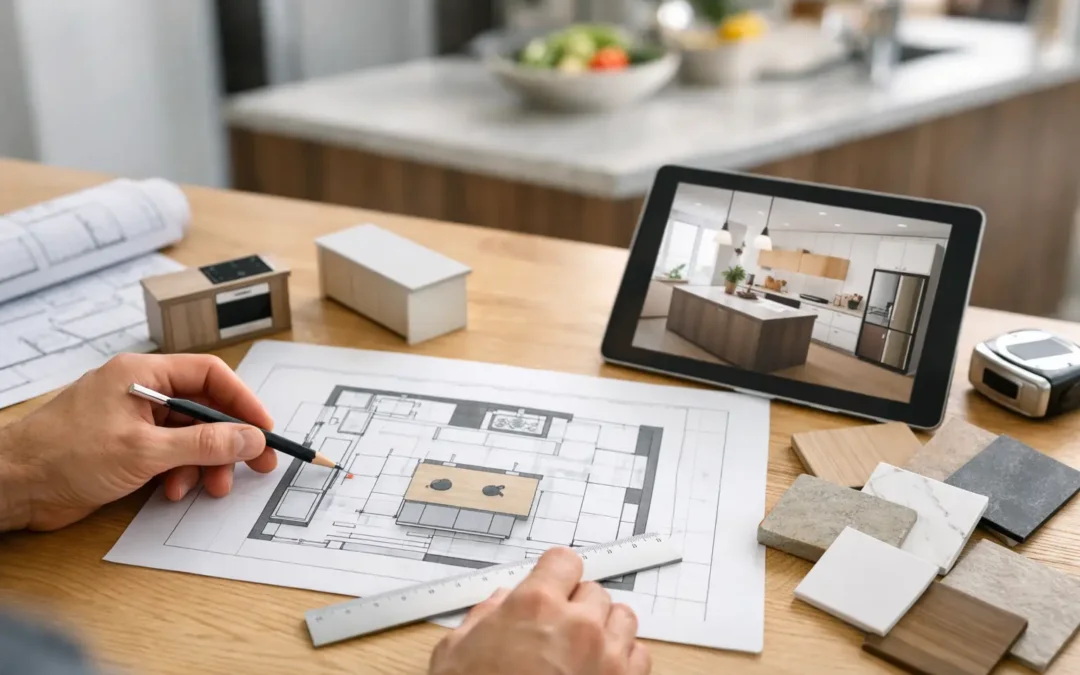
It is difficult to make good design decisions from rough guesses. Accurate measurements are the foundation of a workable plan, especially in older homes where walls may not be perfectly square and ceiling heights can vary.
Record the full room dimensions, then note the position of doors, windows, radiators, soil pipes, electrical points and any structural features. Ceiling height matters too, particularly if you are considering tall cabinetry or want to maximise storage. If there are awkward corners, chimney breasts or sloping ceilings, those need to be factored in early.
It is also worth identifying what can move and what probably should not. Relocating plumbing, gas or drainage can be possible, but it may affect cost and timeline. That does not mean you should avoid changes. It simply means layout decisions need to be made with clear expectations.
Choose the right layout for the shape of the room
There is no single best kitchen layout. The right option depends on the room size, the building itself and how you want the space to function.
A galley kitchen can work extremely well in narrower rooms because everything sits within easy reach. It is efficient, but it needs good circulation and enough width to avoid feeling cramped. An L-shaped layout often suits open-plan homes and gives flexibility for dining or island seating. A U-shaped kitchen offers strong storage and worktop space, though it can feel enclosed if the room is tight.
Straight-line kitchens are common in smaller homes or open-plan spaces where the kitchen needs to feel visually quiet. They can look sleek, but careful planning is essential to avoid losing prep space. Island layouts are popular, and for good reason, but only when the room is large enough. An island should improve the kitchen, not interrupt movement.
Peninsulas can be a smart alternative when an island will not fit. They provide some of the same benefits, such as additional storage and informal seating, while using less floor space.
Think in terms of movement, not just furniture
One of the most useful principles in kitchen planning is the relationship between the sink, hob and fridge. You may hear this called the working triangle. While modern kitchens do not always follow it rigidly, the idea remains helpful. These are the areas used most often, so the distances between them should feel natural.
If they are too far apart, cooking becomes tiring and inefficient. If they are too close together, the room can feel crowded, especially when more than one person is using it. A good layout allows easy movement between food storage, preparation and cooking without awkward detours.
That said, real kitchens are not showrooms. A family kitchen may need wider routes through the space, safer separation between cooking zones and seating, or room for someone to unload shopping without blocking the main work area. Practical planning always beats rigid rules.
Prioritise worktop space where it matters most
Many people underestimate how much clear worktop area they need. A kitchen may appear to have plenty of surface space on a plan, but once the kettle, toaster, coffee machine and chopping boards are in place, it can quickly feel limited.
The most useful prep space is usually between the sink and hob. That is where a lot of day-to-day cooking happens. If possible, allow generous room there. Landing space beside the oven, fridge and sink is equally valuable. Even a small section of usable surface in the right place can make the kitchen feel more practical.
This is often where layout compromises become obvious. A larger island might look appealing, but not if it reduces the main prep run or makes circulation awkward. In the same way, extra tall units can be helpful, but not if they dominate the room and leave nowhere for the eye to rest.
Storage should match what you actually own
Good storage is not about fitting in the maximum number of cupboards. It is about creating the right kind of storage for your cookware, food, crockery and small appliances.
Deep pan drawers are often more practical than standard base cupboards because they make access easier and reduce wasted space at the back. Tall larder units can be excellent for food storage, but they need the right position so they do not interrupt the flow of the room. Corner solutions can help, although some add cost without delivering enough benefit. It depends on the cabinet size and what you need to store.
Wall units can increase storage significantly, but too many can make a room feel heavy. In some kitchens, a mix of closed storage and more open visual space creates a better balance. This is particularly true if the room has limited natural light.
Lighting, appliances and services all affect the layout
A kitchen layout is never only about cabinets. Lighting, extraction, power points and appliance placement all shape how successful the room will be.
Think carefully about where your ovens, dishwasher and fridge freezer should go. A built-in oven at a comfortable height may be more convenient than bending to a low single oven. A dishwasher near the sink usually makes daily use easier. If you choose an induction hob on an island, you will need suitable extraction and power planning from the outset.
Lighting needs equal attention. Ceiling lights alone rarely give enough task lighting for food preparation. Under-cabinet lighting, pendant lighting over an island and feature lighting in glazing can all play a part, but they should support the practical use of the room rather than compete for attention.
Budget affects layout choices more than people expect
When homeowners think about budget, they often focus on finishes. In reality, layout changes can have a major effect on cost. Moving a sink across the room, changing window positions or removing walls can transform a kitchen, but they also add complexity.
That does not mean the best layout is always the cheapest one. Sometimes spending more on the right structural or service changes creates a far better result and avoids long-term compromise. Equally, there are many cases where a thoughtful redesign within the existing service positions delivers excellent value.
This is why experienced planning matters. It helps you understand where money is best spent and where it is sensible to hold back.
How to plan a kitchen layout with confidence
If you are still unsure how to plan a kitchen layout, that is entirely normal. Most people renovate a kitchen only once or twice, so there is a lot to weigh up. The key is to avoid making isolated decisions. Layout, storage, appliances, lighting and budget all connect.
A measured plan, professional guidance and clear understanding of your priorities can save a great deal of stress later. For homeowners investing seriously in their property, especially in older homes around Maidstone and the wider Kent area, that joined-up thinking often makes the difference between a kitchen that merely looks good and one that genuinely improves daily life.
The most successful kitchens are not the ones that follow every trend. They are the ones that feel right the moment you start using them, and continue to do so long after the renovation dust has settled.