
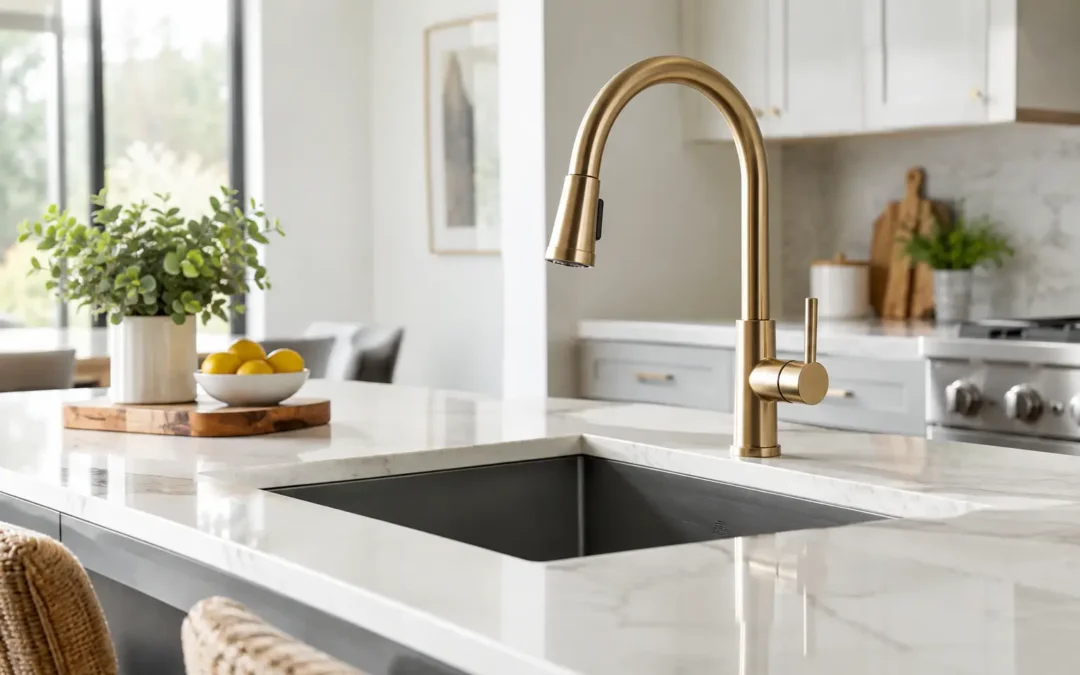
A kitchen island sink can become the most-used spot in the room: where vegetables are rinsed, pans are filled, flowers are arranged and glasses are topped up when guests arrive. That is why choosing the best taps for kitchen islands is about more than finding a finish you like. The tap needs to suit the way your household really uses the kitchen, while looking considered from every angle.
Unlike a tap against a wall, an island tap is on display. It may be visible from the dining area or sitting room, so proportion, spout shape and finish carry more visual weight. At the same time, it must be practical enough for everyday cooking, cleaning and family life.
Start with the island’s purpose
Before choosing a tap, decide what the island sink is there to do. In some kitchens it is the main washing-up sink, used constantly throughout the day. In others, it is a smaller preparation sink that supports the main sink elsewhere in the room. Those two arrangements call for very different choices.
For a primary sink, a full-size mixer tap with a generous spout and a pull-out spray is often the most useful option. It makes rinsing large pans and cleaning the sink easier, particularly if the island includes a wide or deep bowl. A preparation sink can accommodate a more compact tap, provided it still gives enough clearance for filling a kettle or washing produce.
Think about who uses the kitchen, too. A keen cook may value a flexible spray function, while a household that entertains regularly may prefer the instant convenience of a boiling-water tap. There is no single right answer. A good kitchen design begins with honest conversations about routines rather than selecting fittings in isolation.
The best taps for kitchen islands by kitchen style
Pull-out and pull-down spray taps
For busy contemporary kitchens, a pull-out or pull-down spray tap is one of the strongest all-round choices. The hose allows you to direct water exactly where it is needed, making light work of rinsing awkward cookware, washing salad leaves and clearing residue from the corners of the bowl.
A pull-out spout generally draws forward, while a pull-down model extends downwards from a taller, arched spout. Either can work beautifully on an island, but proportions matter. A high pull-down tap creates a striking focal point above a large undermounted sink, whereas a pull-out design can feel more restrained where sightlines across the room need to stay open.
Check the hose movement and the weight of the spray head in a showroom. It should return smoothly to its holder and feel balanced in the hand. This is one of those details that can make a noticeable difference after months of daily use.
Single-lever mixer taps
A single-lever mixer is a dependable choice for almost any island. Temperature and flow are controlled with one handle, which is convenient when your hands are full or messy. The simplicity of the form also works well in both modern and transitional kitchens.
Look at the spout projection, not simply its height. Water should land comfortably towards the centre of the bowl, rather than splashing against the back or front edge. A beautifully designed tap that does not reach far enough soon becomes frustrating.
For an island that is intended to feel calm and uncluttered, a well-proportioned mixer tap can be more effective than a feature-rich model. It offers everyday reliability without turning the sink area into a visual distraction.
Boiling-water taps
Boiling-water taps have become a popular consideration for kitchen islands, particularly in homes where the island is the centre of cooking and socialising. They can provide filtered chilled, sparkling or near-boiling water depending on the system selected, reducing the need for a kettle to sit on the worktop.
The convenience is considerable, but this option needs careful planning. The cabinet beneath the sink must have sufficient space for the system components, and the chosen model must be compatible with the available water pressure and electrical provision. A boiling-water tap can be a very worthwhile investment, but it is not automatically the best choice for every household.
For families, safety features such as child-safe handles and insulated spouts deserve particular attention. It is also worth considering whether the tap will be the only source of hot and cold water at the sink, or whether a separate mixer is preferred. The answer often depends on the desired look as much as the budget.
Traditional bridge and classic mixer taps
An island in a Shaker, country or more traditional kitchen often benefits from a bridge tap or classic twin-lever mixer. These designs bring character and detail without feeling overly decorative, especially when paired with natural timber, painted cabinetry or a stone worktop.
The trade-off is that traditional taps can have more visible joins and detailing to clean. This need not be a problem, but it is sensible to choose a finish that suits the amount of maintenance you are happy to undertake. A classic chrome finish is forgiving and timeless, while aged brass or brushed bronze creates warmth but may develop a natural patina over time.
Height, reach and sightlines matter
A tap that looks perfect on a display can feel too tall once it is placed on a central island. Consider where people will stand, sit and look across the kitchen. If the island faces a dining table or open-plan living area, a very high spout can interrupt views across the room.
That does not mean every island needs a low tap. Taller spouts are excellent for filling stockpots and can create an elegant centrepiece over a substantial sink. The key is to balance the tap with the sink size, worktop depth and surrounding furniture. A wide island with a large bowl can carry more scale than a compact peninsula or narrow breakfast bar.
Positioning is equally important. A tap located too near the edge of the worktop may encourage splashing, while one placed too far back can make the sink awkward to use. The sink, tap and waste arrangement should be considered together early in the design process, rather than treated as separate decisions.
Choose a finish for real life, not just the photograph
Chrome remains popular because it reflects light, suits most appliances and is straightforward to keep looking smart. Brushed nickel and stainless-steel finishes offer a softer alternative and can disguise fingerprints better than highly polished surfaces. For a bolder statement, matt black, brass and bronze taps can provide contrast against pale stone or painted cabinetry.
However, fashionable finishes should be chosen with care. Matt black can show dried water marks in hard-water areas, while unlacquered brass will change naturally as it ages. Neither is inherently a disadvantage, but homeowners should know what to expect before committing.
In Kent, limescale is a practical consideration for many homes. Regular wiping after use and sensible cleaning products will help preserve the finish. Avoid abrasive pads or harsh chemicals, particularly on specialist coatings, as they can dull the surface or damage protective layers.
Do not overlook water pressure and cabinet space
The most attractive tap in the showroom will not perform as intended if it does not suit the property’s water pressure. Some taps are designed to work well at lower pressures, while others need a stronger supply for a satisfying flow and spray function. This is particularly relevant in older homes, where plumbing arrangements can vary.
If you are considering a boiling-water or filtered-water tap, allow for the equipment beneath the sink as well as everyday storage. The space may also need to accommodate bins, cleaning products or a water treatment system. A thoughtfully planned island cabinet avoids the common disappointment of losing more storage than expected.
A considered choice pays off every day
The best island tap is rarely the one with the most functions or the boldest finish. It is the one that feels right for the sink, performs well with your water supply and complements the kitchen as a whole. It should make small everyday tasks easier while adding a finish you will still enjoy years from now.
At MBK Design Studio, we find that seeing taps alongside cabinetry, worktops and sinks helps homeowners make decisions with far greater confidence. A tap may be a relatively small part of a kitchen renovation, but when it is positioned at the heart of the room, choosing it well makes every day feel that little bit more considered.