
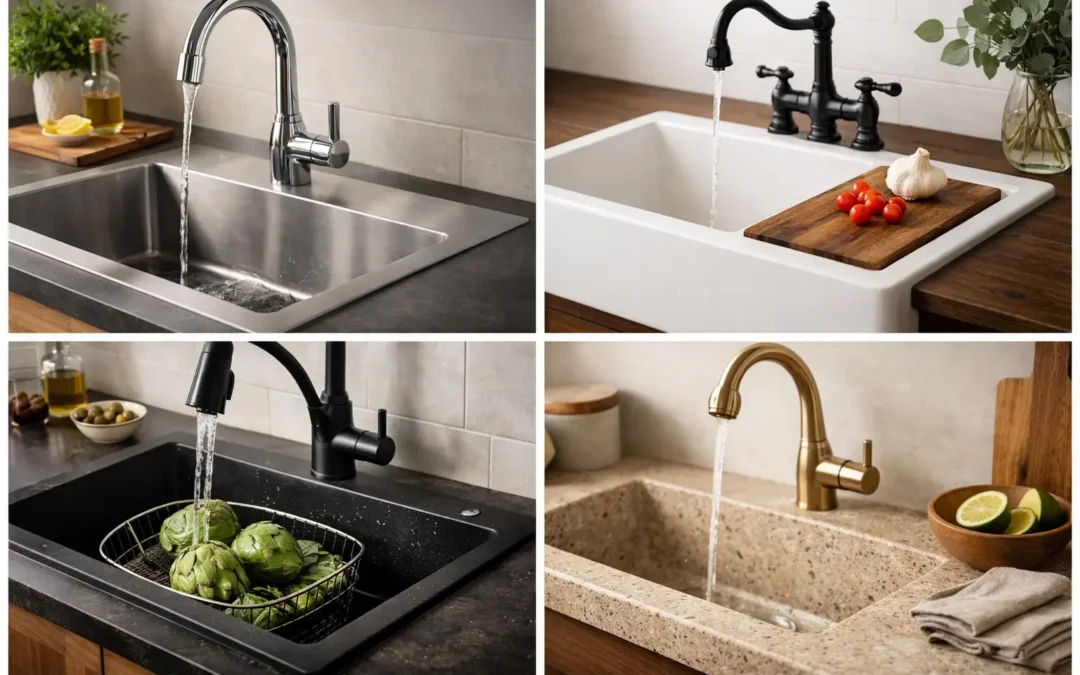
A kitchen sink has a harder working life than most people realise. It deals with hot pans, heavy cookware, sharp cutlery, food stains and countless daily washes, all while sitting at the centre of the room’s design. The best kitchen sink materials are not simply those that look good in a showroom. They are the ones that suit how you cook, clean and use your kitchen over many years.
For a busy family kitchen in Maidstone or the wider Kent area, practicality may lead the decision. In a quieter, design-led space, colour, texture and the way the sink works with the worktop might carry more weight. There is no single right answer, but understanding the trade-offs will help you choose with confidence.
What to consider before choosing a sink material
Start with the way your kitchen is used rather than the finish you first admire. A household that regularly stacks roasting tins and large pans in the sink needs something highly resistant to impact. If you prefer a calm, traditional kitchen, the visual weight of a deep ceramic sink may be exactly what the room needs.
The worktop also matters. A dark composite sink can create a considered, continuous look alongside darker quartz or matt cabinetry, while stainless steel can bring a lighter, more professional character to stone, laminate or timber surfaces. Consider the tap finish at the same time. Matching is not essential, but the combination should look intentional.
Maintenance is the other honest consideration. Every material needs cleaning, but some are more forgiving of water marks, scratches and everyday marks than others. Choosing a sink that fits your appetite for upkeep is usually wiser than choosing one based on appearance alone.
Best kitchen sink materials compared
Stainless steel: practical, versatile and proven
Stainless steel remains one of the most popular choices for good reason. It is heat resistant, hygienic, relatively lightweight and available in an enormous range of sizes and configurations. From a compact single bowl for a smaller kitchen to a generous undermounted model with a second bowl and drainer, it works in contemporary and more functional kitchen schemes.
It is also a sensible choice for households that use the kitchen hard. Stainless steel will not crack if a heavy pan is dropped into it, and it does not object to very hot water. Fine scratches and water marks will develop, particularly on a polished surface, but these generally become less noticeable as the finish gains an even patina.
The main differences in quality come down to steel grade, thickness and sound insulation. Cheaper sinks can feel thin and amplify the sound of running water or crockery. A better-quality sink with a brushed finish and sound-deadening pads is a worthwhile investment in a kitchen designed for daily life.
Granite composite: strong colour and contemporary appeal
Granite composite sinks are made from crushed stone combined with resin. They offer a substantial feel, a lightly textured surface and colours that range from black and graphite through to grey, cream and softer neutral tones. This makes them a strong option when you want the sink to complement the cabinetry rather than stand apart from it.
Their resistance to scratching and everyday impacts is excellent, and many homeowners appreciate that they do not show minor marks in the same way as stainless steel. A dark granite composite sink can be particularly effective in a modern kitchen with handleless furniture or a darker worktop.
There are, however, practical points to weigh up. Composite sinks are heavy, so the cabinet beneath needs suitable support. Very hard water can leave a pale film, particularly on dark finishes, and lighter colours may need prompt cleaning after strongly coloured foods or drinks. Good routine care keeps them looking smart, but they are not entirely maintenance-free.
Ceramic: the natural choice for traditional kitchens
Ceramic sinks, often seen as Belfast, butler or farmhouse styles, have enduring appeal. Their glossy finish brings brightness and character to a room, especially in a Shaker, painted or classically detailed kitchen. A large ceramic sink also provides a genuinely useful deep bowl for washing cookware, flower vases and baking trays.
Quality ceramic is resistant to stains, heat and fading. It is easy to wipe clean and retains its colour well, which explains why it remains a favourite in traditional kitchen design. It can also create a pleasing contrast against timber worktops, natural stone and richly coloured cabinetry.
The trade-off is weight and vulnerability to a severe impact. While the glazed surface is tough, a dropped cast-iron pan or heavy object can chip it. Ceramic sinks are also less visually discreet than an undermounted steel or composite option, which is ideal if you want the sink to be a feature but less suitable if you want the worktop to take centre stage.
Fireclay: handmade character with a premium feel
Fireclay is a type of ceramic fired at very high temperatures. It is most commonly used for traditional apron-front sinks, and it offers an especially dense, hard-wearing finish. The material suits kitchens where craftsmanship, proportion and period character are central to the scheme.
A fireclay sink can stand up to heat, staining and day-to-day use very well. It has a depth and presence that mass-produced alternatives often cannot replicate. That said, it is usually a higher-cost choice, it is heavy, and it needs careful specification early in the design process because the cabinetry and worktop arrangement must accommodate it precisely.
For a heritage property or a carefully designed country kitchen, these considerations are often justified. For a compact, minimalist kitchen, a less visually dominant material may make better use of the space.
Enamelled cast iron: glossy and substantial
Enamelled cast-iron sinks offer a deep gloss and reassuring solidity. They can work beautifully in both traditional and certain modern kitchens, particularly where a rich colour or a bold statement is wanted. The enamel surface is smooth, hygienic and easy to clean.
Their drawbacks are similar to ceramic, with added weight. They require a properly planned cabinet base, and the enamel can chip if subjected to a sharp, heavy blow. A chip should be addressed promptly, as the exposed metal beneath can be susceptible to rust. This is a material chosen primarily for its distinctive appearance and substantial quality rather than for the lowest-maintenance route.
Undermounted or inset: the material changes the decision
Sink material and sink style should be chosen together. An undermounted sink sits beneath the worktop, creating a clean edge that makes wiping crumbs and spills straight into the bowl much easier. This style is particularly effective with quartz, granite and solid-surface worktops, and is commonly paired with stainless steel or granite composite.
An inset sink has a visible rim resting on the worktop. It is more flexible across worktop types and can be a practical solution with laminate. Belfast, butler and many ceramic models usually need a more tailored arrangement, often projecting slightly beyond the cabinet front. These details affect both appearance and cost, which is why the sink should never be treated as a last-minute accessory.
How to choose the right material for your household
If low-fuss practicality is your priority, a good-quality brushed stainless-steel sink is difficult to beat. It is dependable, adaptable and suited to almost any kitchen style. For a contemporary, coordinated look, granite composite gives more colour choice and a more substantial feel, provided you are comfortable with regular cleaning in hard-water areas.
If your kitchen is intended to feel warm, timeless and characterful, ceramic or fireclay may be the better fit. They bring a presence that stainless steel cannot reproduce, but they ask for more care around heavy cookware and need to be planned properly within the cabinetry.
At MBK Design Studio, sink selection is considered as part of the wider kitchen, alongside the worktop, tap, storage and the way the room will be used. With more than three decades of experience, we know that the best choices are rarely based on one feature alone. They come from balancing the look you want with the realities of everyday life.
A sink is touched more often than almost any other kitchen component. Choose one that feels right every time you turn on the tap, clear the dishes or prepare a meal, and it will continue to earn its place long after the renovation is complete.