A kitchen floor has to cope with far more than a beautiful showroom display suggests. It will meet dropped pans, muddy shoes, a hurried breakfast, pet bowls and the occasional overflowing dishwasher. The best flooring for kitchens is therefore not simply the material you like the look of most. It is the one that suits how your household uses the room, complements the kitchen design and will still feel like a sound decision years from now.
For many homeowners, the right answer comes down to finding a sensible balance between water resistance, durability, comfort, maintenance and budget. There is no single material that wins on every point, but there are several excellent choices when selected and fitted properly.
What the best flooring for kitchens needs to do
Kitchen flooring must work hard in an area where moisture and movement are part of everyday life. A floor needs to withstand splashes and spills without swelling, staining or becoming slippery. It should also cope with chair legs, high footfall and the weight of appliances, while making the kitchen feel connected to adjoining rooms.
Before choosing a finish, consider the layout and the way the space is used. A busy family kitchen with doors opening onto the garden has different demands from a compact kitchen used mainly for cooking. Underfloor heating, the condition of the subfloor and whether the kitchen opens into a dining or living area can all affect which material is most suitable.
Colour matters too, although not always in the way people expect. Very dark floors can show dust, crumbs and water marks, while an extremely pale, plain finish may reveal scuffs. A mid-tone floor with natural variation, grain or a subtle pattern can be a forgiving and attractive choice for daily life.
Porcelain tiles: a durable, design-led option
Porcelain is one of the strongest choices for a long-lasting kitchen floor. It is dense, highly water resistant and available in an enormous range of colours, sizes and finishes. Stone-effect, concrete-effect and wood-effect porcelain can provide the appearance of natural materials with considerably less day-to-day concern.
It is particularly well suited to open-plan kitchens, kitchens with patio or garden access, and homes where durability is the priority. Large-format tiles can create a calm, contemporary look with fewer grout lines, while patterned or smaller tiles can bring character to a traditional kitchen.
The trade-off is comfort. Tile can feel hard underfoot and colder than other materials without underfloor heating. It can also be unforgiving if glassware is dropped. Choosing a suitable slip-resistant finish is essential, especially near sinks and external doors, and a quality installation is vital to avoid uneven edges or cracking caused by poor subfloor preparation.
Luxury vinyl tile: practical without looking ordinary
Luxury vinyl tile, often called LVT, has become a popular option for homeowners who want the appearance of wood or stone with a softer, warmer feel. Modern designs can be remarkably convincing, with realistic grain, texture and tile formats. It works well in both contemporary and classic kitchen schemes.
LVT is comfortable to stand on, quieter than ceramic or porcelain and generally easier on dropped crockery. It is also water resistant, straightforward to clean and available in a wide variety of plank, herringbone and stone-look designs. This makes it a strong contender for households where the kitchen is the centre of family life.
However, not every vinyl product is equal. The wear layer, fitting method and preparation of the subfloor all influence its lifespan and appearance. A floor laid over an uneven surface may show imperfections over time, while cheaper products may not stand up as well to heavy use. For a fitted kitchen project, it is worth selecting a quality LVT and ensuring appliance areas, thresholds and door clearances are planned before installation.
Is LVT suitable for an open-plan kitchen?
Yes, often very much so. Using the same LVT through the kitchen, dining space and adjoining living area can make a ground floor feel larger and more coherent. It is also a practical way to avoid abrupt changes in level between rooms. The key is choosing a design that suits the wider interior, not just the kitchen cabinetry.
Engineered wood: warmth with careful planning
For homeowners who value natural warmth and character, engineered wood can be a beautiful kitchen flooring choice. Unlike solid timber, it is built in layers, which gives it better stability where temperature and humidity change. It can bring a welcoming, considered feel to a kitchen, particularly in period homes or kitchen-diners where continuity with living spaces matters.
That said, wood is not maintenance-free. Spills should be wiped up promptly, and standing water is never ideal. It may also pick up dents and marks over time, although many people consider this part of its appeal. A lacquered finish can offer useful protection, while an oiled floor can be repaired in localised areas more easily, but will need periodic care.
Engineered wood is best for households willing to treat it as a natural material rather than expecting it to behave like tile. It is less suitable immediately inside a heavily used back door or in a kitchen where wet shoes and pet traffic are a constant feature.
Laminate flooring: improved, but choose with care
Laminate has come a long way in appearance and performance. It can offer a wood-look floor at a more accessible price point and is relatively quick to fit. Many current products have convincing textures and are designed with improved water resistance.
The distinction between water resistant and waterproof is important. Even a good laminate floor can be vulnerable if water gets into joints or sits for prolonged periods. It can be a sensible option for a lower-risk kitchen or a renovation where budget is tightly controlled, but it is not normally the first choice for a very busy family kitchen with frequent spills.
If laminate is being considered, look closely at the manufacturer’s guidance for kitchen use, follow the required expansion and sealing details, and do not assume that a water-resistant surface makes every edge immune to moisture.
Natural stone: character that needs commitment
Stone flooring has enduring appeal. Limestone, slate and other natural stones bring texture, tonal variation and a sense of permanence that works especially well in country properties and traditional kitchen designs. Each floor is individual, and the material can develop a pleasing patina over the years.
It also requires an honest understanding of maintenance. Most natural stone needs sealing and occasional resealing to help protect it from stains and moisture. Some stones are more porous or more prone to marking than others, and acidic spills can affect certain finishes. Stone can be ideal for the right property and owner, but it should be chosen for its authenticity as much as its appearance.
Do not overlook the fitting details
The best material can disappoint if the installation details are not properly considered. Kitchen flooring needs to work with cabinet plinths, integrated appliances, islands, thresholds and any underfloor heating. The floor should also be specified with its final thickness in mind, particularly if it continues into other rooms or meets external doors.
There is also a practical question about whether flooring sits beneath the kitchen units or is fitted up to them. The answer depends on the material, installation method and future plans, but it should be agreed early. Planning this alongside the kitchen avoids awkward trims, unexpected height differences and last-minute changes to appliance positions.
At MBK Design, these decisions form part of the wider kitchen planning conversation, rather than being left until the cabinetry has already been ordered. Coordinating finishes from the beginning helps ensure the floor, worktops, doors and lighting feel like one considered scheme.
Choosing a floor that suits your home
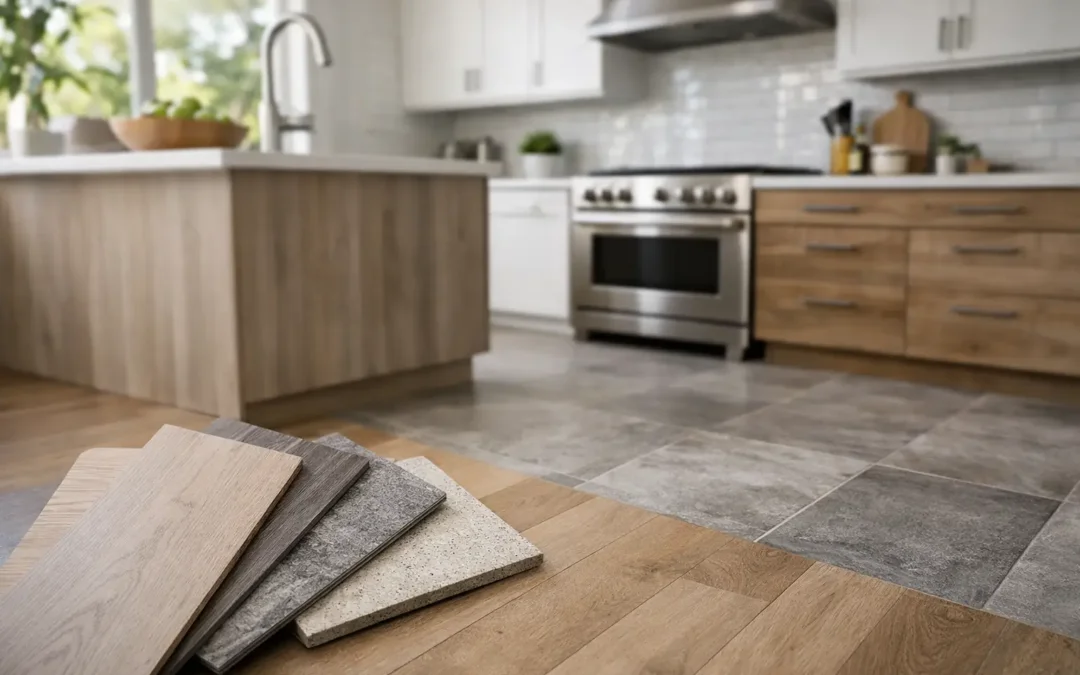
If easy maintenance and maximum water resistance are your priorities, porcelain is difficult to beat. If you want warmth, comfort and a wide choice of looks, quality LVT is often an excellent all-round choice. Engineered wood offers natural character for those prepared to care for it, while laminate can work where the budget is more restricted and the kitchen is less exposed to moisture.
The right floor should not make daily life feel precious or complicated. Bring samples into the room, view them in morning and evening light, and imagine them alongside the realities of your household rather than just the finished photographs. A considered choice at this stage will give your kitchen a foundation that feels good to live with for many years.