A kitchen can look beautiful in a brochure yet feel completely wrong once you start living in it. That is usually where the real difference between modern and traditional kitchen design becomes clear – not in a single door style or worktop finish, but in how the whole room supports your daily routine, your home and the way you want the space to feel.
For some homeowners, a modern kitchen brings the clean lines, easy maintenance and open-plan simplicity they have been looking for. For others, a traditional kitchen offers warmth, character and a sense of permanence that suits the age and style of the property. Neither is automatically better. The right choice depends on your house, your taste, your budget and how you use the room every day.
What is the difference between modern and traditional kitchen design?
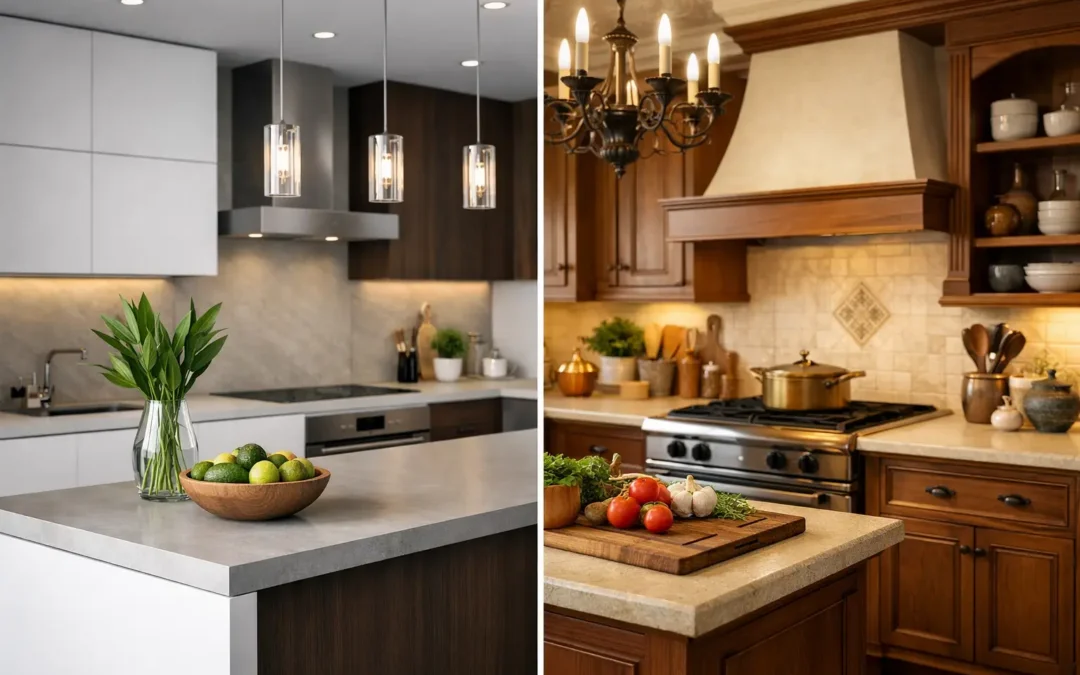
At the simplest level, modern kitchens focus on clean forms, minimal detail and a more streamlined appearance. Traditional kitchens tend to use framed or detailed cabinetry, decorative elements and materials or finishes that feel more classic and familiar.
That said, most real homes do not sit at either extreme. A modern kitchen can still feel warm and welcoming, while a traditional kitchen can be designed with excellent storage, integrated appliances and contemporary convenience. In practice, the difference often comes down to where each style places its emphasis. Modern design prioritises simplicity and visual calm. Traditional design prioritises character and timeless detail.
The visual style and first impression
A modern kitchen usually has flatter cabinet fronts, sleeker handles or handleless openings, and a more restrained palette. You will often see matt finishes, gloss surfaces, neutral tones, darker statement colours and materials such as quartz, glass and metal. The overall effect is crisp and uncluttered.
A traditional kitchen creates a different first impression. Shaker doors, in-frame cabinetry, mouldings, curved features and painted timber finishes all add depth and texture. Colours are often softer or more heritage-led, with warm neutrals, muted greens, blues or cream tones proving popular. Instead of aiming for a pared-back look, traditional design tends to create a room with more visible detail and a stronger sense of craftsmanship.
This is one of the biggest style decisions homeowners face. If you walk into a room and want it to feel sleek, architectural and tidy, modern may be the better fit. If you want it to feel established, homely and full of personality, traditional often has the edge.
Layout, space and how the room functions
The difference between modern and traditional kitchen planning is not only about appearance. It also affects how the space is organised.
Modern kitchens often suit open-plan living particularly well. Their streamlined look helps the kitchen blend into dining and family areas without dominating the whole room. Large islands, hidden storage and integrated appliances work especially well in this setting because they keep visual noise to a minimum.
Traditional kitchens can also work beautifully in open-plan spaces, but they often come into their own in period homes, cottages and properties where the kitchen is intended to feel like the heart of the house. Features such as mantel surrounds, dresser units, decorative shelving and feature larders can give the room a furniture-like quality that feels more rooted and characterful.
If your property already has strong architectural features, the kitchen should respect them. A very sharp modern scheme in a heavily traditional home can work, but it needs careful design to avoid feeling disconnected from the rest of the house. Equally, an overly ornate kitchen in a new-build can sometimes feel forced unless the styling is handled with restraint.
Cabinets, doors and detailing
Cabinetry is where style differences become easiest to spot.
Modern kitchens usually rely on slab doors, smooth finishes and precise lines. Handles may be slim and understated, recessed into the cabinetry or removed altogether. Storage is often designed to be concealed, which helps maintain the clean appearance.
Traditional kitchens are more likely to use Shaker-style doors, raised panels, visible hinges in some cases and more decorative ironmongery. Cornices, pilasters and end panels may also be included to soften the room and create a bespoke fitted look.
There is a practical side to this choice too. Simpler modern fronts are often easier to wipe down quickly. Traditional cabinetry has more joints, grooves and detail, which many people love visually but which can require a little more care when cleaning.
Materials and finishes
Modern kitchens often favour engineered materials and polished finishes that give consistency and durability. Quartz worktops, lacquered doors, composite surfaces and stainless steel details all sit naturally within this style. These materials can be ideal for busy households because they are designed for hard daily use.
Traditional kitchens tend to lean more towards painted timber effects, natural stone, timber accents and tactile finishes. They are often chosen for the warmth and depth they bring to the room. A timber feature, a ceramic sink or an aged brass handle can make the space feel more individual and less manufactured.
This is one area where lifestyle matters. If you want a highly practical family kitchen with minimal upkeep, modern materials can be very appealing. If you value natural variation and are comfortable with a little patina developing over time, traditional finishes may feel more rewarding.
Colour and atmosphere
Modern kitchens generally use a more disciplined colour approach. That might mean white, grey, graphite, black or taupe, sometimes lifted with wood textures or a single accent shade. The goal is usually a balanced, intentional look rather than a layered decorative scheme.
Traditional kitchens often allow for a softer and more expressive palette. Painted cabinetry in sage, navy, mushroom or stone can bring charm without feeling dated. These colours tend to sit comfortably in British homes, especially where the kitchen needs to connect with older architectural details.
Atmosphere matters just as much as colour choice. Modern kitchens can feel calm, spacious and efficient. Traditional kitchens can feel warm, familiar and settled. When homeowners are unsure which they prefer, it often helps to think less about style labels and more about mood. Ask yourself how you want the room to feel on a weekday morning and on a relaxed Sunday afternoon. That usually points you in the right direction.
Appliances, technology and storage
Modern kitchens naturally lend themselves to integrated appliances and hidden functionality. Built-in ovens, induction hobs, boiling water taps, concealed extraction and clever internal storage all sit neatly within the design. If you want the latest features without visual clutter, modern cabinetry usually makes that easier.
Traditional kitchens can still accommodate all of the same practical upgrades, but the challenge is integrating them in a way that preserves the style. That is where thoughtful design becomes essential. A traditional kitchen should not feel old-fashioned in use. It should simply present modern functionality through a more classic visual language.
For many homeowners in Kent, this balance is the sweet spot – a kitchen that looks timeless but performs like a modern one.
Cost, longevity and value
People often assume one style is always more expensive than the other, but it is rarely that simple. Cost depends on the level of cabinetry, the materials you choose, the complexity of the design and whether the project includes building work, electrics, flooring and full installation.
Traditional kitchens can become more expensive when they include in-frame construction, bespoke detailing and specialist finishes. Modern kitchens can also command a higher budget when they feature premium handleless systems, large-format worktops and high-end appliances.
In terms of longevity, both styles can last well when they are properly designed and installed. The bigger question is whether you will still enjoy the look in ten or fifteen years. Traditional kitchens often have broad long-term appeal because they sit comfortably within many property types. Modern kitchens can also age very well, particularly when the design is simple and not chasing short-lived trends.
A dependable kitchen is not just about fashion. It is about choosing quality products, practical layouts and a design that suits your home from the start.
How to choose between modern and traditional kitchen styles
If you are deciding between the two, start with your house rather than a mood board. The age of the property, the amount of natural light, ceiling height and the surrounding rooms should all influence the final direction.
Then think honestly about how you live. A family that wants easy cleaning, hidden storage and a strong open-plan connection may prefer modern. A homeowner renovating a character property or looking for a more furniture-led, welcoming space may naturally lean traditional.
There is also a third route worth considering. Many of the best kitchens borrow from both styles. A painted Shaker kitchen with quartz worktops and integrated appliances can feel both classic and current. A sleek modern kitchen with timber accents and softer lighting can avoid feeling cold. At MBK Design, this is often where the most successful projects land – not at the extremes, but in the balance between personal taste, practical use and the character of the home.
The best kitchen is the one that still feels right after the excitement of the renovation has passed. Choose the style that fits your life as well as your eye, and the room will earn its place every day.