
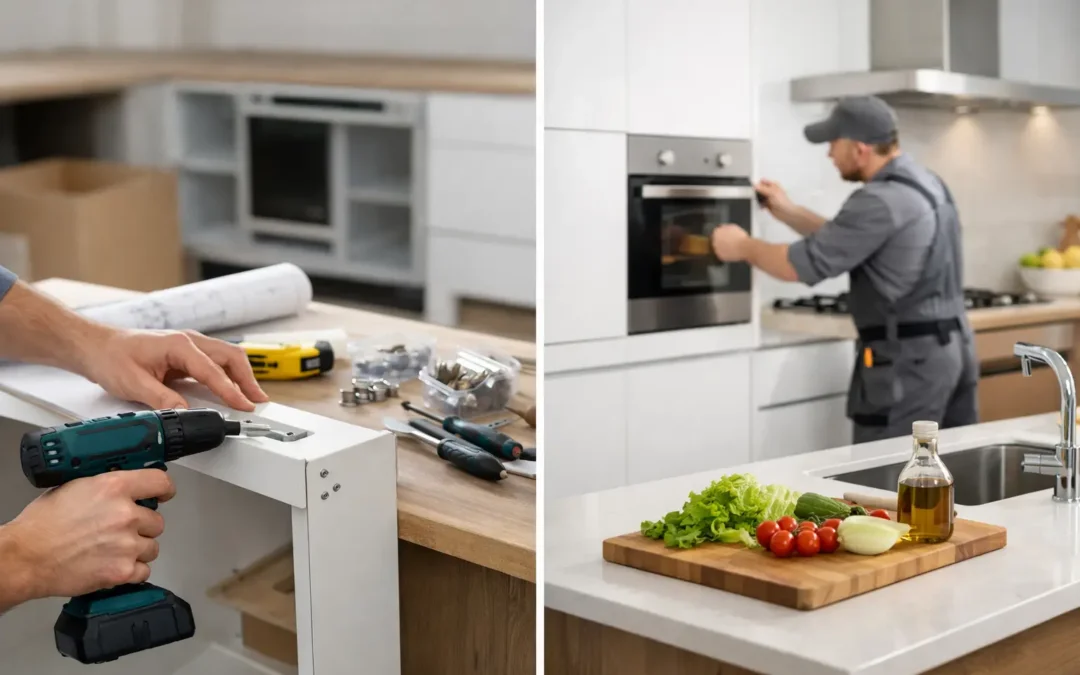
A kitchen renovation can look straightforward on paper: choose the doors, worktops and appliances, then arrange for everything to be fitted. In practice, the choice between supply only vs fully fitted kitchens shapes almost every part of the project, from who measures the room to who resolves an unexpected issue with the plumbing.
Neither route is automatically better. Supply only can offer valuable flexibility for a homeowner with a trusted fitter and a clear plan. A fully fitted service can remove the pressure of coordinating trades, deliveries and decisions while the work is under way. The right choice depends on your budget, available time, confidence with renovation projects and the level of responsibility you want to carry.
What does supply only mean for a kitchen?
A supply-only kitchen means you purchase the designed kitchen furniture, worktops, appliances and selected accessories, but arrange installation separately. You may use your own builder, a recommended independent kitchen fitter or several different tradespeople for fitting, electrical work, plastering, flooring and decorating.
This route does not have to mean going it alone. A professional kitchen designer can still help you create a practical layout, select finishes and specify the products required. The difference is that the installation contract sits between you and your chosen fitter, rather than being managed as part of one inclusive service.
For some homeowners, this is ideal. Perhaps you are already carrying out wider building work, have a family member in the trade or have worked with a reliable local installer before. You may want to schedule the kitchen fitting around an extension, new flooring or other improvements already being organised.
Where supply only gives you more control
Supply only allows you to choose the installer, agree their scope of work directly and shop around for labour costs. If you have firm quotes and a trusted team in place, that can make budgeting feel more transparent.
It can also work well where the room is simple and the work is limited. Replacing a like-for-like kitchen in a sound room, without moving services or altering walls, is usually less complicated than reconfiguring a kitchen in an older property.
The important point is that the kitchen design, survey information and installation plan must all match. A beautiful plan can still create delays if pipework has not been considered, wall conditions are poor or appliances are ordered without confirming the necessary connections and clearances.
The responsibilities that come with supply only
With supply only, you become the central point of contact when questions arise. If a cabinet cannot be fitted because a wall is out of square, your installer may need to pause while a solution is agreed. If a delivery arrives before the room is ready, you need somewhere safe and dry to store it. If trades overlap, you may need to decide who attends first and when.
This does not mean supply only is risky by default. It means a good outcome relies on careful preparation and clear communication between the designer, supplier and installer. Before placing an order, ask who is responsible for final site measurements, how damaged or missing items are handled, and whether the fitter has reviewed the proposed kitchen plan.
What is included with fully fitted kitchens?
The phrase “fully fitted” can mean different things between suppliers, so always ask for a written scope of work. In its broadest sense, it means the kitchen is supplied and installed for you. A more comprehensive design-and-install service may also include project coordination, installation management, worktop templating, plumbing, electrics, tiling and finishing work.
At MBK Design, customers can choose a fully inclusive route that brings the design and installation process together, while retaining the personal attention of a local showroom business. This is particularly valuable when a new kitchen involves several trades, structural adjustments or a tight timescale.
A managed installation creates a clearer chain of responsibility. The people designing the room understand the products being supplied, and the installation is planned around the final specification. When a question arises, you have one team coordinating the answer rather than chasing separate suppliers and contractors.
Why homeowners choose a managed service
The main benefit is not simply convenience. It is coordination. Kitchen projects involve many details that must happen in the correct order: removing the old units, preparing walls, completing first-fix electrics and plumbing, fitting cabinets, templating worktops, connecting appliances, then carrying out final finishes.
An experienced project team can organise those stages and anticipate dependencies. For example, a stone worktop cannot be accurately templated until the base units are fitted and level. An integrated appliance needs the right housing, ventilation allowance and electrical provision. A kitchen island may require power beneath the floor before the cabinetry is installed.
For busy households, this reduces disruption and decision fatigue. You still make the important choices about style, colour, storage and budget, but you are less likely to spend your evenings coordinating installers, delivery dates and trade schedules.
Supply only vs fully fitted kitchens: comparing the cost
Supply only is often assumed to be the cheaper option, and the initial quote may well be lower because fitting and project management are not included. However, the total cost depends on the work required and how accurately it is planned.
With supply only, obtain detailed written quotations from installers that cover removal, fitting, worktop fitting, plumbing, electrics, wall preparation, waste disposal and any finishing work. A low fitting figure can rise if these elements are excluded or if unexpected site issues emerge.
A fully fitted kitchen generally has a higher headline price because it includes expertise, labour and management. In return, it can provide a more complete understanding of the investment before work begins. For homeowners who place a high value on certainty, accountability and protecting their time, that can represent better value than coordinating separate contracts.
The fairest comparison is not cabinet price against cabinet price. Compare the complete project cost, the quality of products and workmanship, the likely contingency allowance, and the support available if something needs attention after installation.
Consider the complexity of your room
The more complex the room, the stronger the case for professional coordination. A kitchen with uneven walls, limited access, old pipework, multiple appliance types or a new island needs more than attractive cabinetry. It needs accurate planning and experienced installation.
This is common in period homes and properties that have been altered over time. Rooms may have chimney breasts, awkward corners, sloping ceilings or services that do not sit where a modern layout needs them. A tailored design can make these characteristics work hard for the space, but it must be backed by a practical installation plan.
Conversely, a straightforward replacement kitchen may suit supply only very well, particularly when your installer knows the property and has a strong record of kitchen work. The key is to be honest about what is changing behind the units, not just what will be visible once the doors are closed.
Questions to ask before choosing your route
Start by considering who will take responsibility at each stage. Who completes the final measure? Who checks that appliances, worktops and cabinetry will work together? Who organises the fitter, plumber and electrician? Who deals with an item that arrives damaged or a specification that needs to change on site?
Also think about your own availability. A kitchen installation can require prompt decisions, access to the house and occasional flexibility around deliveries or trade schedules. If work and family commitments make that difficult, a fully fitted service may offer welcome reassurance.
Finally, consider what quality means to you. It includes the appearance of the finished kitchen, but also how well doors align, how effectively storage works, whether worktops are fitted precisely and whether the room feels considered for daily life. A well-designed kitchen deserves the same care in its installation.
The best route is the one that gives you confidence before work starts. If you have a trusted installer, a simple project and the time to coordinate it, supply only can be a sensible and flexible choice. If you want one experienced team to turn your plans into a finished room with less pressure on your household, a fully fitted kitchen can make the investment feel far more manageable.