
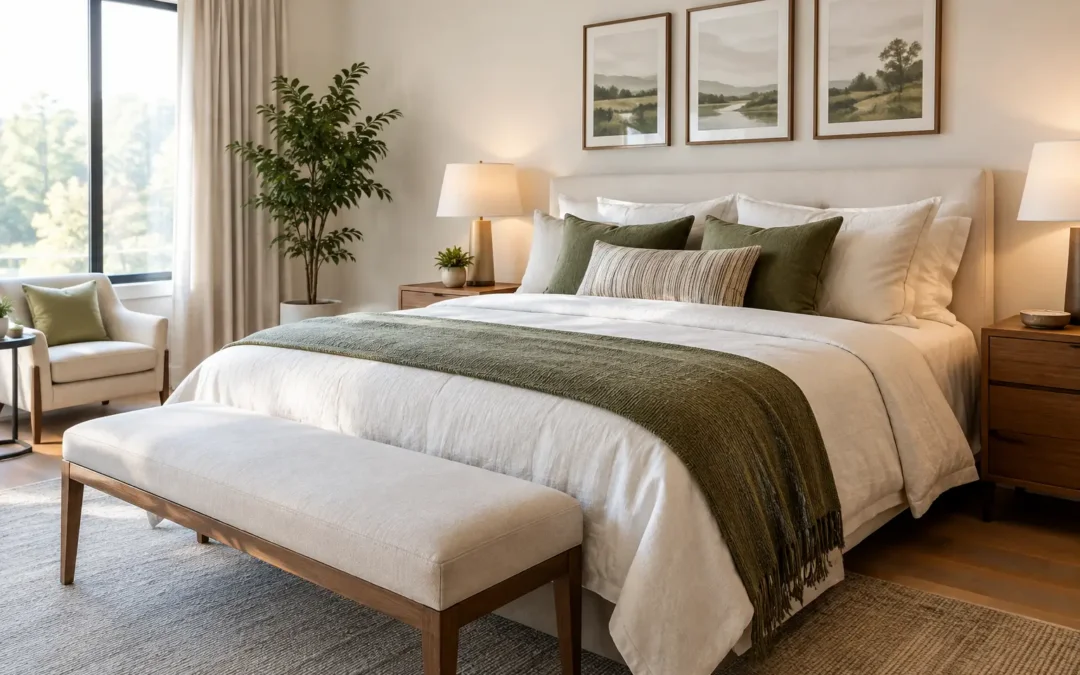
A bedroom should still feel restful when the wardrobe doors are shut, the laundry has not quite made it downstairs and life is busy. That is why the most worthwhile bedroom design trends are less about copying a look from a photograph and more about creating a room that supports daily routines, stores what you own and feels personal for years to come.
For homeowners planning a fitted bedroom, the best starting point is not a colour chart. It is an honest look at how the room is used: who gets ready there, what needs storing, where natural light enters and whether the space must also work as a dressing area, study corner or quiet place to read. Current ideas can provide inspiration, but they should always be adapted to the property and the people living in it.
Bedroom Design Trends Moving Beyond the Showroom
The strongest direction in bedroom design is towards comfort with purpose. Rooms are becoming softer and more layered, while furniture is working harder behind the scenes. Rather than filling a bedroom with freestanding pieces that leave awkward gaps and collect clutter, many homeowners are choosing considered fitted furniture that makes the most of every wall, alcove and sloping ceiling.
This does not mean every bedroom needs to look minimal or ultra-modern. A traditional home in Kent may suit panelled doors, warmer timber finishes and classic handles, while a newer property may call for smooth matt cabinetry and a simpler palette. The common thread is thoughtful planning, not one fixed style.
Calm colours with depth
White and pale grey bedrooms have had a long run, but the move now is towards warmer, more forgiving neutrals. Stone, mushroom, putty, soft taupe and gentle clay shades create a calmer backdrop than stark white, particularly in north-facing rooms where cool daylight can make finishes look flat.
There is also growing confidence with deeper colours. Olive green, muted blue, warm brown and charcoal can make a larger bedroom feel more settled and can give fitted wardrobes a furniture-like presence. The trade-off is light: dark cabinetry absorbs it, so it is usually best balanced with pale walls, good bedside lighting and carefully chosen mirrors.
A colour does not have to cover every surface to make an impact. A painted wall behind the bed, upholstered headboard or coloured wardrobe interior can introduce character without committing the whole room to a short-lived fashion.
Fitted storage that looks considered
Storage remains the practical heart of a successful bedroom. The trend is not simply for more cupboards, but for storage designed around real wardrobes and routines. Full-height fitted wardrobes use the vertical space that is often wasted above standard furniture. Internally, a combination of hanging sections, drawers, adjustable shelves and dedicated compartments helps prevent the familiar problem of a large wardrobe that is surprisingly difficult to use.
Door style matters as much as internal layout. Shaker-inspired and lightly framed doors bring texture to traditional and transitional schemes. Flush doors suit a cleaner, contemporary finish, especially when finished in a soft matt colour. Fluted or reeded detailing can add interest, although it is best used selectively. A whole wall of heavily textured doors may feel dated sooner than a quieter design with one distinctive feature.
Handleless wardrobes offer a neat, modern appearance, but handles can be more practical and add personality. In a period property, a carefully chosen knob or pull may tie the bedroom to the rest of the house. In a compact room, slimline handles can make doors easier to open without interrupting the clean lines.
Bedroom Design Trends That Put Comfort First
A well-designed bedroom needs more than attractive cabinetry. It needs layers that soften the hard surfaces and create a sense of retreat at the end of the day.
Upholstered beds and tactile finishes
Beds with upholstered headboards remain popular because they bring immediate warmth, visual comfort and a useful backrest for reading. Bouclé and heavily textured fabrics have been widely used, but they are not the only answer. Linen-look weaves, velvet, wool blends and classic woven fabrics can be more versatile, depending on the room and household.
When choosing upholstery, practicality should guide the decision. Light fabric may look elegant but requires more care in a family home or where pets regularly visit the bedroom. A darker tone or a durable, easy-clean fabric can be the better long-term choice. The same applies to rugs, curtains and occasional seating: texture makes a room feel finished, but it should not create a maintenance burden.
Natural timber, woven textiles, ceramic lamps and softer metallic finishes such as aged brass continue to sit well within this more relaxed approach. The aim is not to match every finish precisely. It is to create a room with enough variation to feel collected rather than bought as a set.
Lighting designed for real routines
One central ceiling fitting rarely provides enough light for a bedroom. Layered lighting is now a practical expectation, particularly where the room doubles as a dressing space. Bedside lamps or wall lights offer a comfortable pool of light for reading, while discreet wardrobe lighting makes early mornings and darker winter evenings easier.
Dimmable lighting is particularly valuable. Brighter light is helpful when selecting clothes or cleaning, but a lower level creates a more restful atmosphere before bed. Positioning matters too. A pendant placed directly above a bedside table can free valuable surface space, yet it must be hung at the right height to avoid glare or accidental knocks.
Do not overlook task lighting around mirrors and dressing areas. Light from one side can cast unhelpful shadows, so balanced lighting is often more useful than a single decorative fitting.
Small Bedrooms Need Better Planning, Not Less Style
Smaller bedrooms often benefit most from fitted design. Made-to-measure furniture can work around chimney breasts, awkward corners, loft slopes and alcoves, turning difficult areas into useful storage. It can also reduce visual clutter by keeping the floor clearer and avoiding a collection of mismatched units.
However, filling every wall with cupboards is not always the answer. In a small room, the balance between storage and breathing space is crucial. A run of wardrobes in a lighter finish, perhaps with mirrored or reflective details, can feel less imposing than dark, heavily detailed doors. Sliding doors can be helpful where there is limited clearance in front of the wardrobe, although hinged doors may give better access to the full interior and are often easier to organise.
A fitted window seat, slim dressing table or integrated bedside shelving may be more useful than trying to accommodate every conventional bedroom furniture piece. Good design asks what the room needs, rather than assuming it must contain a bed, two bedside tables, a chest of drawers and a wardrobe simply because that is familiar.
What to Treat Carefully
Not every trend deserves a permanent place in a fitted bedroom. Highly patterned wallpaper, bold feature colours and unusual hardware can be excellent choices when they genuinely reflect your taste, but they are easier to change on walls and accessories than on expensive furniture.
It is also sensible to be cautious with storage layouts based on an idealised version of life. Open rails and exposed shelving look attractive in carefully styled images, but they require disciplined upkeep. For many households, closed storage delivers a calmer room and a more realistic daily experience.
Technology is another area where restraint pays off. Integrated charging, sensor lighting and well-placed sockets are genuinely useful. More complex features should earn their place by solving a clear problem, not simply because they are new.
Choosing a Bedroom That Will Still Suit You
The most enduring bedrooms are built around proportion, quality materials and a layout that makes everyday life easier. Start with the bed position and circulation space, then plan storage around what you actually own. Consider how door openings, drawers and bedside furniture will work together, particularly in tighter rooms.
Before making final choices, view finishes in person where possible. Cabinet colours change significantly in daylight and under warm artificial light, while the feel of a handle, the quality of a drawer and the detail of a door finish are difficult to judge from a screen. A showroom visit also helps turn broad inspiration into decisions that suit your home, budget and preferred level of project support.
At MBK Design Studio, the focus is on listening first, then shaping a fitted bedroom that feels right for the way you live. A lasting scheme does not need to follow every new idea – it simply needs to make coming home, getting ready and switching off feel that little bit easier.