A bedroom usually starts to feel cramped long before it is actually full. It happens when freestanding wardrobes waste awkward corners, bedside tables interrupt the flow, and every extra chest of drawers steals a little more floor space. That is why the best bedroom fitted furniture is rarely about adding more pieces. It is about making the room work harder, look calmer and feel easier to live in every day.
What makes the best bedroom fitted furniture?
The short answer is fit, function and finish.
Furniture can look impressive in a showroom and still be wrong for your home. The best bedroom fitted furniture is designed around the room you actually have, including sloping ceilings, alcoves, chimney breasts and uneven walls. It should solve practical problems first, then bring the style together in a way that feels considered rather than crowded.
That means good fitted bedroom design starts with questions, not colours. How much hanging space do you really need? Do you fold more than you hang? Are shoes, bags and luggage currently ending up in places they should not? Is the bedroom also doubling up as a dressing space, a quiet corner to work, or simply somewhere that needs to feel restful at the end of the day?
When those answers shape the design, the result tends to last. When the design is led only by appearance, compromises usually show up quite quickly.
The best bedroom fitted furniture balances storage and space
One of the biggest mistakes homeowners make is assuming that more storage automatically means a better result. In practice, the room still needs to breathe.
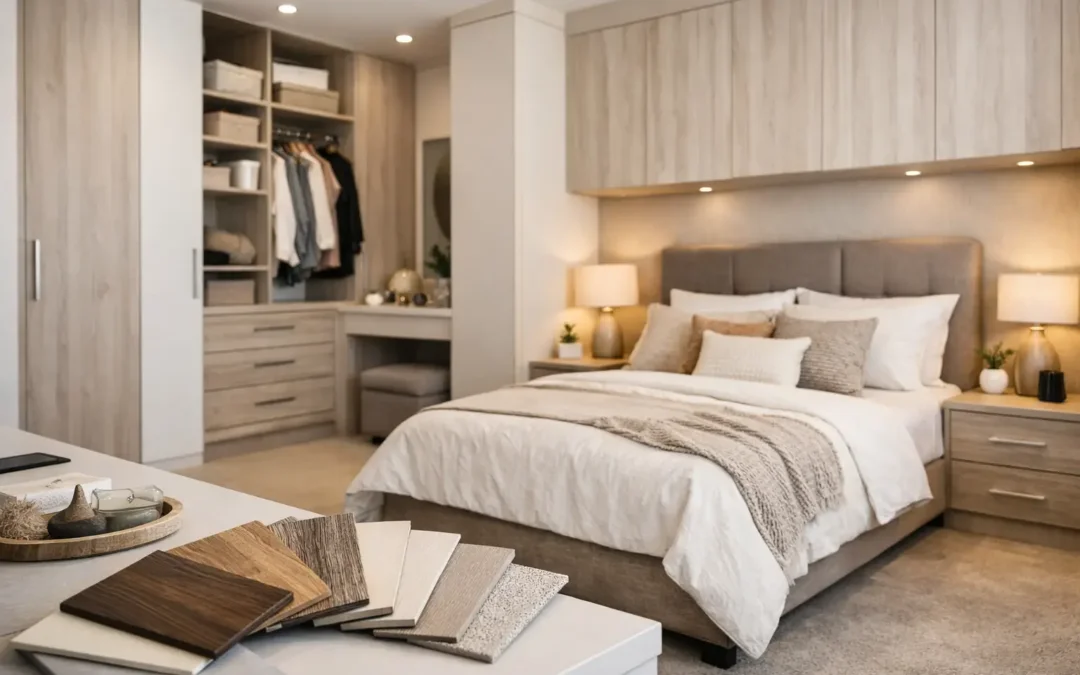
Full-height wardrobes can be excellent in a standard bedroom because they use every inch from floor to ceiling and remove the dust-trap void above freestanding units. In a smaller room, though, heavy dark finishes or oversized door sections can make the space feel closed in. Lighter colours, mirrored panels or a combination of wardrobes and open display niches may create a better balance.
The same applies to internal storage. Deep drawers are useful, but not if they become a dumping ground. Double hanging rails can maximise capacity, but not for long dresses or coats. Open shelving looks attractive in brochures, but many households prefer concealed storage because it keeps the bedroom looking tidier with less effort.
This is where bespoke planning earns its keep. The best layouts are not the ones with the most compartments. They are the ones that match how the household lives.
Wardrobes are only part of the picture
When people think of fitted bedroom furniture, they usually picture wardrobes wall to wall. That can work very well, but it is not the whole story.
A properly planned fitted bedroom may also include bedside units built into the run, a dressing table recess, over-bed storage, window seat cupboards or low-level drawer banks beneath eaves. In an awkward room, these details often make more difference than the main wardrobes themselves. They turn previously wasted areas into useful storage without forcing extra furniture into the room.
For family homes, this can be especially valuable. As routines change and storage needs grow, fitted furniture gives the room a stronger framework rather than leaving it to be patched together piece by piece.
Style matters, but practicality matters longer
A bedroom should feel personal and attractive, so style is not a secondary issue. Even so, practical decisions tend to have the longest impact.
Door style is a good example. Shaker fronts suit both traditional and more transitional homes, while slab doors give a cleaner contemporary look. Neither is better in absolute terms. The right choice depends on the property, the rest of the interior and how much visual detail you want in the room.
Finishes need the same level of thought. Matt surfaces can look understated and elegant, but some show marks more readily than textured finishes. Gloss can help bounce light around a smaller room, though it may feel less forgiving in terms of fingerprints. Woodgrain effects add warmth, while painted tones can keep the scheme lighter and more tailored.
Handles, lighting and interior accessories all affect the final result too. Soft-close drawers, integrated lighting and well-planned shelving are not just nice additions. They influence how easy the furniture is to use every day.
Sliding or hinged doors?
This is one of the most common fitted bedroom questions, and the honest answer is that it depends on the room.
Sliding doors are often the practical choice where space is tight because they do not project into the room when opened. They can work particularly well in more contemporary schemes and in bedrooms where circulation space is limited. The trade-off is that you only access one section at a time.
Hinged doors give full access to the interior and often offer greater flexibility in wardrobe configuration. They can suit classic and modern designs alike. The compromise is that you need enough clear floor space for them to open comfortably.
The best bedroom fitted furniture is not about choosing the fashionable option. It is about choosing the one that makes daily use simpler.
Why bespoke design usually pays off
There is a real difference between fitted furniture that fills a wall and fitted furniture that has been properly designed.
A bespoke approach considers room proportions, sightlines, natural light, storage habits and how the bedroom connects with the rest of the house. It also allows for details that standard ranges cannot always handle neatly, such as uneven ceilings, awkward corners or the need to integrate a television point, radiator, dressing area or loft access.
This matters because fitted furniture is a long-term investment. If it is going to be in place for years, it should not merely look acceptable. It should improve the way the room works from the first week onward.
For homeowners planning a broader refurbishment, this joined-up thinking becomes even more valuable. Coordinating bedroom furniture with flooring, wall finishes and lighting can create a result that feels deliberate and complete rather than added in stages.
Budget, value and where not to cut corners
Cost is always part of the decision, and rightly so. Bedroom furniture needs to justify its price.
The cheapest option is rarely the best value if it leaves gaps, wastes space or needs replacing sooner than expected. Equally, the most expensive specification is not automatically the smartest choice. There may be areas where premium internals or upgraded finishes are worth it, and others where a simpler approach gives the same practical result.
Good value usually comes from a combination of sound design, durable materials and accurate installation. If the carcasses, hinges, drawer runners and finish quality are right, the furniture should continue to perform well long after trends have moved on. If the planning is weak, even a high-end range can disappoint.
This is one reason many homeowners prefer a guided design process rather than trying to piece everything together themselves. In areas such as Maidstone and across the wider Kent area, where homes vary widely in age, layout and character, local experience can make a genuine difference to what is realistic and what will work well over time.
Choosing a company, not just furniture
The product matters, but so does the team behind it.
A fitted bedroom project involves surveys, design decisions, ordering, delivery, installation and aftercare. If any of those stages are poorly managed, the whole experience becomes more stressful than it needs to be. Homeowners often worry about disruption, unclear pricing and whether the finish will match what they were promised. Those concerns are valid.
That is why experience and process matter. An established company should be able to guide you through options clearly, explain trade-offs honestly and help you choose a solution that suits your room and budget rather than pushing a standard package. At MBK Design, that kind of measured advice is central to creating fitted spaces that feel right in both practical and visual terms.
A bedroom should feel calmer, not more complicated
The best bedroom fitted furniture does not draw attention to how much it stores. It simply makes the room feel more settled, more useful and easier to enjoy. When everything has a place and the design suits the space properly, the bedroom stops feeling like a compromise and starts feeling finished.
If you are weighing up ideas, focus less on what looks impressive in isolation and more on what will still make sense in five or ten years. The right fitted furniture should earn its place quietly, every single day.