A freestanding wardrobe can store clothes, but it rarely makes the most of an awkward alcove, a sloping ceiling or the space above a door. That is why homeowners often ask: are fitted bedrooms worth it? The honest answer is that they can be – particularly when better storage, a calmer room and a long-lasting finish matter more than buying the lowest-cost furniture available today.
A fitted bedroom is a considered investment rather than a quick furniture purchase. The value comes from how well it works for your room, your possessions and the way you live every day.
What makes fitted bedrooms different?
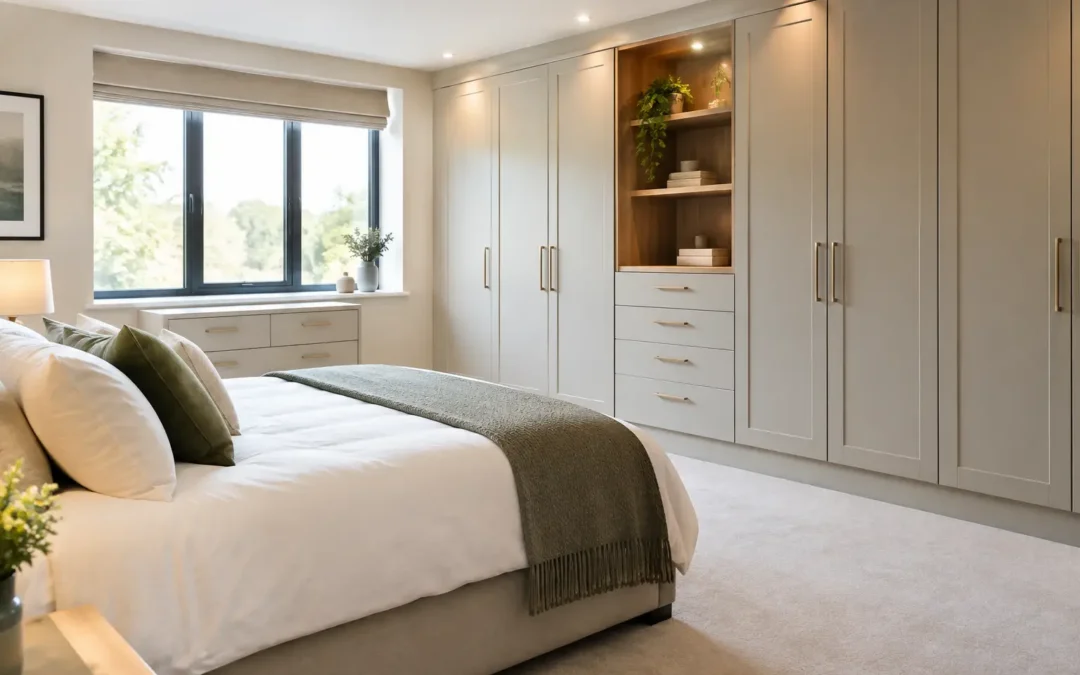
Fitted bedroom furniture is designed around the room itself. Wardrobes, drawers, bedside units and dressing areas can be planned to use the full height and width available, rather than leaving narrow gaps at either side of standard furniture. This is especially useful in period properties, loft rooms and bedrooms with chimney breasts, angled walls or uneven corners.
The difference is not simply that the furniture fits. A good design considers what needs to be stored and where it is most useful. Long hanging space for dresses and coats, double hanging for shirts, deep drawers for knitwear, shelves for bags and a dedicated place for laundry can all be built into the layout. The result should feel effortless to use, not just neat on the day it is finished.
There is also a visual benefit. Matching finishes and carefully proportioned doors give the room a more settled appearance than a collection of separate pieces. In a smaller bedroom, that sense of order can make the space feel noticeably larger and more restful.
Are fitted bedrooms worth it for storage?
For many households, storage is the strongest reason to choose fitted furniture. A conventional wardrobe may stop well below the ceiling, leaving a dusty and inaccessible void above it. It may also be too shallow, too wide for one wall or too narrow for the clothing it needs to hold.
A fitted design can turn those overlooked areas into useful storage while keeping the room balanced. Tall cupboards can accommodate bedding and seasonal items, while shallow cabinetry can work well around a chimney breast. In a loft conversion, furniture can follow the roofline so low-level areas become drawers or cupboards rather than wasted floor space.
However, more cupboards do not automatically mean a better bedroom. Overfilling every wall can make a room feel heavy, particularly where there is limited natural light. The most successful schemes leave breathing room around windows, beds and circulation routes. They also use a mixture of closed storage and, where appropriate, open shelving or a dressing table to prevent the design feeling too uniform.
It should be designed around your routine
Before choosing finishes, it helps to think about the first and last ten minutes of an ordinary day. Do two people need access to the wardrobe at once? Is the bedroom also used for working, getting ready or storing household linen? Are children’s clothes and toys taking over a shared room?
These practical questions shape the internal layout. A beautiful wardrobe front matters, but the inside is where its value is felt every morning. Pull-down rails may help where full-height storage is needed. Internal drawers can keep smaller items organised. A full-length mirror, integrated lighting or a small seated dressing area may remove the need for additional furniture elsewhere in the room.
The cost question: when is the investment justified?
Fitted bedrooms generally cost more than buying ready-made wardrobes, chests and bedside tables. They involve surveying, design work, made-to-measure manufacture, delivery and professional fitting. The final price will depend on room size, the number of units, interior fittings, door style, materials and any preparation needed before work begins.
That higher starting cost is worthwhile when standard furniture would compromise the room or need replacing sooner. If you are furnishing a straightforward guest room with plenty of space and limited storage needs, quality freestanding furniture may be the sensible choice. It gives flexibility and can be moved easily if the room changes purpose.
The case for fitted furniture is stronger in a principal bedroom, a compact room where every centimetre matters, or a property you expect to enjoy for years. In these settings, tailored storage can reduce clutter, improve daily routines and remove the temptation to keep adding mismatched furniture as needs grow.
It is also worth looking beyond the headline price. Cheaper furniture can appear economical until you factor in unused space, extra storage bought later and the shorter lifespan of poorly made pieces. A well-planned fitted bedroom is intended to be part of the home, not a temporary solution.
Quality and craftsmanship affect long-term value
Not all fitted bedrooms are made to the same standard. The visible finish is important, but so are the details that are less obvious in a showroom: cabinet construction, door alignment, hinges, drawer runners, edging, internal fittings and how neatly the furniture meets walls and ceilings.
Durable materials and reliable hardware make a real difference to furniture that will be opened and closed thousands of times. Consider whether the door style suits the room and your lifestyle too. Hinged doors offer a wide view of the wardrobe interior, while sliding doors can be useful where space around the bed is tight. Handleless designs can create a clean modern look, while framed doors and warmer finishes may better suit a traditional home.
A good designer will also be candid about the room’s limitations. For example, very deep wardrobes may reduce walking space, and some wall conditions or ceiling levels may affect what is achievable. Clear advice early in the process helps prevent costly compromises later.
Flexibility is the main trade-off
The principal drawback of a fitted bedroom is that it is designed for one room. You cannot simply take it with you when you move house, and major changes to the room layout may require alterations to the furniture.
That does not mean fitted storage is inflexible in everyday life. Interiors can often be designed with adjustable shelving, adaptable hanging rails and drawers that continue to work as a child grows or a spare room becomes a dressing room. But it does mean the overall plan needs careful thought before it is signed off.
If you expect to move soon, rent out the property, or regularly rearrange your furniture, freestanding pieces may better suit your circumstances. If you are improving a home for the long term, a tailored layout can feel more appropriate and may appeal to future buyers who value practical storage. It should not be viewed as a guaranteed way to increase a property’s sale price, but well-designed bedrooms are certainly easier to appreciate than rooms dominated by clutter and ill-fitting furniture.
Getting the design right before work starts
The best fitted bedrooms begin with a conversation, not a catalogue. Bring measurements if you have them, but also bring photographs of the room, ideas you like and a realistic list of what needs to be stored. A showroom visit can be useful for comparing door finishes, colours, handles and internal accessories in person, where you can judge quality more confidently.
Ask how the design will address awkward features, where sockets and switches will sit, and whether there is enough room to open doors and drawers comfortably. Think about lighting at the same time. Wardrobe lighting, bedside lighting and a dressing mirror all affect how useful the finished room will be.
At MBK Design Studio, the aim is to turn those everyday requirements into a bedroom that feels personal, practical and properly planned. With design choices agreed before work begins and the project carefully coordinated, homeowners have a clearer route from initial ideas to a finished space they can enjoy.
A fitted bedroom is worth considering when it solves genuine problems rather than simply following a trend. Choose it because you want to wake up to a room with a place for everything, enough space to move and a design that still feels right long after the initial excitement of a renovation has passed.