A bathroom unit can look perfectly proportioned in a showroom, then feel entirely different once it sits beside your tiles, lighting and everyday toiletries. This bathroom furniture finishes guide is designed to help you choose beyond the colour sample, considering how each surface will reflect light, cope with moisture and support the look you want for years to come.
The right finish is not simply a matter of fashion. It affects how large the room feels, how often fingerprints show, whether a traditional or contemporary scheme feels convincing, and how well the furniture relates to brassware, worktops and wall finishes. For a bathroom refurbishment, these are the details that turn a collection of good products into a room that feels properly considered.
Start with the character of the room
Before comparing matt against gloss, decide what you want the bathroom to say. A calm, spa-inspired en-suite often suits soft matt neutrals, pale timber effects or subtle painted tones. A compact cloakroom may benefit from a reflective gloss finish that helps distribute available light. For a period property, a painted shaker-style door can bring warmth and a sense of permanence that a very sleek slab front may not provide.
There is no rule that a small bathroom must be white or glossy. Dark furniture can look striking in a smaller space when it is balanced with good lighting, a lighter floor or wall finish, and a clear layout. Equally, a large room can feel cold if every surface is bright, hard and reflective. The best choice depends on the room’s natural light, its proportions and how it will be used.
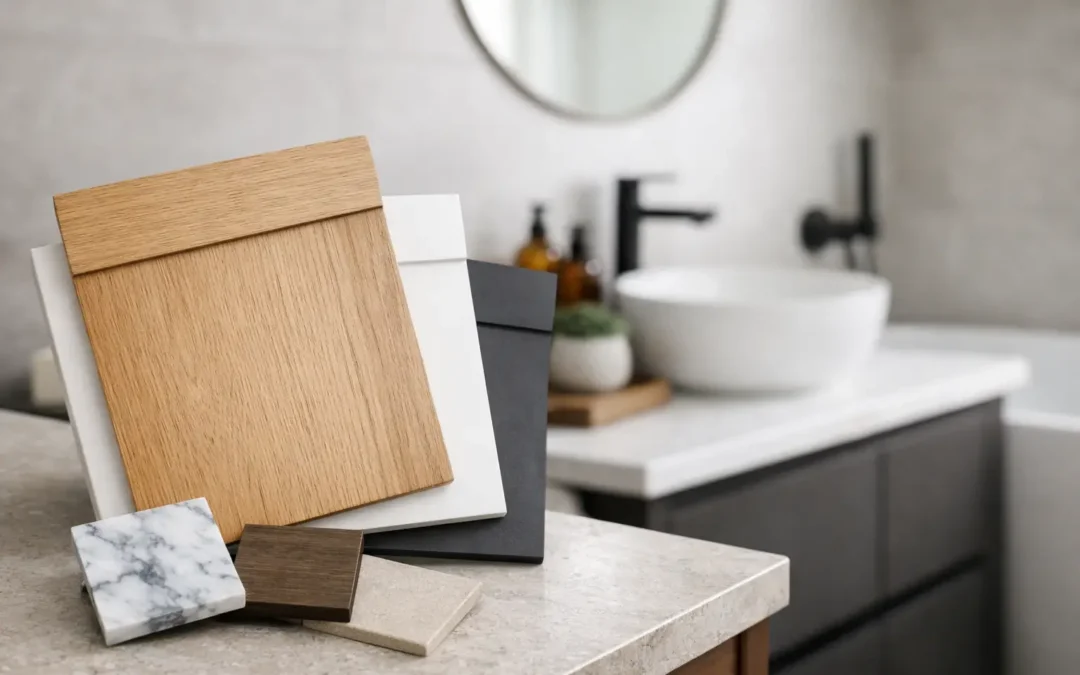
Take samples into the actual bathroom where possible. Light changes considerably between a north-facing room, a windowless en-suite and a bright family bathroom. What appears to be a warm grey under showroom lighting can read cooler at home.
Bathroom furniture finishes guide: the main options
Matt finishes
Matt furniture has a soft, understated quality that works particularly well in contemporary and transitional bathrooms. It absorbs rather than bounces light, so it can make a scheme feel calmer and more refined. Shades such as stone, cashmere, taupe, sage and deep blue are especially effective when paired with natural-look tiles, brushed metal fittings or textured wall finishes.
The practical consideration is that matt surfaces may show splashes, soap residue or greasy fingerprints more readily than some mid-sheen finishes, particularly in darker colours. This does not make them unsuitable for busy homes, but it does mean choosing a quality finish and being realistic about regular wiping down. A microfibre cloth and mild cleaner are usually all that is required. Avoid abrasive products, which can mark the surface or alter its appearance.
Gloss finishes
Gloss remains a popular choice for modern bathrooms because it reflects light and gives furniture a crisp, clean presence. White gloss is a familiar option, but greys, soft creams and bolder colours can work just as well. In narrow bathrooms and cloakrooms, the extra reflection can make the room feel more open.
The trade-off is visibility. Water marks and fingerprints tend to show more clearly on high-gloss doors, especially on very dark or very light colours in direct sunlight. If the bathroom is used by a family with young children, a soft gloss or satin alternative may give a similar brightness with less day-to-day upkeep. Gloss can also feel overly clinical when used alongside large areas of shiny tile, chrome and glass. Introducing timber, coloured walls or a textured worktop helps restore balance.
Wood-effect finishes
Wood-effect furniture brings texture and warmth without asking a bathroom to become rustic. Contemporary oak, walnut and weathered timber effects can soften porcelain tiles and painted walls, while giving a simple vanity unit more visual depth. They are an excellent choice for homeowners who want a bathroom to feel connected to the rest of the house rather than like a separate, all-white space.
Pay attention to the undertone. Some wood effects lean golden, some grey and some rich brown. A warm oak finish beside a cool grey tile can either create a pleasing contrast or look accidental, depending on the samples. It is worth viewing them together before making a decision.
Wood-effect finishes are often forgiving of minor marks because their grain breaks up the surface visually. However, they still need appropriate care. Bathroom furniture should be designed for the moisture levels found in a bathroom, but standing water around joints, handles and worktop edges should always be wiped away promptly.
Painted and shaker-style finishes
For traditional homes, country-inspired schemes and bathrooms with architectural character, painted furniture offers flexibility and lasting appeal. Soft off-whites, muted greens, blues and warm greys can be chosen to sit comfortably with timber flooring, stone-look tiles or more decorative mirrors and lighting.
A framed or shaker-style door gives the finish additional shadow lines, creating a more crafted look than a flat-fronted unit. This can be particularly effective in larger bathrooms, where the furniture has room to be appreciated. In a very compact room, however, a heavily detailed door may feel busier than a cleaner design.
Painted-style finishes vary between ranges. Some are factory-finished in a fixed selection of colours, while others may offer a broader palette. The key question is not just which colour you like now, but whether it will still work if you change wall paint, towels or flooring later. A well-chosen neutral or softened heritage shade tends to give more flexibility than a highly specific fashion colour.
Think about handles, worktops and brassware together
Furniture finish rarely works in isolation. The handle, basin, worktop and taps all change how it is perceived. A matt navy unit with polished chrome can feel smart and classic; with brushed brass it becomes warmer and more decorative; with matt black it moves in a more contemporary direction.
Handleless furniture creates a clean, architectural look and allows the door finish to take centre stage. It can be ideal for compact bathrooms where visual clutter needs to be kept low. Handles introduce another opportunity for character, though. Knurled brass, aged bronze, simple nickel or black bar handles can all make the same cabinet feel very different.
If you are considering a furniture worktop, look at it beside the unit rather than choosing it later. A white marble-effect surface can brighten dark cabinetry, while a darker stone effect can ground pale or timber furniture. Remember that a busy worktop and pronounced wood grain can compete. Often, one should lead and the other should be quieter.
Choose for real life, not just the first impression
A family bathroom has different demands from a guest en-suite. In a room used every morning, a mid-tone matt, satin or wood-effect finish can be more forgiving than black gloss or a very pale high-gloss door. In a cloakroom used occasionally, you may be happier choosing a bolder finish simply because the maintenance burden is lower.
Consider who will use the furniture and how. Wall-hung units make cleaning the floor easier and can create a lighter appearance, but the finish still needs to stand up to regular use around the basin. Freestanding-style furniture may bring more character, although it can require more careful planning around cleaning and available floor space.
Quality construction matters as much as the visible surface. Moisture-resistant materials, neatly finished edges, reliable hinges and drawers, and correct fitting all contribute to how furniture performs over time. A low-cost unit can look appealing at first, but poorly protected edges or weak fittings may prove disappointing in a humid room.
Use the showroom to test your choices
Photographs are useful for building ideas, but they do not show texture, sheen or the scale of a door accurately. Seeing furniture in person allows you to open drawers, compare colours under changing light and put samples next to tile and worktop options. This is particularly valuable when choosing between similar greys, whites or timber tones.
At MBK Design Studio, the aim is to help homeowners make those decisions with the full room in mind, from layout and storage through to finishes that support the chosen style. A considered design avoids the common mistake of selecting each item separately and hoping it will all work once the room is complete.
Give yourself permission to choose the finish that suits the way you live, rather than the one that looks best in a single photograph. When the samples, lighting and practical demands have all been considered together, your bathroom furniture can remain a pleasure to use long after the renovation dust has settled.