A beautiful new bathroom can disappoint surprisingly quickly if the shower is weak when someone runs a tap downstairs, or if a generous bath takes too long to fill. That is why the type of boiler influences your choice of goods: it affects the amount of hot water available, the pressure at which it is delivered and how comfortably the room will work for the household using it.
When choosing baths, showers, taps and even certain kitchen features, appearance is naturally important. But the most successful projects begin with the practical questions too. What boiler do you have? Is there a hot-water cylinder? How many people may need hot water at the same time? The answers help ensure the finished space looks right and performs as expected.
Why the type of boiler influences your choice of goods
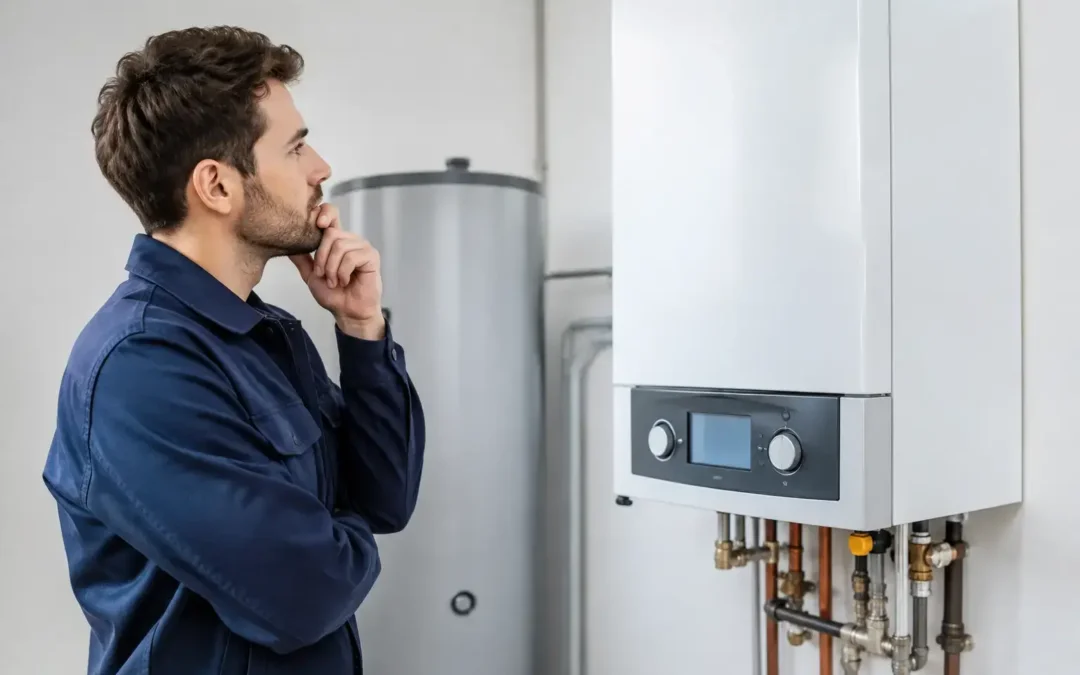
Your boiler is not simply a hidden piece of household equipment. It is part of the system behind every hot shower, warm towel rail and hot-water tap. The three most common arrangements in UK homes are combi boilers, system boilers and conventional or regular boilers. Each supplies hot water in a different way, and that can change which bathroom products are sensible choices.
A combi boiler heats water directly from the mains as it is needed. It does not usually store hot water in a cylinder, which can save space and works well in many smaller households. Its limitation is flow rate: it can generally provide hot water very effectively to one main outlet at a time, but demand from several outlets can reduce the experience.
System and regular boilers work with a hot-water cylinder. They can store a useful volume of hot water ready for use, making them a strong option for larger homes, busy morning routines and bathrooms with more than one shower or bath. The details still matter, however. Cylinder capacity, incoming mains pressure, pump arrangements and the condition of the existing system all influence the final result.
The key point is not that one boiler type is always better. It is that your chosen goods should suit the system and the way your household lives.
Showers: where the difference is most noticeable
Showers place a clear, immediate demand on the hot-water system. A large drencher head may look spectacular in a showroom, but it often needs a higher flow rate than a compact handset. If the boiler or water supply cannot support it, the result can be a shower that feels less luxurious than expected.
With a combi boiler, a thermostatic mixer shower can work very well when selected to match the boiler’s available flow. A sensible-sized shower head, correctly specified valve and realistic expectations around simultaneous use are important. If someone starts filling the kitchen sink or another shower is turned on, a combi may have less hot water to share.
An unvented cylinder paired with a system boiler can offer strong mains-pressure hot water to more than one outlet, provided the incoming supply is adequate. This can suit homes where two bathrooms are used at similar times, or where a large shower head is a genuine priority. A conventional system with a vented cylinder may have different pressure characteristics, and certain shower arrangements may require a compatible pump.
Electric showers are a separate consideration. They heat cold water within the unit and do not draw on the boiler’s hot-water supply. That can be useful as a practical backup in some homes, although they have their own electrical and water-flow requirements. They also create a different showering experience from a high-flow mixer shower.
The shower head is not just a style choice
It is easy to focus on the finish, shape and size of a shower head. Yet its litres-per-minute requirement is one of the most useful figures in a bathroom specification. A large ceiling-mounted head may need substantially more water than a rail shower, particularly if you expect a full, drenching flow.
This does not mean a combi boiler rules out a stylish shower. It means the design should be honest about what the system can deliver. Often, a well-chosen shower with a reliable, comfortable flow is far more satisfying than an oversized fitting that never reaches its potential.
Baths, taps and the reality of filling time
Bath capacity matters more than many homeowners realise. A deep freestanding bath can hold considerably more water than a standard built-in model. It can become the focal point of a bathroom, but it also asks more of the hot-water system and may take longer to fill.
For a household with a cylinder, the question is whether the stored hot-water capacity is enough for that bath as well as normal demand. For a combi boiler, the issue is often the rate at which it can supply hot water. A bath may still be perfectly achievable, but filling it could take longer than expected, especially with a lower-flow tap or a busy household using water elsewhere.
Bath taps deserve the same attention. Wall-mounted, deck-mounted and floor-standing taps can all be specified with different flow rates. The visual design can remain exactly as you want it, while the internal choice is matched to the available pressure. This is a good example of where early planning avoids a costly compromise later.
Basin taps are generally less demanding, but they still contribute to overall simultaneous demand. In an en-suite, cloakroom and family bathroom that may all be used at once, these smaller calls on hot water begin to add up.
Kitchen choices can be affected too
The boiler conversation should not stop at the bathroom door. Kitchens rely on hot water for washing up, cleaning and everyday use, while utility rooms can increase demand further. In a home with a combi boiler, drawing hot water at the kitchen tap while someone showers upstairs may affect shower performance, depending on the boiler and supply.
Boiling-water taps need a more specific discussion. Most use their own small tank, while some provide filtered or mixed hot water in different ways. They do not automatically place the same demand on the boiler as a conventional hot-water tap, but they still need careful planning for cupboard space, electrics, water connections and the way the kitchen will be used.
For homeowners redesigning a kitchen and bathroom at the same time, looking at the whole household system is particularly worthwhile. A change that seems minor in one room can affect comfort in another.
Boiler output is only part of the picture
It is tempting to judge everything by the boiler’s kilowatt rating, but that number alone does not tell the whole story. A larger boiler does not automatically guarantee better shower pressure or a faster bath fill. Incoming mains pressure and flow, pipework size, water softening arrangements, cylinder recovery time and the number of outlets in use all play a part.
Older properties can bring further variables. Pipework may have been altered over the years, a water supply may be shared or restricted, or a cylinder may no longer offer the capacity a growing household needs. Equally, a newer boiler may be perfectly capable, while a poorly selected fitting is what causes disappointment.
This is why assumptions can be expensive. Choosing a product from a photograph or online description without considering its technical requirements can lead to changes once work is under way. A measured assessment before final selections are made is far more reassuring.
Plan around how your household actually lives
The right specification starts with honest habits rather than an idealised wish list. A couple who usually shower at different times may be very happy with a combi boiler and carefully selected fittings. A family with teenagers, two bathrooms and a preference for long showers will have a different set of priorities. A large bath may be central to one household’s relaxation routine and barely used in another.
Think about peak demand. Are several people getting ready between 7am and 8am? Does the dishwasher run while the shower is in use? Is an en-suite being added where there was previously only one bathroom? These details allow a designer and heating professional to consider whether the proposed goods are a natural fit for the current system, or whether the wider system needs attention first.
There is also a budget consideration. Keeping a suitable existing boiler and choosing compatible fittings can protect more of the budget for the finishes that matter most to you. In other cases, investing in improved hot-water provision may make a larger bath or high-performance shower genuinely worthwhile. Neither route is automatically right. The value lies in knowing the trade-off before decisions are fixed.
Bring boiler details into the design conversation early
Before selecting final bathroom goods, gather the basics: the boiler make and model, its age, whether you have a cylinder, and any existing concerns about pressure, temperature or recovery time. If possible, note where the boiler and cylinder are located, as this can affect practical planning.
At MBK Design Studio, the aim is to help homeowners make choices that work as well in daily life as they do in the showroom. Considering the hot-water system at the start gives more confidence when choosing showers, baths and taps, and helps coordinate the project around practical realities rather than late-stage surprises.
A bathroom should not ask your home to do something it cannot comfortably provide. Start with the way you want to live, understand the system behind the walls, and let that knowledge guide the products that will make every morning and evening feel properly considered.