
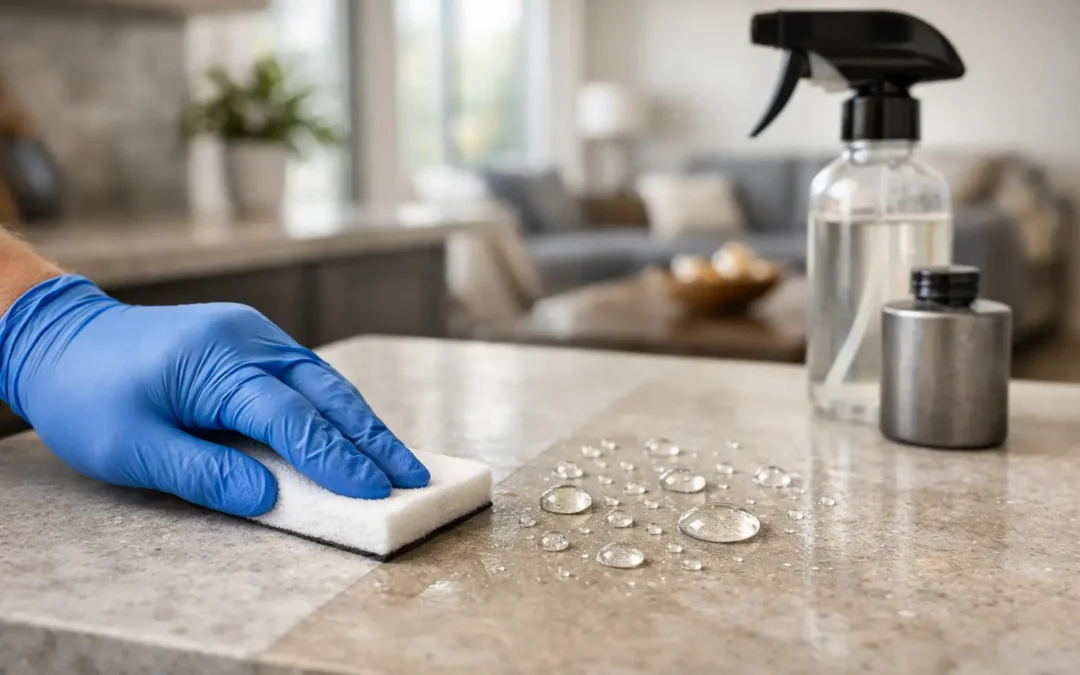
A pale limestone worktop, marble vanity or natural-stone floor can transform a room, but it also needs the right protection from the start. In this Stainproof Original sealer review, we look at what this premium impregnating sealer is designed to do, where it is a sensible choice, and what homeowners should realistically expect from it.
For kitchens and bathrooms, the appeal is clear: a surface that is easier to live with without changing the natural character of the stone. That benefit is real when the sealer is correctly specified and applied. It is not, however, a substitute for sensible cleaning, prompt spill removal or choosing the right material for the way your household uses the room.
What Stainproof Original sealer is designed to do
Stainproof Original is a penetrating, or impregnating, sealer for porous natural stone, masonry, grout and similar mineral surfaces. Rather than leaving a visible film over the top, it is intended to penetrate into the pores of the material and make it more resistant to water and oil-based staining.
That distinction matters. A topical coating can alter the sheen or feel of a surface and may eventually wear unevenly. An impregnating sealer aims to preserve the appearance of the stone while reducing the speed at which spills can soak in. On a honed limestone worktop, for example, this can provide valuable extra time to wipe away cooking oil, wine or coloured food spills before they become a lasting mark.
The product is often considered for porous stones such as limestone, travertine and some marbles, as well as porous granite, slate, sandstone, grout and concrete. Suitability depends on the particular slab or tile, its finish and how absorbent it is. Two pieces of stone sold under the same name can behave very differently.
Stainproof Original Sealer review: the strengths
The main strength is its focus on stain resistance without a pronounced surface finish. For many homeowners, particularly those choosing natural stone for a kitchen or bathroom, that is exactly what they want. The material keeps its tactile, natural appearance rather than looking coated or artificially glossy.
It is also a practical choice where a surface is exposed to regular splashes and occasional spills. Kitchen worktops, utility room floors, shower surrounds, bathroom vanity tops and stone hearths can all benefit when the underlying material is suitable. A good impregnating sealer is especially reassuring in family homes, where a small delay in dealing with a spill is sometimes unavoidable.
Another advantage is that protection can form part of a considered installation process. Stone should be assessed, prepared, sealed where appropriate and handed over with clear care guidance. This is preferable to treating sealing as an afterthought once staining has already occurred.
Stainproof Original is positioned as a high-performance product, and that can make it worth considering for a premium stone installation. The upfront cost may be higher than basic DIY sealers, but the relevant comparison is not simply bottle price. It is whether the chosen sealer is suitable for the surface, applied thoroughly and likely to reduce avoidable damage over time.
The limitations homeowners should understand
No sealer makes natural stone stainproof in the literal sense. It makes the surface more stain resistant. Strongly coloured liquids, oils, cosmetics, dye, rust, plant matter and acidic foods can still mark a surface, particularly if left in place. The best rule remains simple: blot spills promptly rather than rubbing them across the stone.
Sealing also does not prevent etching. This is particularly relevant to marble, limestone and other calcareous stones. Lemon juice, vinegar, wine and some bathroom products can react with the stone itself, leaving a dull or lighter patch. That is a chemical change to the surface, not a conventional stain, and an impregnating sealer cannot stop it.
Nor will a sealer prevent scratches, chips, heat damage, grout cracking or wear caused by abrasive cleaning. A stone worktop still needs chopping boards, trivets and pH-neutral cleaning products. In a bathroom, it still needs regular removal of soap residue and limescale using products appropriate for natural stone.
This is why material selection comes before product selection. A busy family kitchen that sees frequent citrus preparation, red wine and enthusiastic cooking may suit a more forgiving worktop material than highly polished marble. Natural stone can be an excellent choice, but it should match the household as well as the design.
Where it makes the most sense
Stainproof Original is likely to be most valuable on a genuinely porous surface in a location where stains are a realistic risk. Honed limestone flooring, a porous stone splashback, a natural-stone vanity or grout in a wet area are common examples.
It may be less necessary on very dense, highly polished stone that absorbs little or no liquid. Applying sealer to a non-absorbent surface will not create extra protection, and excess product left on the surface can cause problems with residue or appearance. A simple absorption test on an inconspicuous area can help establish whether sealing is needed, although professional advice is sensible for an expensive worktop or newly installed bathroom.
External stone also needs more careful consideration. Weather exposure, moisture movement, existing contamination and the type of paving all affect the right preparation and sealer choice. The same product that works well indoors is not automatically the best answer for every patio, path or wall.
Application is as important as the product
Even a quality sealer can disappoint if it is applied over dust, moisture, old coatings, grout haze or existing stains. The stone must be clean and fully dry, and any previous treatments need to be identified before work begins. Sealing over a stain may make it harder to remove later.
Application should follow the manufacturer’s instructions for the specific surface. In broad terms, the sealer is applied evenly, allowed to dwell for the required period and then all excess is removed before it dries on the surface. Porous stone may need more than one application, while dense stone may need none. Leaving surplus sealer to cure on top is a common cause of streaking or tacky patches.
Ventilation and sensible site protection are also essential. In a kitchen renovation, sealing is best coordinated around templating, fitting, grouting and final clean-down so that the surface is protected at the right stage rather than being repeatedly exposed to construction dust and moisture.
For homeowners in Maidstone and the surrounding Kent area investing in stone worktops or tiled bathrooms, this is one area where experienced preparation is often worthwhile. The cost of getting it right is usually modest compared with attempting to correct residue, patchiness or a permanent stain on a costly surface.
How to care for a sealed surface
A sealed surface should be easy to maintain, not difficult. Use a soft cloth or mop and a pH-neutral cleaner suitable for natural stone. Avoid household cleaners containing acids, bleach, ammonia or harsh abrasives unless the product manufacturer specifically confirms they are appropriate for the material.
Do not judge the sealer’s performance by whether water sits in beads forever. Water beading can be a useful indication, but it is not the whole story and can vary with cleaning routines, surface texture and use. More useful is observing whether the stone darkens quickly when a small amount of water is placed on an inconspicuous area, then wiped away.
If the surface begins absorbing liquids readily, it may be time to reassess protection. Resealing intervals vary considerably. A lightly used bathroom vanity may perform differently from a kitchen island used every day, and the stone itself has a major influence. There is no reliable one-size-fits-all timetable.
Our verdict
Stainproof Original is a strong option for suitable porous stone and mineral surfaces where homeowners want discreet, high-level stain resistance rather than a visible coating. Its greatest value lies in protecting an investment while retaining the natural look that made the material appealing in the first place.
The trade-off is that it demands realistic expectations and careful application. It cannot make marble immune to etching, rescue an unsuitable material choice or remove the need for everyday care. When matched to the right stone, installed properly and supported by straightforward cleaning habits, it can help a beautiful kitchen or bathroom remain enjoyable for many years.