A good Victorian-style bathroom should never feel like a museum piece. Nor should it feel so stripped back that the period character disappears. The best modern victorian bathrooms get that balance right – they borrow the elegance, detail and sense of permanence of the Victorian era, then quietly improve everyday comfort with better layouts, smarter storage and more dependable materials.
For many homeowners, that mix is exactly the appeal. You can enjoy a bathroom with real presence, but still have underfloor heating, a properly sized shower, easy-clean surfaces and lighting that works at 6am as well as it does during a long evening soak. Getting there, though, takes more than simply adding a roll-top bath and some patterned tiles.
What defines modern victorian bathrooms?
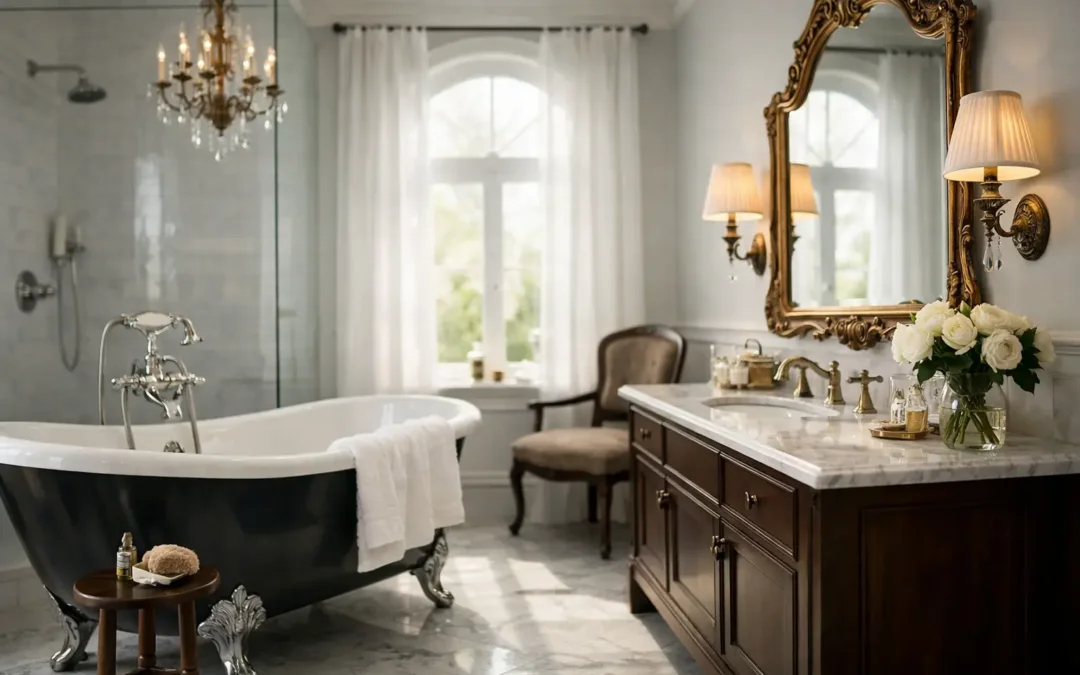
At their best, modern victorian bathrooms combine classic shapes with a cleaner, more considered finish. Think of high-level detailing, traditional brassware profiles, panelled vanity units, marble-effect surfaces, matt paint colours and statement mirrors, but edited for the way people live now.
That usually means the room keeps a sense of decoration and warmth, while avoiding clutter. Victorian design was often layered and rich, but many modern homes do not have the same room sizes or ceiling heights. So the aim is not strict historical accuracy. It is to capture the atmosphere without making the space heavy or impractical.
This is where design judgement matters. A bathroom can quickly tip too far in either direction. If every surface is ornate, the room can feel busy. If everything is too plain, the Victorian influence looks token. The most successful schemes pick a few clear references and support them with modern performance.
Start with the architecture you actually have
One of the most common mistakes is designing for a period property that does not exist. Not every home in Kent has original cornicing, high ceilings and generous proportions. That is perfectly fine. A modern Victorian look can work in a Victorian terrace, a 1930s house, a village cottage or a newer property, but the approach should change.
If your home already has period features, the bathroom design can afford to echo them more directly. Picture rails, deep skirting boards, sash-style windows or original fireplaces in neighbouring rooms can all justify stronger traditional detailing. In a newer home, the look often works better when it is simplified – perhaps a shaker-style vanity, classic taps, half-height wall panelling and patterned floor tiles rather than a full period recreation.
This is often the difference between a bathroom that feels thoughtfully designed and one that feels borrowed from somewhere else.
The colours that make the style work
Colour does a great deal of the heavy lifting in modern victorian bathrooms. Brilliant white sanitaryware still has its place, but the surrounding palette is what gives the room its mood.
Deeper shades such as navy, charcoal, forest green and warm black can create the grounded, tailored feel many people want from this style. Softer tones such as chalk, mushroom, stone and muted sage keep things lighter while still feeling more characterful than plain white. The right choice depends on natural light, room size and how dramatic you want the end result to be.
There is a trade-off here. Darker colours can look exceptional with brass, marble and traditional detailing, but they need enough light and a confident hand. In a small bathroom with no window, they may feel oppressive unless balanced with reflective finishes and layered lighting. Lighter schemes are easier to live with visually and can make compact rooms feel larger, but they need texture and contrast to avoid looking flat.
Brassware and sanitaryware need balance, not competition
Taps, showers and brassware do more than provide function in this style – they set the tone. A brushed brass finish often works beautifully because it nods to period warmth without looking overly polished. Chrome remains a strong option too, especially if you prefer a fresher, crisper take on the style. Matt black can work in some schemes, but it generally pushes the room in a more contemporary direction.
The same applies to sanitaryware. A freestanding bath is the obvious focal point, but it is not always the right one. If the room is tight and daily life revolves around quick mornings and family use, a well-designed shower-bath or a spacious walk-in shower may be the better decision. There is nothing less luxurious than squeezing a statement bath into a room that can no longer function properly.
Basins and WCs should feel substantial enough to suit the scheme, but not oversized for the space. Wall-hung pieces can be useful in smaller rooms because they introduce a cleaner line and make floor space easier to maintain. That may seem less traditionally Victorian, yet it can be the very thing that makes the whole room practical.
Tiles and wall finishes give the room its character
If there is one area where homeowners can shape the style quickly, it is surface choice. Metro tiles, marble-look porcelain, encaustic-style patterned floors and tongue-and-groove panelling all sit naturally within a modern Victorian palette.
The key is restraint. Use too many strong patterns and the room starts to argue with itself. A patterned floor often works best when wall tiles are simpler. Likewise, if you want bold wall colour and decorative mirrors, a quieter floor may be the better partner.
Porcelain is often the practical choice because it gives the look of natural stone or encaustic tile with less maintenance. That matters in real homes. Beautiful bathrooms should still be easy to clean and durable enough for everyday use. It is one thing to admire a finish in a showroom. It is another to live with it for the next ten years.
Storage matters more than most people expect
Traditional style can tempt people into focusing only on the decorative side, but clutter is one of the fastest ways to spoil the effect. Modern Victorian bathrooms work best when all the practical items – toiletries, spare towels, cleaning products, children’s bath toys – have somewhere sensible to go.
A vanity unit is usually doing more work here than a pedestal basin. It keeps visual noise down and gives the room a stronger furniture feel, which suits the style well. Recessed mirrored cabinets, built-in niches and bespoke fitted storage can also be introduced without losing character, especially when finishes are chosen carefully.
This is where tailored design becomes particularly valuable. Every household uses a bathroom differently. A couple creating an elegant en suite may prioritise atmosphere and symmetry. A family bathroom in a busy household may need hard-working storage, a tougher floor and easier access around the bath or shower.
Lighting is what stops the room feeling flat
Bathrooms with period influence often look best when the lighting is layered rather than harsh. A single ceiling fitting rarely does enough. Wall lights at mirror height, softer ambient lighting and practical task lighting around the vanity all help create depth.
This is especially important with darker paint colours and richer materials. Without proper lighting, lovely details disappear. With it, panelling, brass finishes and textured surfaces all come to life.
It is also worth planning lighting early, not as a finishing touch. If you want symmetrical wall lights, illuminated mirrors or feature pendants over a bath, those decisions affect wiring positions and the overall layout.
Why layout still comes first
No matter how attractive the fittings are, layout decides whether the bathroom actually works. The Victorian influence should never override the basics of movement, access and comfort.
That may mean choosing a slightly smaller freestanding bath so the room breathes properly. It may mean placing the shower where cleaning is easier, or selecting a vanity that improves storage without making the room feel cramped. In some homes, especially older properties, awkward walls and existing plumbing routes also shape what is sensible.
This is often the stage where homeowners benefit from experienced guidance. A bathroom can look straightforward on paper and still become awkward once door swings, window heights, pipe runs and headroom are taken into account. Careful planning at the beginning avoids expensive compromises later.
For homeowners around Maidstone and the wider Kent area, this is often where a showroom-led design process pays off. Seeing finishes together, comparing brassware tones and discussing how the room will actually be used tends to produce better decisions than buying individual pieces in isolation.
A style worth getting right
Modern Victorian bathrooms last because they do not chase trends too hard. They offer warmth, detail and a sense of quality, but they can still be adapted to suit contemporary life. That makes them particularly appealing for homeowners who want a bathroom to feel established rather than temporary.
The secret is not to copy the past too literally. It is to take the best elements of Victorian design – proportion, elegance, decorative restraint, lasting materials – and combine them with the comfort and practicality expected from a modern home. When those parts are in balance, the result feels timeless rather than themed.
If you are planning a bathroom with this look, give as much thought to layout, lighting and storage as you do to taps, tiles and paint. The room should look impressive on day one, but it should also feel easy to live with every single day after that.