Some bathrooms date quickly because they lean too hard in one direction. Go ultra-modern and the room can feel cold within a few years. Go fully traditional and it may start to feel fussy or less suited to modern family life. The appeal of modern traditional bathroom ideas is that they sit comfortably in the middle, giving you the warmth and character of period-inspired design with the comfort, storage and usability people expect today.
For many homeowners, that balance is exactly what makes a bathroom feel worth the investment. You want a space that still looks right in five or ten years, works well in a busy household, and feels considered rather than copied from a trend. Getting there is not about mixing random old and new elements. It is about understanding which features create heritage charm, and which modern updates make daily life easier.
What makes modern traditional bathroom ideas work?
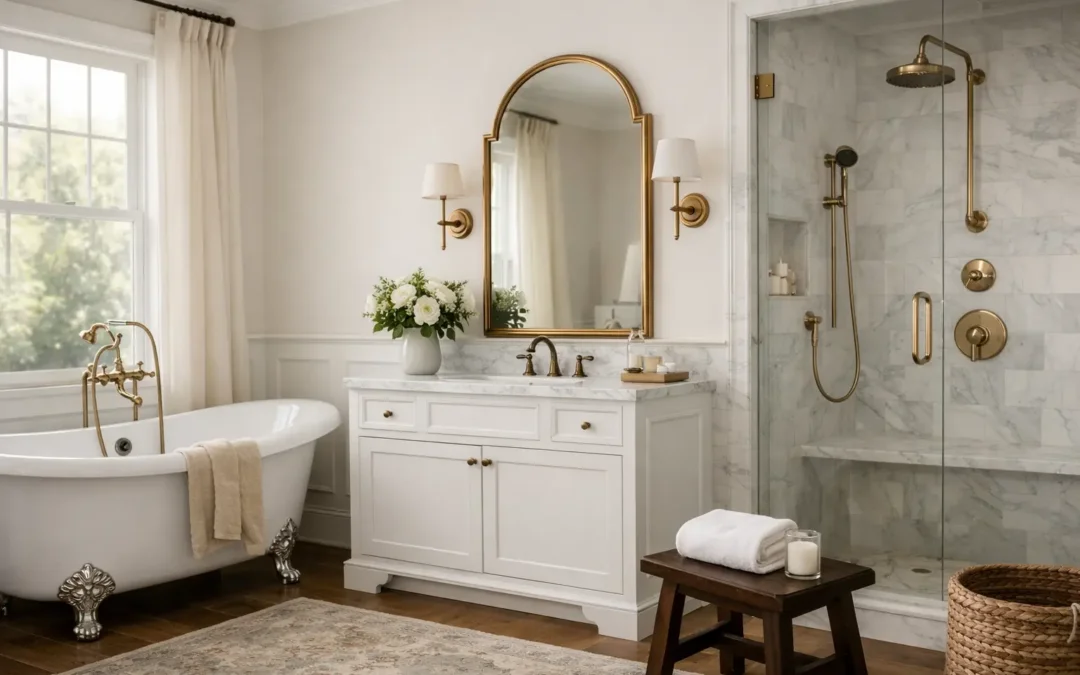
At its best, this style is built on contrast with purpose. You might pair shaker-style furniture with a sleek quartz worktop, or choose traditional brassware in a cleaner, more minimal shape. The room should feel calm and coherent, not split into two competing styles.
Proportion matters more than people often realise. In a larger bathroom, a freestanding bath, half-height panelling and a generous vanity can all sit comfortably together. In a smaller room, you may need to be more selective. A wall-hung vanity with classic door detailing, for example, can give you the traditional look without taking too much visual space.
Materials also do a lot of the heavy lifting. Natural stone effects, painted timber finishes, ceramic tiles and brushed brass or nickel all help create a timeless base. Then modern elements can be introduced through sharper lines, better lighting, underfloor heating or more efficient storage.
1. Start with a classic shape, then simplify it
If you are planning a modern traditional scheme, begin with one or two traditional anchors. This might be a roll-top bath, a basin with a furniture-style vanity, or framed wall panelling. Once those features are in place, keep the rest of the design cleaner and less ornate.
This is often where the room feels more current. Instead of heavily detailed cornices, decorative borders and multiple feature finishes, choose simpler surfaces and restrained colour changes. A classic vanity in a painted finish can look fresh when paired with plain walls, a large mirror and discreet lighting.
The trade-off is that restraint can feel underwhelming if the room lacks character elsewhere. That is why texture, joinery detail and good quality fittings matter. Simplicity only works when the underlying choices are strong.
2. Choose a colour palette with depth
Colour is one of the easiest ways to bring old and new together. Soft whites, warm greys, sage green, muted blue and earthy taupe all suit this look because they feel settled rather than stark. These shades also work well with natural materials and classic sanitaryware.
Bright white can be effective, but it often needs warming up with timber tones, brushed metallics or textured tiling. Cooler greys can look elegant, although too much grey can flatten the room if there is not enough contrast. For many homes, especially period or character properties, warmer neutrals tend to give a more welcoming result.
If you want a darker scheme, consider using deeper colour on vanity furniture or panelling rather than across every surface. Navy, forest green or charcoal can look striking, but they need good lighting and enough floor area to avoid making the room feel enclosed.
3. Use wall panelling carefully
Wall panelling is one of the strongest traditional references you can introduce, but it needs to be handled with care in a bathroom. Tongue and groove or shaker-style panelling can bring charm and structure, particularly in cloakrooms and family bathrooms.
To keep the overall look modern, avoid overcomplicating it. Panelling to dado height with painted plaster above usually feels fresher than covering every wall. It also gives you a natural way to break up colour and helps the room feel less busy.
In wetter zones, practical specification is key. Moisture-resistant materials and proper installation matter far more than the visual effect alone. This is one of those details that can look lovely on a mood board but disappoint in real life if it is not planned correctly.
4. Mix classic brassware with cleaner lines
Taps, shower controls and handles can steer the style of the entire room. Crosshead taps and heavily ornate fittings push the space further towards a period look, while ultra-minimal brassware can make it feel sharply contemporary. For a balanced result, look for traditional influence without too much embellishment.
A softly curved basin mixer in brushed brass, bronze or polished nickel often works well. These finishes add warmth and depth, especially against painted furniture or marble-effect surfaces. Chrome still has its place and can be a sensible choice if you want a brighter, more understated finish.
Consistency matters here. Mixing too many metal finishes can make the room feel unresolved. In some schemes, two finishes can work, but only if there is a clear reason for each.
5. Make storage part of the design
One reason some traditional bathrooms feel less practical is that they were never designed around modern storage needs. Hair tools, spare toiletries, cleaning products and everyday clutter all need a home. Without proper storage, even the best-designed room loses its sense of calm.
Furniture-style vanity units are ideal for this look because they combine classic visual appeal with useful concealed storage. Shaker doors, in-frame detailing and painted finishes all support the style, while drawers and internal organisers make the room easier to live with.
Open shelving can be attractive for styled towels or baskets, but it works best as a secondary feature. For most households, closed storage is what keeps the room looking smart on a Tuesday morning rather than just in the brochure.
Modern traditional bathroom ideas for tiles and surfaces
Tiles are often where people either overplay the traditional theme or strip too much character out of the room. Metro tiles, marble-effect porcelain, patterned floors and stone-look finishes can all work, but the combination needs thought.
A simple approach is often the strongest. You might use a marble-effect tile on the floor with plain wall tiles, or choose metro tiles in a softer colour with a more understated floor. If you love pattern, keep it contained to one area such as the floor or a shower recess.
Grout colour makes a difference too. High-contrast grout can feel more industrial and modern, while matching grout gives a softer, more classic finish. Neither is right or wrong, but the decision should fit the wider scheme.
6. Introduce a bath or basin with presence
Statement sanitaryware can bring personality to a modern traditional bathroom without relying on decorative excess. A freestanding bath is the obvious example, but not every room has the space for one. In a tighter layout, a well-designed built-in bath with panel detailing can achieve a similar effect more efficiently.
Basins also offer a chance to strengthen the style. Countertop basins can work if the rest of the room is grounded in classic materials, but in many cases an integrated basin within a furniture unit feels more balanced. It gives a smarter line and often offers better practical use around splashes and cleaning.
The right choice depends on how the bathroom will be used. A family bathroom usually benefits from easier maintenance, while an en suite may allow for something more design-led.
7. Layer lighting instead of relying on one fitting
Bathrooms need more than a central ceiling light. Good lighting makes the room easier to use, but it also changes how traditional details are perceived. Wall lights beside a mirror, soft LED lighting beneath furniture, and well-placed ceiling spots can add depth without making the room feel overly technical.
For a modern traditional look, decorative wall lights often do more than a feature pendant. They reinforce the classic side of the design while still allowing the room to function well. The key is to combine atmosphere with practical task lighting around the mirror and shower area.
This is especially useful in homes where natural light is limited. In many Kent properties, bathrooms can be compact or tucked into less generous layouts, so lighting has to work hard.
8. Keep the layout contemporary
A room can look traditional without being planned in a traditional way. In fact, one of the best modern updates is simply improving the layout. Better spacing, a larger shower enclosure, a wall-hung WC frame, or more efficient vanity placement can completely change how the room feels.
This is where experience matters. Sometimes people focus on finishes first, when the real improvement comes from rethinking the use of the space. Moving the basin, widening a shower opening, or choosing fitted furniture instead of separate pieces may not sound dramatic, but it often has the biggest impact on daily comfort.
9. Add warmth through texture
Modern traditional bathrooms can fall flat if everything is too smooth and polished. Texture adds the softness that makes the room feel inviting. Fluted glass, brushed metals, painted timber, natural-look porcelain and quality textiles all help.
This does not mean crowding the room. A few well-chosen finishes usually do enough. The aim is to create a space that feels settled and lived in, rather than overly glossy.
10. Design for longevity, not just first impressions
The best modern traditional bathroom ideas are the ones that still make sense after the novelty has worn off. That means choosing finishes you can live with, investing in quality where it counts, and being honest about how much maintenance you are willing to take on.
Natural stone can be beautiful, for example, but it may need more care than porcelain. Freestanding baths look elegant, but they are not always the easiest to clean around. Brass finishes can add warmth, though some households prefer the simplicity of chrome for long-term upkeep. None of these are deal-breakers. They just need to match your priorities.
A good bathroom should do more than look impressive on completion day. It should feel easy to use, comfortable to maintain and right for your home. If you are weighing up styles and want a bathroom that blends character with everyday practicality, modern traditional design is often the most reliable place to start.