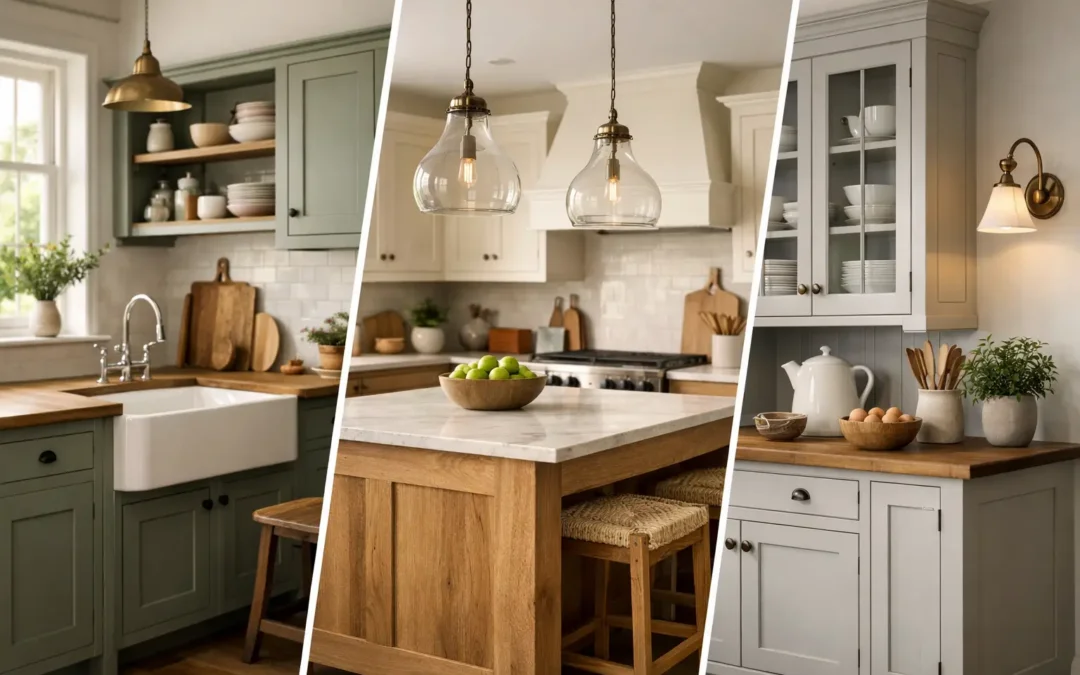
A well-planned Shaker kitchen does not need to feel old-fashioned to feel traditional. The best traditional shaker kitchen ideas take the quiet simplicity of framed doors and honest detailing, then build in the comfort, storage and practicality that modern family life demands.
For many homeowners, that balance is exactly the challenge. You may love the warmth of a classic kitchen, but you still want enough drawer space, durable surfaces and lighting that works on a dark winter afternoon. That is where thoughtful design matters most. A traditional Shaker scheme should look settled and timeless, but it also needs to earn its place in daily use.
What makes traditional Shaker kitchen ideas work?
Shaker design has lasted because it is disciplined rather than fussy. The door style is simple, proportions matter, and every element has a purpose. In a traditional setting, that usually means painted timber-style cabinetry, tactile natural materials, softer colours and details that feel established without becoming overly decorative.
The key is restraint. Too little detail and the kitchen can feel plain. Too much and it stops looking like Shaker at all. A successful design usually sits somewhere in the middle, with enough character to create warmth and enough simplicity to stay elegant for years.
1. Start with a softer, heritage-led colour palette
Colour does a great deal of the work in a traditional Shaker kitchen. Deep navy, muted sage, warm stone, soft grey and off-white all suit the style because they have a calm, settled quality. These shades allow the cabinetry profile to stand out without shouting for attention.
Lighter colours can make a smaller room feel more open, especially in period cottages or narrower kitchen layouts. Darker painted cabinets bring depth and richness, particularly in larger spaces with good natural light. If you are unsure, a two-tone approach often gives you the best of both. A lighter perimeter with a darker island keeps the room grounded without making it feel heavy.
It also helps to think about the light in your home rather than choosing a colour from a sample card alone. North-facing rooms can flatten cooler greys, while warmer tones tend to feel more comfortable throughout the day.
2. Choose cabinetry details that feel classic, not overdone
Traditional Shaker kitchens benefit from subtle detailing. Beaded frames, mantle shelves, glazed dressers and pilasters can all work well, but only if they suit the architecture of the room. In a Victorian terrace, those details may feel perfectly natural. In a newer build, too many decorative features can look forced.
This is one of the most common trade-offs in kitchen design. Many homeowners want a kitchen with character, yet the room itself may be fairly modern. In that case, it is often better to introduce tradition through finishes and accessories rather than loading every cabinet with decorative trim.
A simpler Shaker door with well-chosen handles and a traditional cornice can be enough to create the right effect.
3. Use handles and ironmongery to add authenticity
Handles are small, but they change the mood of a kitchen quickly. A traditional Shaker style often suits cup handles on drawers and knobs on doors, especially in aged brass, pewter or antique black finishes. These choices add weight and visual texture without overpowering the cabinetry.
That said, comfort matters. If you cook regularly and use deep pan drawers every day, the handle needs to feel right in the hand as well as look appropriate. It is always worth testing a few options before committing, especially if different generations in the household will be using the space.
Mixing finishes can work too, but it needs a steady hand. One metal finish throughout usually creates a calmer and more convincing result.
4. Bring in natural worktops or convincing stone-effect surfaces
Worktops can either strengthen a traditional scheme or pull it towards something more contemporary. Natural stone, wood and quartz with gentle veining all sit comfortably with Shaker cabinetry. They add depth and texture, and they help avoid the flatter, more clinical look that some ultra-modern surfaces create.
Wooden worktops have plenty of charm, particularly in period homes, but they do ask more of you in terms of upkeep. Around sinks and heavy-prep areas, many homeowners prefer the resilience of quartz or granite. This is a good example of where the most traditional-looking option is not always the most practical one.
A sensible compromise is to combine materials. Stone around the main working areas and timber on an island or breakfast section can give you both warmth and durability.
5. Think carefully about the sink and tap
A Belfast or Butler sink is one of the most recognisable features in traditional shaker kitchen ideas, and for good reason. It adds character immediately and works beautifully with painted cabinetry and stone worktops. It also tends to suit homes where the kitchen is meant to feel generous, practical and welcoming.
However, these sinks are larger and visually stronger than under-mounted alternatives, so they need the right setting. In a compact kitchen, a fireclay sink can dominate more than you expect. If space is tight, a more understated ceramic sink may keep the balance better.
Pairing the sink with a classic bridge tap or a gently curved mixer tap can complete the look without making the room feel theatrical.
6. Add storage that protects the traditional look
One reason some traditional kitchens disappoint is that they look lovely in photographs but struggle in real life. Crockery piles up, small appliances crowd the worktop and the whole room loses its calm. Good storage is what keeps a traditional kitchen looking timeless rather than busy.
Deep pan drawers, integrated recycling, larder cupboards and corner solutions can all sit behind Shaker fronts. From the outside, the kitchen still feels classic. In daily use, it works far harder than an older kitchen ever did.
This is often where experienced design support proves its worth. Homeowners can understandably focus on colours and finishes first, but layout and storage planning will shape the kitchen for the next ten or fifteen years.
Traditional shaker kitchen ideas for lighting
Lighting is often treated as a finishing touch, yet in a traditional kitchen it plays a major part in the atmosphere. Pendant lights over an island or dining table can add softness and visual focus, especially in glass, aged metal or ceramic finishes. Wall lights or under-cabinet lighting can then support everyday tasks more quietly.
The aim is not to make the room dramatic for its own sake. It is to create layers of light so the kitchen feels inviting in the evening and practical during food preparation. A single central fitting rarely does either job well enough.
If your kitchen includes a dining or seating area, lighting should help zone the space. That matters particularly in open-plan rooms, where the kitchen needs to feel connected to the house without looking like a line of cabinets dropped into a living area.
8. Include furniture-style pieces where space allows
Traditional kitchens often feel more relaxed when they include something that looks like furniture rather than fitted cabinetry from wall to wall. That might be an island with turned legs, a dresser, an open shelf section or a bench seat built into a corner.
These elements soften the fitted nature of the room and make the kitchen feel more lived in. They are especially effective in older properties, where a fully uniform run of cabinetry can feel slightly too polished.
Of course, space has the final say. In a smaller room, forcing in a dresser or oversized island can make movement awkward. The better option may be to keep the layout simpler and add warmth through texture, lighting and colour instead.
9. Don’t ignore flooring and wall finishes
A traditional Shaker kitchen is never just about the cabinets. Flooring and walls provide much of the background character. Porcelain tiles with a natural stone look, real stone, timber flooring or even patterned tiles in the right property can all work well.
Wall finishes should support the cabinetry rather than compete with it. Soft paint colours are usually the safest route, though tongue-and-groove panelling or a classic tiled splashback can add another layer of interest. The most effective rooms tend to have variation in texture, not constant variation in colour.
If you are renovating an older home in Kent, it is often worth taking cues from the property itself. Ceiling height, existing flooring, window style and natural light can all guide what will look genuinely at home.
10. Make room for modern appliances without losing character
The best traditional kitchens quietly handle modern life. Integrated dishwashers, refrigeration, induction hobs and boiling water taps can all be included without spoiling the aesthetic. What matters is how they are positioned and framed within the design.
A range cooker often suits a traditional Shaker layout, but it is not the only answer. For some households, separate ovens at a comfortable height are simply easier to use. Likewise, a statement chimney hood can look beautiful, but a more discreet extraction solution may suit the room better.
This is where good kitchen design becomes personal rather than prescriptive. A traditional style should reflect how you live, not just what looks appealing in a showroom. At MBK Design, that usually starts with understanding how a household cooks, stores, entertains and moves through the space before final choices are made.
Traditional Shaker kitchens endure because they are not chasing fashion. When the proportions are right, the materials are well chosen and the practical details are properly considered, they can feel as relevant in ten years as they do now. If you are planning your own kitchen, the smartest ideas are usually the ones that respect the character of the style while making everyday life noticeably easier.