A kitchen can look impressive on the day it is finished and still feel dated surprisingly quickly. So, what makes a kitchen timeless? It is rarely one colour, door style or fashionable finish. A timeless kitchen is one that continues to work beautifully for the household, feels right for the property and has enough quiet confidence not to rely on the trend of the moment.
For homeowners planning a major renovation, this matters because a kitchen is a considerable investment and one of the hardest-working rooms in the home. The aim is not to create a space with no personality. It is to make the lasting decisions well, then bring character through details that can evolve more easily over time.
1. A layout that serves real life
The strongest timeless kitchens begin with planning, not decoration. A well-considered layout makes preparing meals, clearing up, storing food and spending time together feel straightforward. No amount of beautiful cabinetry can compensate for a cramped route to the fridge, too little worktop beside the hob or a dishwasher that blocks the main walkway when open.
The right arrangement depends on the room and the people using it. A busy family may benefit from a generous island with seating away from the cooking zone, while a couple renovating a period property may prefer a practical galley layout that respects the proportions of the room. A utility area, larder storage or a dedicated drinks cupboard can make daily routines calmer where space allows.
Good planning also considers how the kitchen connects to the rest of the home. In an open-plan room, sightlines, noise and storage become particularly important. In a smaller separate kitchen, every cabinet and every centimetre of worktop needs a clear purpose. Timeless design is not about following a prescribed layout. It is about making the layout work for the life you lead.
2. Cabinetry with balanced proportions
Cabinet doors are among the largest visual surfaces in a kitchen, which is why their proportions and construction matter more than a passing trend. Shaker-style doors have endured because their simple framed detail suits both traditional and contemporary homes. Flat-fronted doors can be equally long-lasting when their lines are clean and the finish is well chosen.
The key is restraint. Extremely ornate mouldings, oversized handles or novelty door profiles can make a room feel rooted in a particular decade. That does not mean a traditional kitchen must be plain, nor that a modern scheme must be handleless. It means the detail should suit the architecture and be pleasing without demanding attention.
Consider the scale of the room, too. Tall cabinets can provide invaluable storage, but a full wall of them may feel heavy in a modest kitchen. Breaking them up with open space, a well-positioned worktop run or a carefully selected dresser can give the room breathing room. In a larger kitchen, cabinetry needs sufficient presence to avoid looking insubstantial.
3. Materials chosen for living, not just looking
A timeless kitchen earns its character through materials that age with dignity. Natural timber, stone, ceramic, quality laminate and durable composite surfaces can all work well, provided they suit the household and are specified honestly.
For example, natural stone offers depth and individuality, but it may require sealing and a little more care than some engineered alternatives. A pale timber worktop can bring warmth, although it is not the most forgiving option beside a heavily used sink. Quartz-style surfaces are practical and consistent, while ceramic worktops offer excellent heat and scratch resistance but need knowledgeable handling and fitting due to their weight and rigidity.
There is no universally correct choice. The most enduring material is often the one whose maintenance requirements match the way you actually live. A household that enjoys cooking every night may value resilience above all else. Someone restoring a characterful Kent home may be happy to accept a little patina in return for the richness of natural materials.
4. A calm foundation of colour
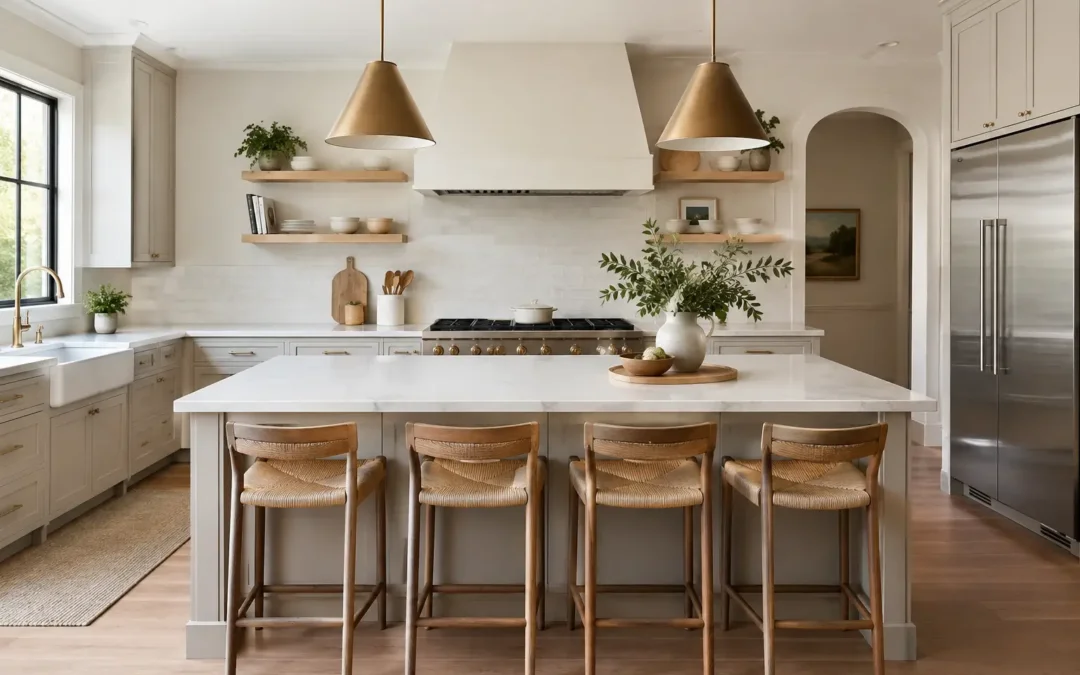
Neutral does not have to mean bland. Soft whites, warm greys, muted greens, earthy blues and natural timber tones tend to remain appealing because they sit comfortably with changing furnishings, wall colours and accessories. The most successful schemes often have an undertone that relates to the light in the room and the materials nearby.
Before settling on a colour, view samples in the actual kitchen space at different times of day. A grey that looks elegant in a showroom can appear cool in a north-facing room, while a cream that seems gentle under display lighting may look yellow in strong sunlight. Flooring, worktops and splashbacks should be considered alongside cabinetry, rather than selected in isolation.
A bolder colour is not automatically less timeless. Deep navy, forest green or a rich painted red can feel entirely at home when it reflects the property and is balanced with quieter surrounding finishes. The sensible approach is to put the most distinctive choices on elements that are less expensive to refresh than the core structure of the kitchen.
5. Worktops and splashbacks with visual continuity
Worktops and splashbacks do a great deal to set the tone of a room. A simple, well-made surface with a calm pattern usually has greater staying power than an aggressively veined or highly patterned option chosen purely because it is currently popular.
Continuing the worktop material up the wall can create a refined, uncluttered look, especially in a contemporary kitchen. Tiles can be just as enduring, particularly in ceramic, porcelain or handmade styles with subtle variation. The question is whether the scale, grout colour and pattern will still feel comfortable after years of daily use.
Practicality should have its say here. Light grout behind a hob can demand more cleaning, while heavily textured tiles may catch grease. A beautiful kitchen should not become a chore to keep looking presentable.
6. Lighting planned in layers
One central ceiling fitting rarely provides enough useful light for a kitchen. Timeless lighting combines practical task lighting with softer ambient illumination, then adds decorative fittings where they genuinely contribute to the room.
Under-cabinet lighting helps make worktops safer and more pleasant to use. Ceiling spots or discreet track lighting can give even coverage, while pendants over an island or dining table create focus and warmth. Dimmers are worth considering, particularly in kitchens that become social spaces in the evening.
Choose statement lights carefully. A sculptural pendant can be a lovely finishing touch, but it should not dictate the entire scheme or obstruct views across the room. Lighting trends move quickly; good light where you need it never goes out of style.
7. Storage that keeps surfaces clear
Timeless kitchens tend to feel calm because they are designed to contain the everyday clutter of modern life. Deep drawers for pans, internal recycling, practical corner solutions, tall larders and sensible drawer dividers are not glamorous decisions, but they affect how the kitchen feels every morning and every evening.
Think beyond the standard list of appliances. Where will bread, pet food, packed-lunch items, charging cables and the coffee machine live? Is there room for serving dishes, small appliances and the weekly shop? A kitchen can have generous cabinet numbers and still lack useful storage if the internal planning is poor.
Open shelving has a place, particularly for displaying ceramics or adding softness to a traditional scheme. It works best as an accent rather than the main storage strategy. Closed cabinets remain more forgiving for busy households and keep visual noise to a minimum.
8. Quality where it counts
A timeless appearance is only part of the picture. Doors should feel solid, drawers should run smoothly, hinges should be dependable and worktops should be properly supported and finished. These details are easy to overlook when comparing drawings or prices, yet they make a significant difference to long-term satisfaction.
It is also worth allowing for the hidden parts of the project: electrics, plumbing, ventilation, flooring transitions and the condition of walls and floors. A good design should account for these from the outset rather than treating them as inconvenient surprises later. Clear discussions about specification and budget help protect both the finished result and the overall experience.
At MBK Design Studio, the starting point is always how you want to use your home, not a one-size-fits-all look. With thoughtful planning and materials selected for your lifestyle, a kitchen can feel personal on day one and still feel right many years from now.