A worktop decision often looks simple until you are standing in a showroom, comparing samples under different light, wondering which surface will still feel right in ten years. If you are weighing up quartz or granite worktops, the best choice is rarely about which one is “better” overall. It is about how you cook, how much maintenance you want, the look you are aiming for and how the material will sit within the rest of your kitchen design.
Both materials are premium choices and both can add real presence to a room. Yet they behave differently in day-to-day life, and those differences matter once the kitchen is in regular use.
Quartz or granite worktops – what is the difference?
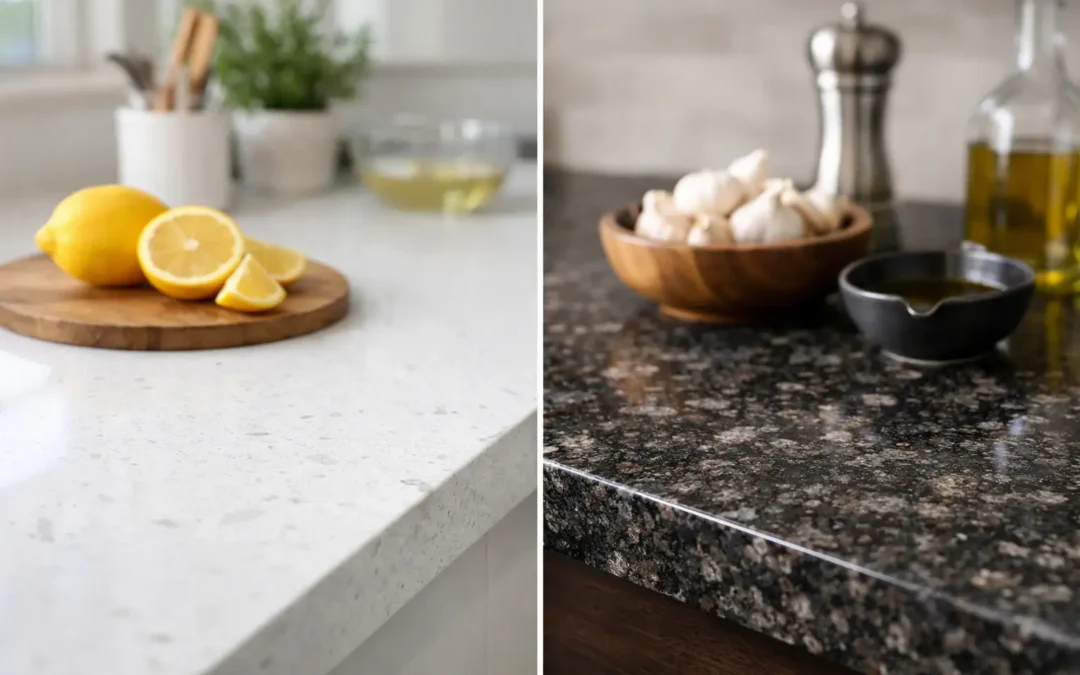
Granite is a natural stone cut from quarried slabs. That means every piece has its own pattern, variation and character. Some granites are dramatic and heavily veined, while others are tighter and more consistent in appearance. No two slabs are exactly the same, which is part of the appeal.
Quartz worktops are engineered surfaces made from natural quartz combined with resins and pigments. They are designed to give a more controlled finish, so colours and patterns tend to be more consistent from slab to slab. That consistency is useful if you want a clean, contemporary look or if your kitchen design depends on a very specific shade.
Neither option is a compromise. They simply suit different priorities.
Appearance and style in a real kitchen
For many homeowners, the visual decision comes first. Granite has a natural depth that is difficult to replicate. It can feel rich, individual and slightly less uniform, which suits kitchens where you want the worktop to have personality. In traditional spaces, in-frame cabinetry and timber details often sit beautifully alongside granite. It also works well in modern kitchens when you want to soften sharper lines with a more organic surface.
Quartz tends to appeal to those who want a neater, more tailored finish. If you like pale worktops, crisp veining, soft greys or a more contemporary matt style, quartz offers plenty of flexibility. It works especially well in modern family kitchens where the cabinetry, splashbacks and flooring are all being balanced carefully. Because the finish is more predictable, it can be easier to plan the overall scheme with confidence.
This is one of those moments where seeing a small sample is not enough. A material can look quite different across a full run of worktop, around a hob or across an island. Lighting, cabinet colour and even the size of the room all affect the result.
Durability and daily use
A kitchen worktop needs to do much more than look good. It has to cope with cooking, cleaning, spills, family life and the occasional heavy-handed moment.
Quartz is highly durable and non-porous, which makes it resistant to staining from common kitchen substances such as tea, coffee, wine and oil. Because the surface is engineered, it does not need sealing in the same way natural stone does. For many busy households, that lower-maintenance quality is a major advantage.
Granite is also extremely hard-wearing and performs very well in kitchens, but it is naturally porous to varying degrees. That means it usually needs sealing to help protect against staining and moisture penetration. Once properly sealed, granite is very practical, but it does ask a little more of you over time.
If you want the simplest care routine, quartz usually has the edge. If you value natural stone enough to accept some periodic maintenance, granite remains a strong choice.
Heat, scratches and the reality of wear
This is where the details matter. Granite generally handles heat very well, which is one reason it has remained popular for serious cooks. A hot pan is still best placed on a trivet rather than directly on the surface, but granite is typically more forgiving when it comes to high temperatures.
Quartz is tough, but the resin content means it can be more vulnerable to extreme heat. Sudden or intense temperature exposure may cause damage, so pan stands are a sensible habit. In most kitchens this is easy to manage, but it is worth knowing from the outset.
Both materials are resistant to scratching under normal use, although neither is indestructible. Chopping directly on any premium worktop is not a good idea, both for the surface and for your knives. Edges, corners and unsupported overhangs also need proper planning and fitting, whichever material you choose.
Which is easier to maintain?
When clients ask for a beautiful kitchen that does not become hard work, maintenance is often the deciding factor.
Quartz is straightforward. Warm water, a soft cloth and a mild cleaner are usually enough for everyday care. Because it is non-porous, it is less likely to harbour marks if spills are wiped promptly.
Granite is still practical, but it benefits from the right aftercare. Depending on the stone and its finish, periodic resealing may be recommended to keep it performing at its best. That is not an onerous task, but it is another item on the list. Some homeowners are perfectly happy with that in return for the look and individuality of natural stone. Others would rather remove that responsibility entirely.
There is no right answer here, only an honest one. If you know you prefer low-fuss living, choose accordingly.
Cost and value over time
Price is always part of the conversation, and understandably so. Worktop costs vary according to material, thickness, edge profile, cut-outs, supplier and installation complexity. The size of the kitchen and whether you are including a statement island can also shift the budget quickly.
Quartz and granite can both sit in the premium bracket, and either can represent good value when chosen well. Granite prices can vary significantly depending on the rarity and source of the slab. Quartz pricing is often influenced by brand, finish and design detail.
The better question is not simply which is cheaper, but which gives you better value for your way of living. A homeowner planning a long-term family kitchen may place more value on easy upkeep and consistency. Someone creating a distinctive kitchen with natural variation may see granite as the stronger investment. A well-designed kitchen is about the whole result, not a single line on a quote.
Quartz or granite worktops for different households
If your kitchen is busy from morning to evening, quartz often makes life easier. It suits households that want smart looks without added maintenance and works particularly well in contemporary renovations where a clean, cohesive finish matters.
If you are drawn to natural materials and want a surface with one-off character, granite can be worth the extra care. It often appeals to homeowners who enjoy the authenticity of stone and do not mind a little more involvement in keeping it at its best.
There are also design-led decisions. A compact kitchen may benefit from the brighter, more uniform appearance of a pale quartz. A larger room with a feature island might suit the movement and depth of granite beautifully. The cabinetry style, wall colours and amount of natural light all play a part.
Why fitting and specification matter as much as the material
A good worktop can be let down by poor planning. Sink cut-outs, drainer grooves, joints, upstands, edge profiles and support requirements all affect the finished result. So does the way the worktop meets appliances, window lines and feature walls.
This is why expert design advice matters early in the project, not just at the point of ordering the slab. The best material choice is one that works with your layout, your cabinetry and the way you actually use the room. In practice, homeowners often benefit from seeing the wider design first and then selecting the surface that supports it properly.
For kitchen projects in and around Maidstone, that joined-up approach can save a great deal of uncertainty. It helps avoid choosing a worktop in isolation, only to discover later that the tone, edge detail or upkeep does not quite fit the rest of the space.
So which should you choose?
Choose quartz if you want consistency, easy maintenance and a polished finish that works hard in a busy kitchen. Choose granite if you want natural beauty, distinctive variation and a material with genuine one-off character.
Both can look excellent and both can last for many years when specified and installed properly. The sensible decision is the one that matches your home, your habits and the standard you expect from the finished room.
If you are still torn, that is usually a sign you should compare full samples alongside your door colours, flooring and tile choices rather than making the decision from a photograph. The right worktop should not just impress on day one. It should continue to feel right every time you make a coffee, clear up after supper or gather people around the kitchen island.