
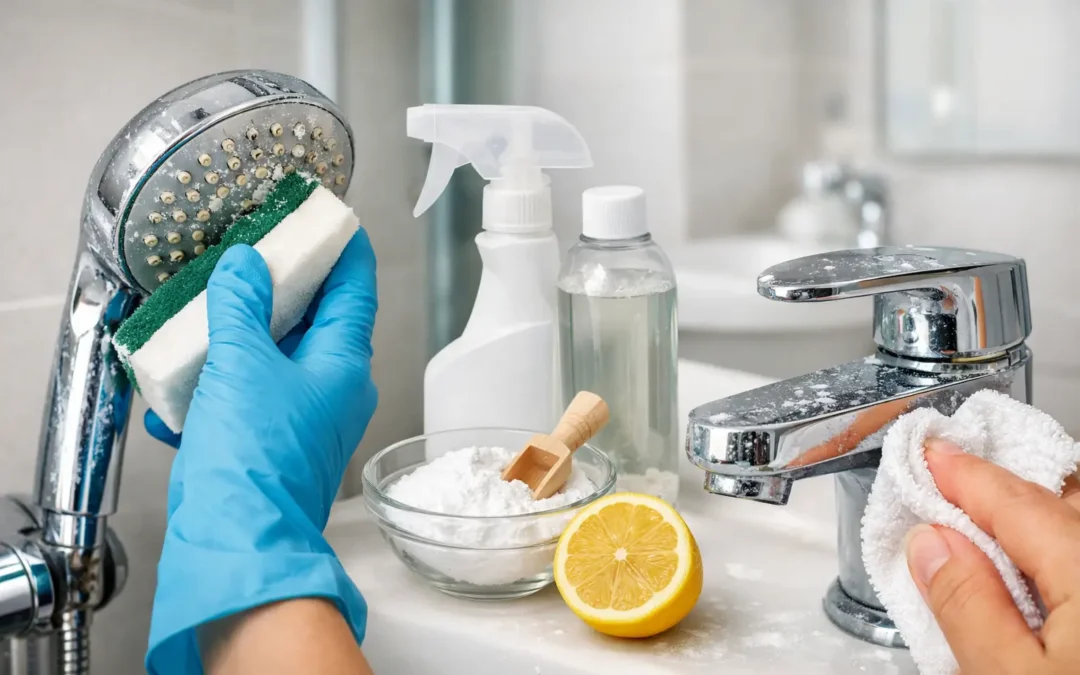
Because Limescale causes so much of a problem in our area every kitchen or bathroom we supply and arrange the installation we provide a free Aquabion if possible.
That chalky white crust around taps, on shower screens and along tile edges is more than a cleaning annoyance. Home limescale treatment for bathrooms matters because once scale builds up, it can make a good-quality bathroom look tired far sooner than it should. For homeowners investing in a new bathroom or trying to protect an existing one, dealing with limescale properly is part of keeping the room smart, hygienic and easier to maintain.
In Kent, hard water is a familiar issue. You can polish a basin and wipe a shower screen, only to find marks returning almost straight away. That is why it helps to think beyond quick fixes. The real question is not just how to remove limescale, but how to stop it repeatedly damaging the look and performance of your bathroom.
Why limescale is such a problem in bathrooms
Limescale forms when hard water evaporates and leaves mineral deposits behind, mainly calcium and magnesium. Bathrooms are the perfect environment for this. Taps are splashed daily, shower heads dry with droplets still on them, and glass screens collect a fine film every time the shower is used.
At first, the effect is cosmetic. Chrome loses its shine, glass turns cloudy and grout can begin to look dull. Left longer, it becomes more stubborn. Shower heads may spray unevenly, tap aerators can clog, and deposits can settle into corners and joints where ordinary cleaning no longer shifts them easily.
This is where many homeowners get frustrated. They clean more often, use harsher products, and still feel as though the room never looks fully fresh. In reality, the issue is often not effort. It is that the treatment method does not match the level of build-up, or the bathroom materials need a more careful approach.
Home limescale treatment for bathrooms – what actually works
The best home limescale treatment for bathrooms depends on two things: how severe the scale is and what surface you are treating. There is no single solution that suits every bathroom.
For light, recent deposits, a regular wipe-down with a suitable bathroom cleaner and a soft cloth is often enough. This works best on taps, shower screens and ceramic surfaces when the limescale has not yet hardened. Consistency matters more than scrubbing power. A little and often approach usually gives better results than waiting until the scale is obvious.
For more established build-up, descaling products can help break down deposits more effectively. However, not every product is safe for every finish. Natural stone, some specialist coatings, coloured brassware and certain grout finishes can all react badly to acidic cleaners. That is why the label matters, and why using a stronger product is not always the smart option.
On shower heads and smaller removable fittings, soaking can be effective if the manufacturer allows it. But even here, care is important. Over-soaking or using the wrong solution can affect the finish as well as the scale.
If a surface has become etched, stained or permanently dulled, cleaning alone may not restore it. At that stage, the issue is no longer simple residue. The finish itself may have been compromised.
Prevention usually beats removal
Most people think about limescale when they can see it. In practice, the better approach is to reduce how much settles in the first place.
Drying down wet surfaces after use makes a noticeable difference, particularly on glass and brassware. A quick wipe with a microfibre cloth or squeegee takes far less time than a deep clean later. It is not glamorous advice, but it is effective.
Ventilation also plays a part. When moisture lingers, surfaces stay wet for longer and mineral deposits have more opportunity to form. Good extraction will not remove the minerals from water, but it does help the room dry more quickly and evenly.
The choice of bathroom products matters too. Some finishes and materials are simply easier to live with in hard water areas. Large-format wall panels, for example, may present fewer joints and edges than heavily tiled shower areas. Certain glass coatings can also make routine maintenance easier, although they are not a substitute for proper care.
For homeowners planning a bathroom refurbishment, this is where expert guidance adds value. A beautiful design should still be practical for the way the room will be used and the local water conditions it will face.
Protecting brassware, glass and tiles without causing damage
One of the biggest mistakes with limescale is treating every surface as though it were plain ceramic. Bathrooms now often include more varied finishes than they did years ago – brushed brass, matt black, fluted glass, porcelain feature tiles, stone surfaces and specialist shower enclosures. Each needs a slightly different level of care.
Brassware is a common casualty. Aggressive descalers and abrasive pads can strip away the finish or leave it patchy. Once that happens, replacement may be the only real fix. The same applies to decorative shower fittings and premium taps, where the cost of getting it wrong is much higher than the cost of careful maintenance.
Glass screens can also suffer. If limescale is left to bake on repeatedly, especially in areas with frequent use, the surface can appear permanently cloudy. Sometimes the deposit is removable. Sometimes the glass has been marked beyond a simple clean.
Tiles and grout deserve attention as well. Glazed porcelain is usually resilient, but grout lines hold onto deposits more readily and can become discoloured over time. Textured tiles may also trap residue more easily than smoother surfaces. What looks striking in a showroom can need more upkeep in daily life, so this is worth bearing in mind at the design stage.
When a professional limescale treatment is the better option
There is a point where a home routine is no longer the best answer. If limescale keeps returning quickly, covers large areas, or affects specialist surfaces, a professional treatment can be the more sensible route.
This is particularly relevant after a bathroom installation or refurbishment, when homeowners want to preserve the finish from the outset rather than wait for problems to develop. Professional treatments may include surface protection designed to reduce adhesion of deposits and make future cleaning easier. That does not make a bathroom maintenance-free, but it can significantly reduce the effort needed to keep it looking right.
It can also be worthwhile in established bathrooms where hard water has become a persistent issue. Instead of cycling between heavy descaling and disappointment, a more considered treatment plan can protect what you have already invested in.
For homeowners in and around Maidstone, where hard water is part of everyday life, this is often less about luxury and more about protecting long-term value. A bathroom should continue to look considered and well cared for years after installation, not just in the first few months.
Building limescale resistance into bathroom design
The smartest home limescale treatment for bathrooms sometimes starts before the room is even fitted. Design choices can make a real difference to day-to-day upkeep.
Wall-hung sanitaryware can make cleaning easier by reducing awkward edges near the floor. Slimline trays, quality shower screens and well-planned drainage can help minimise standing water. Sensible storage also matters, because when cleaning cloths and approved products are easy to reach, routine care is more likely to happen.
Even layout has an effect. A cramped room with tight gaps around a vanity or shower enclosure can be harder to dry down properly, which means deposits build up faster. Good bathroom design is not only about appearance. It is also about making the room practical to maintain.
This is where experience counts. A well-designed bathroom should suit the household using it, but it should also stand up to real conditions, including hard water, regular use and the need for straightforward aftercare.
A realistic way to think about maintenance
No bathroom in a hard water area will stay perfect without some ongoing care. That is simply the reality. But there is a big difference between manageable maintenance and a constant battle with cloudy glass, crusted taps and stained grout.
If you are relying on stronger cleaners more often, it is worth stepping back. Usually the answer is a mix of gentler regular cleaning, better prevention and, where appropriate, protective treatment. That balance helps preserve both the look of the room and the lifespan of its fittings.
A bathroom is a significant investment, whether you are updating a family shower room or creating a more luxurious master suite. Treating limescale as part of the care plan, rather than an afterthought, is one of the simplest ways to protect that investment and keep the space looking as good as it should.