
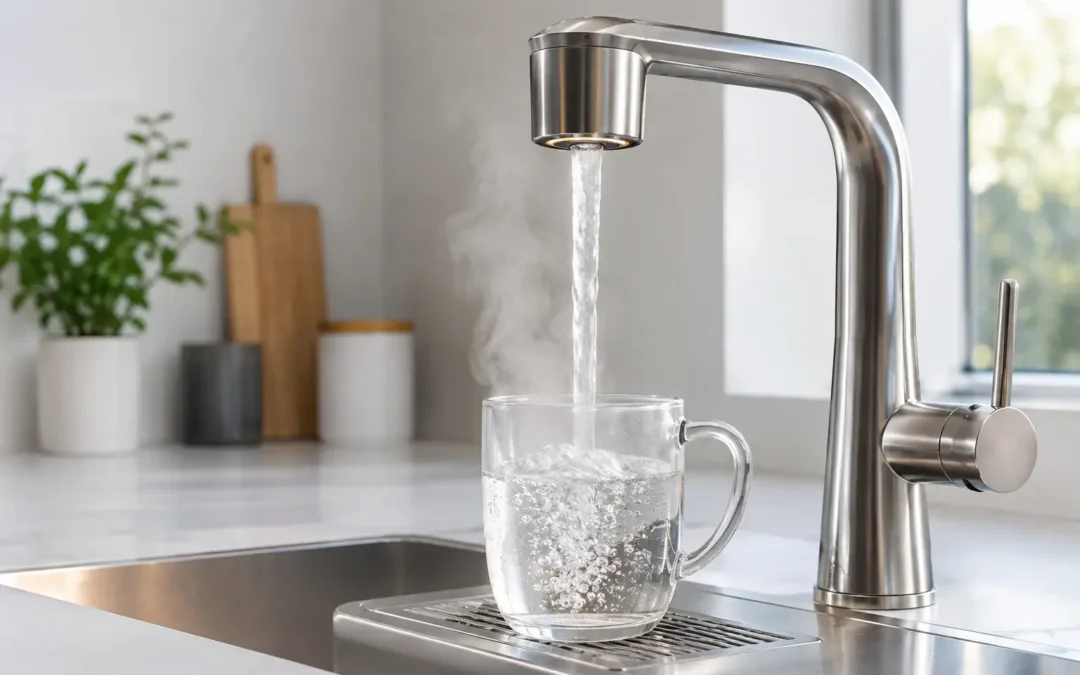
A boiling water tap can make the morning rush, cooking and entertaining far easier, but do boiling water taps filter your water as well as heat it? The honest answer is: many do, but not all filters do the same job. The detail matters, particularly if you are choosing a tap as part of a new kitchen where everyday convenience, water quality and ongoing costs all need to stack up.
A boiling water tap is not automatically a water purifier. Its filtration is usually designed to improve the supplied mains water before it reaches the tap system, but the type of cartridge, what it treats and which outlets it serves vary between models.
Do boiling water taps filter water?
Most premium boiling water taps are supplied with a filter or have one available as part of the system. Typically, cold mains water passes through a cartridge before entering the boiling water tank. Depending on the model, filtered water may also be supplied through a dedicated chilled or cold drinking-water outlet.
That does not mean every drop from the tap has been filtered. On some systems, the normal hot and cold mixer functions are connected directly to the mains supply, while only the boiling water passes through the cartridge. Other models provide filtered cold water as a separate function. It is worth checking the product specification rather than assuming that a multi-function tap filters every outlet.
This distinction is easy to miss in a showroom, because the tap may look like one elegant fitting on the worktop. Under the sink, however, there may be a tank, filter housing and sometimes a chiller or sparkling-water unit. The configuration determines what you receive at the spout.
What does a standard boiling water tap filter remove?
The most common cartridges combine activated carbon with a scale-reduction medium. Activated carbon is widely used to reduce chlorine and improve the taste and smell of drinking water. For many households, this is the most noticeable benefit: tea, coffee and a glass of cold water can taste cleaner without keeping bottles in the fridge.
The scale-reduction element is especially relevant in Maidstone and much of Kent, where hard water is a familiar fact of life. Calcium and magnesium in the supply form limescale when water is heated. Reducing the build-up helps protect the boiler tank and may support more consistent performance over time.
Some filters also reduce fine sediment and certain metals, but the exact claim depends on the individual cartridge and its independent testing. If reducing lead, specific chemicals or microscopic contaminants is a priority, do not rely on broad wording such as “filtered water”. Ask for the manufacturer’s performance data for that particular filter.
A good way to think about it is this: a standard boiling water tap filter is often there to improve taste and manage limescale, not to solve every possible water-quality concern.
Filtering is not the same as purifying
Mains drinking water in the UK is already treated and monitored. In most homes, the aim of a tap filter is refinement rather than making unsafe water safe. A filter may reduce chlorine, odour, particles and hardness-related minerals, but it will not necessarily remove all dissolved substances, bacteria, viruses, nitrates or PFAS chemicals.
Nor does the boiling function itself turn a tap into a comprehensive treatment system. Heating water can deal with many microorganisms if the water is brought to a suitable temperature, but it does not remove dissolved minerals or chemical contaminants. In fact, as water evaporates, dissolved solids can become more concentrated.
If you have a specific concern about your water supply, an appropriate test and advice from a water-quality specialist should come before choosing a kitchen tap. It is better to select equipment for a known requirement than to pay for features that do not address it.
Why filter choice matters in a hard-water area
In a hard-water area, the practical value of filtration is often less about the taste of water and more about looking after the appliance. A boiling water tank repeatedly heats water, so it is more exposed to scale than an ordinary cold-water filter.
Manufacturers deal with this in different ways. Some use replaceable filters with built-in scale control. Others specify a separate scale-control cartridge, while certain systems adjust their recommended service intervals according to local water hardness. The right approach depends on the product, how much boiling water your household uses and the hardness of your local supply.
There is a trade-off. Cartridges that reduce hardness need replacing regularly, creating an ongoing cost. Skipping replacements to save money is false economy: it can affect taste, encourage scale inside the system and, in some cases, compromise the product warranty. The replacement schedule should be part of the buying decision, just like the upfront price of the tap.
How often should filters be changed?
There is no single interval for every boiling water tap. Many filters are replaced around every six to 12 months, though usage, water quality and cartridge capacity all affect this. Some systems provide an indicator light, app notification or countdown to make the timing clearer.
Households that make frequent hot drinks, cook extensively or fill pans from the tap may get through a cartridge faster than a couple who mainly use it for an occasional cup of tea. Conversely, a low-use kitchen still needs attention because filters have a time-based service life as well as a litre capacity.
When comparing taps, ask three practical questions: what cartridge is required, what does it cost, and how easy is it to obtain? A beautifully designed tap should be enjoyable to own years after the kitchen is finished, not dependent on hard-to-source consumables or vague maintenance advice.
Choosing the right filtered boiling water tap
The best choice starts with how you actually use your kitchen. A busy family may value a larger tank capacity and filtered cold water for bottles and packed lunches. Someone who enjoys entertaining may prefer chilled and sparkling functions. A smaller household may need little more than instant boiling water for drinks and cooking, with a compact under-sink arrangement.
It is also sensible to consider the kitchen layout before selecting a system. The cabinetry below the sink needs room for the tank, filter and any additional equipment, while still leaving practical storage for household essentials. The sink, worktop thickness, water pressure and available electrical provision all influence which products are suitable.
Design should not be an afterthought. A tap is one of the most used fittings in the kitchen and is always visible. Finishes can be selected to complement handles, lighting and appliances, whether your scheme is modern, classic or somewhere in between. However, the most striking finish is only a good choice when the system beneath it suits your water, cupboard space and lifestyle.
Questions worth asking before you buy
Before committing to a model, establish whether filtered water is available from the boiling outlet only or also from a dedicated cold-water function. Confirm exactly what the supplied cartridge reduces, how frequently it needs changing and whether local hard water requires an additional scale solution.
You should also ask about tank capacity, energy use when on standby, safety features such as child-safe operation and the space required in the sink cabinet. These are not minor details. They shape whether the tap feels like a daily luxury or an expensive compromise.
For a kitchen renovation, planning the tap early avoids awkward late changes to cabinetry and services. At MBK Design Studio, this is the sort of practical conversation that sits alongside choosing doors, worktops and appliances, so the finished room works as well as it looks.
A decision worth making at the planning stage
A boiling water tap with the right filter can reduce kettle clutter, improve the taste of drinking water and help manage limescale in a hard-water home. It should not be bought on the assumption that it filters everything, though. Choose a system with clear, relevant filtration claims and a maintenance routine you are happy to keep up with. That small amount of care at the outset helps ensure the tap remains a pleasure to use long after the excitement of the new kitchen has settled in.