
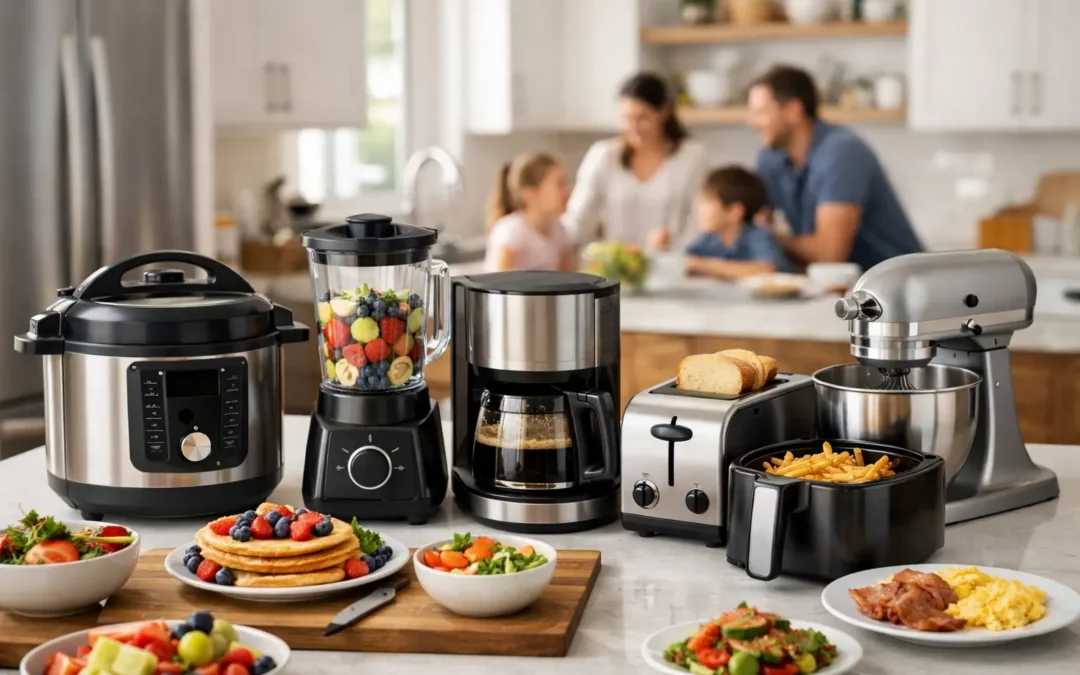
The school-run breakfast rush quickly reveals whether a kitchen works for family life. One person is packing lunches, another is looking for cereal, the kettle is boiling and dinner may already need planning. In that moment, the best kitchen appliances for families are not necessarily the most feature-packed or expensive. They are the ones that make everyday routines calmer, safer and easier to manage.
A well-planned family kitchen needs appliances that suit the household now, while allowing for changing needs over the years. Capacity matters, but so do layout, energy use, cleaning, noise and the way each appliance works alongside the cabinetry. Choosing them early in a kitchen project gives you far more freedom to create a space that looks considered and performs properly.
Start with the way your family really lives
Before comparing brands, programmes or finishes, consider how the kitchen is used on an ordinary weekday. A family that cooks from scratch most evenings will need different priorities from one that relies on quick meals between clubs and late finishes. A busy household may value a larger dishwasher and flexible refrigeration more than a second oven, while enthusiastic cooks may feel the reverse.
It is also worth thinking beyond the number of people in the home. Do you regularly host grandparents? Are teenagers likely to want independent access to snacks and drinks? Do you batch-cook at weekends, buy in bulk or need space for packed lunches? These habits affect the capacity and specification worth paying for.
The most successful designs avoid treating appliances as isolated purchases. Their position, door openings, handle style, ventilation requirements and access to sockets all influence how comfortable the kitchen feels to use.
Best kitchen appliances for families: the essentials
Refrigeration with flexible storage
For many households, the fridge freezer is the hardest-working appliance in the room. A generous capacity is helpful, but internal flexibility often matters more. Look for adjustable shelves, a wide salad drawer, useful door storage and freezer drawers that make it easy to see what is inside.
An integrated fridge freezer creates a clean, fitted appearance and can work beautifully in both contemporary and traditional kitchens. However, a freestanding American-style model may offer greater storage for larger households. The trade-off is that it needs more room, can dominate the visual design and may require careful planning for delivery access and ventilation.
If family members frequently open the fridge for drinks, fruit and snacks, a layout that keeps everyday items within easy reach can reduce congestion around meal preparation. Some families also benefit from a separate under-counter drinks fridge or additional freezer space, particularly where the main kitchen has room for it.
A dishwasher that can keep up
A full-size 60cm dishwasher is usually a sensible choice for a family kitchen, even in a smaller household. It gives you room for pans, plates, lunchboxes and water bottles without forcing you to run a cycle after every meal. An integrated model keeps the cabinetry line uninterrupted, while a freestanding dishwasher can be a practical option where flexibility or budget is the priority.
Do not focus solely on the number of place settings. Check the rack arrangement, cutlery drawer or basket, adjustable upper rack and the space available for larger cookware. A machine that technically holds more but cannot accommodate your usual pans will soon become frustrating.
Noise level can be especially important in open-plan homes. A quieter dishwasher is worth considering when the kitchen shares space with dining, homework or relaxing. A delay timer and efficient eco programme can also make it easier to run loads overnight or at lower-cost energy periods, where your tariff allows.
An oven arrangement built around mealtimes
A single multifunction oven can suit many families very well, particularly when paired with a combination microwave. The oven handles everyday baking and roasting, while the microwave provides rapid reheating and defrosting without taking over the worktop.
For larger households, keen cooks or families who entertain regularly, two cooking appliances can make a noticeable difference. A main oven with a compact second oven, steam oven or combination microwave gives you more flexibility when cooking a roast, preparing vegetables and warming a pudding at the same time.
Position matters as much as the appliance itself. A built-in oven at a comfortable height avoids repeated bending and keeps hot trays away from very young children more effectively than an under-counter installation. It is not right for every layout, but it is a worthwhile discussion during the design stage.
Pyrolytic cleaning is another feature that can earn its place in a busy home. It heats the oven to a very high temperature to reduce food residue to ash, making cleaning less labour-intensive. It will add to the purchase price, so it makes most sense for households that cook often and want to reduce a recurring chore.
An induction hob for speed and control
Induction hobs are increasingly popular in family kitchens because they heat quickly, respond precisely and leave the surrounding surface cooler than traditional electric hobs. The pan itself heats through magnetic energy, rather than the whole cooking zone becoming intensely hot.
This does not make an induction hob risk-free, and young children should always be supervised around cooking. However, features such as child locks, timers and residual heat indicators add useful reassurance. The smooth glass surface is also easier to wipe down after a rushed supper.
The main consideration is cookware. Induction requires compatible magnetic pans, so factor replacements into the overall budget if your existing collection is unsuitable. Gas remains a favourite for some keen cooks because of its familiar flame control, but it needs more detailed cleaning and good extraction. The best option depends on your cooking habits, preferred look and available services.
Extraction that keeps the room comfortable
An extractor is often underestimated until cooking smells linger in curtains, upholstery and adjoining living areas. In a family kitchen, particularly one that is open plan, effective extraction helps manage steam, grease and odours from everyday cooking.
A vented extractor takes air outside and will generally provide the strongest performance, provided the property layout allows it. Recirculating models can be an excellent solution where external ducting is not practical, but they rely on filters that need regular maintenance or replacement. Choosing a quieter model is valuable where conversations, television and family life happen close to the hob.
Do not overlook the smaller time-savers
A built-in combination microwave can be more useful than a basic microwave on the worktop, particularly where clear preparation space is limited. It keeps the kitchen looking uncluttered and provides an additional cooking option for quick meals.
A boiling-water tap is another appliance-like addition worth considering, although it is not essential for every home. It can make hot drinks, pasta and sterilising tasks quicker, but it needs careful installation and a realistic view of ongoing filter costs. Families with young children should choose an appropriate safety mechanism and use it thoughtfully.
Coffee machines, wine coolers and warming drawers can be enjoyable additions, but they should come after the practical essentials. In a kitchen with finite space and budget, reliable refrigeration, cooking and cleaning capacity will deliver greater everyday value.
Choose efficiency, but understand the trade-offs
Energy efficiency is a sensible consideration for appliances that run daily, especially refrigeration and dishwashers. Comparing energy labels, water consumption and programme lengths can help you make an informed choice. However, the highest-rated model is not automatically the right one if it lacks the capacity, storage layout or functions your household needs.
Eco cycles often use less water and energy, but they can take considerably longer. That may be perfectly acceptable overnight, yet impractical when you need clean lunchboxes before the morning. Similarly, smart controls can be convenient for monitoring programmes or scheduling a wash, but they should not be the deciding feature if the appliance is otherwise unsuitable.
Long-term value comes from selecting dependable products with the right specification, fitting them correctly and allowing access for future servicing. An appliance that looks elegant but is difficult to maintain can become an expensive compromise.
Plan appliances into the kitchen from the beginning
Appliance decisions should shape the kitchen plan, not be left until the cabinets have been chosen. The fridge should be accessible without blocking the main cooking area. The dishwasher works best close to the sink, while ovens, hobs and preparation space need to form a comfortable working relationship.
This is where professional kitchen planning can prevent small frustrations becoming permanent ones. At MBK Design, appliance choices can be considered alongside cabinetry, worktops, storage and installation requirements, so the finished room supports the way your family actually lives.
A family kitchen does not need every new feature to feel exceptional. It needs appliances that earn their place every day, leaving more time for the people gathered around the table.