A bathroom can look generous on paper and still feel cramped once the furniture goes in. That is usually the moment homeowners realise that knowing how to choose bathroom furniture is less about picking a nice unit and more about getting the balance right between storage, movement, durability and style.
The best choices start with how the room needs to work day after day. A family bathroom has very different demands from an en-suite used by two adults, and a cloakroom has its own priorities again. If you begin with appearance alone, it is easy to end up with furniture that looks the part in a showroom but feels awkward at home.
How to choose bathroom furniture for real life
Before looking at colours, handles or worktops, think about who uses the room and what they need to keep in it. Towels, cleaning products, spare toiletries, children’s bath items, electric toothbrushes and everyday essentials all need a home. If they do not, surfaces become cluttered very quickly and even a well-designed bathroom can start to feel untidy.
This is where honest planning matters. Some households want everything hidden away behind doors for a clean, calm finish. Others prefer a mix of concealed storage and open shelves for easy access. Neither is universally right. It depends on how neat you want the room to look, how much you need to store and whether you are happy to keep open shelving styled and organised.
The practical side is just as important as the visual one. Consider how often drawers will be opened, whether cupboard doors will clash with the shower screen, and how much clearance you need around the basin and WC. A piece of furniture that is too deep can make a bathroom feel narrower than it really is.
Start with layout, not furniture ranges
One of the most common mistakes is choosing a vanity unit first and trying to make the rest of the room fit around it. A better approach is to plan the layout as a whole. Think about walkways, sightlines and where people naturally stand, turn and reach.
In a compact bathroom, wall-hung furniture often works well because it leaves more floor visible and makes the room feel lighter. It can also make cleaning easier. That said, floorstanding units can offer a more substantial look and sometimes provide slightly more storage. In period properties or more traditional schemes, they may also sit more comfortably with the character of the room.
Corner units, reduced-depth furniture and combination vanity and WC units can all help in smaller spaces, but each comes with trade-offs. Slimmer units save space, yet they may limit basin size or internal storage. Combination furniture creates a neat fitted effect, though it can be less flexible if you ever want to change individual elements later.
Measure beyond the obvious
Measurements should cover more than wall-to-wall dimensions. Check door swings, window openings, radiator positions, sloping ceilings and any awkward boxing-in for pipework. It is also worth thinking about how drawers open in relation to the basin and whether users can stand comfortably in front of the mirror once the furniture is installed.
If the bathroom is part of a larger refurbishment, this is the stage where experienced design advice can save a great deal of frustration. Small layout adjustments can make a noticeable difference to both function and finish.
Storage should match the way you live
Good bathroom furniture earns its place by keeping the room calm and usable. That means choosing storage that reflects your routine rather than guessing what might be useful.
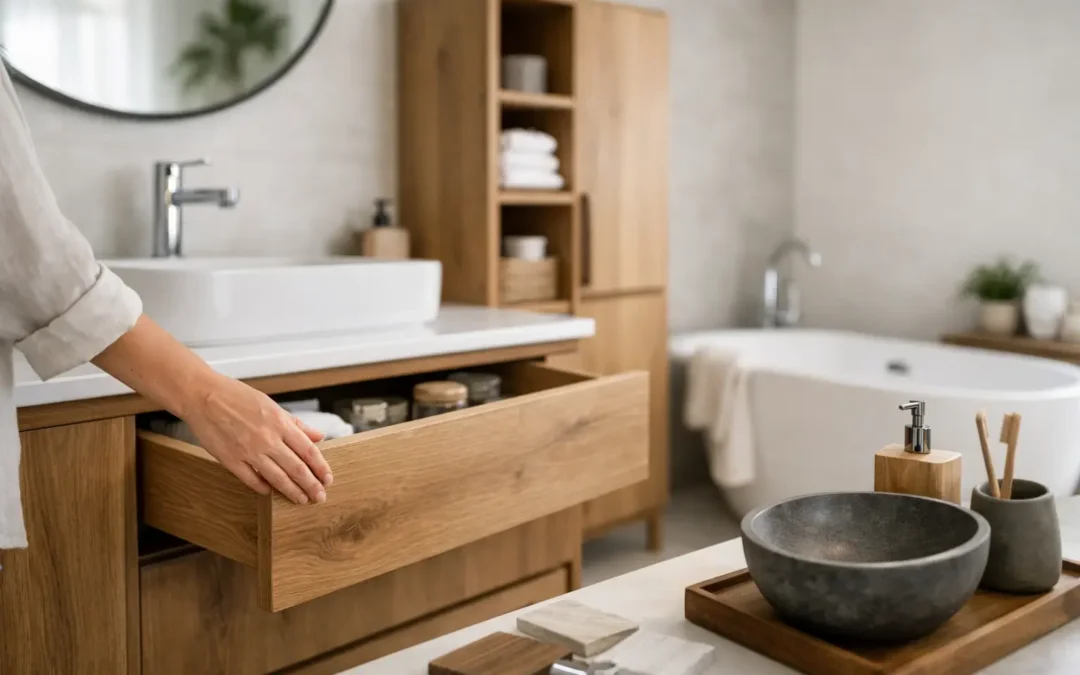
Drawers are often better than cupboards for everyday items because you can see contents more easily and reach the back without crouching down. Cupboards can still be useful for bulkier products, spare loo rolls and cleaning supplies. Tall units make excellent use of vertical space, particularly in bathrooms where floor area is limited.
Families often benefit from more storage than they first expect. Shared bathrooms tend to collect products over time, and a design that feels minimalist at installation can become overcrowded six months later. On the other hand, if you are designing an en-suite and only need room for daily essentials, overfilling the room with furniture can make it feel heavier than necessary.
Think about what stays on show
Not everything needs to be hidden, but anything left visible should be intentional. Open shelving can soften a bathroom and add personality, especially with neatly folded towels or carefully chosen accessories. It does, however, require discipline. If your aim is a crisp, low-maintenance space, enclosed storage is usually the safer choice.
Materials and finishes matter more than you think
Bathrooms are hard-working rooms. Steam, splashes, changes in temperature and daily cleaning all take their toll, so the finish of your furniture is not a detail to leave until the end.
When deciding how to choose bathroom furniture, look closely at the quality of the carcass, edges, doors and drawer construction. Moisture-resistant materials and well-finished surfaces are essential if you want the furniture to keep its appearance over time. A bathroom may not be soaked constantly, but it is still a demanding environment.
Gloss finishes reflect light and can help smaller rooms feel brighter, while matt finishes often create a softer, more contemporary look. Wood-effect furniture brings warmth, but the tone matters. Lighter timber effects can feel fresh and Scandinavian-inspired, whereas darker woods suit richer, more classic schemes. Painted finishes, especially in greys, greens or off-whites, work well when you want a timeless look rather than a trend-led one.
Handles also influence the final feel. Integrated handleless furniture looks sleek and modern, but traditional knobs or cup handles can add character. Think about cleaning as well as style. Intricate detailing may look attractive, though flatter surfaces are generally easier to wipe down.
Match the furniture to the style of the home
A bathroom should feel like it belongs in the property, even if it introduces a fresher or more luxurious look. In a modern extension, floating furniture and clean lines may feel completely natural. In an older Kent home with more traditional detailing, a shaker-style vanity or fitted furniture with a softer profile may sit more comfortably.
That does not mean every bathroom has to copy the rest of the house. Contrast can work beautifully. The key is to make it intentional. A highly contemporary unit in a character property can look striking if the materials, colours and brassware are chosen carefully. Equally, a traditional-style vanity in a newer home can add warmth where minimalist finishes might otherwise feel stark.
Avoid choosing solely by trend
Trends can be useful for inspiration, but bathroom furniture should last well beyond a single season of interiors fashion. If you love bold colours or statement finishes, consider where to use them. A dramatic furniture colour may be perfect if you genuinely enjoy it, but if you are uncertain, it is often wiser to keep the main furniture timeless and bring personality in through mirrors, wall finishes or accessories.
Budget for value, not just the unit price
Furniture choices are often shaped by budget, and understandably so. The important thing is to look at value over the life of the bathroom rather than the ticket price in isolation.
A cheaper unit may appear to save money at first, but if the finish deteriorates, the drawers feel flimsy or the storage does not really work for your household, it can become a false economy. Better-made furniture usually feels different in daily use. Doors close properly, drawers run smoothly and surfaces stand up better to regular cleaning and moisture.
It is also worth remembering that furniture decisions affect the wider project. Changing the depth of a vanity, adding fitted storage or choosing bespoke-style combinations can influence plumbing positions, tiling and installation time. This is why early planning is so valuable. It helps avoid expensive changes once work is under way.
Why expert guidance often pays off
Bathroom furniture looks straightforward until all the details start to overlap. Basin size affects worktop space. Furniture depth affects movement. Storage choices affect how tidy the room feels. Finishes affect light, maintenance and longevity.
For many homeowners, especially those investing in a full refurbishment, seeing options in a showroom and discussing them with an experienced designer makes the process far clearer. You can compare proportions properly, understand what is practical for your room and avoid buying in pieces that do not work together. Businesses such as MBK Design have spent decades helping homeowners make these decisions with confidence, which is often the difference between a bathroom that simply looks good and one that feels right every day.
If you are weighing up options now, take your time with the furniture. Tiles and taps may grab attention first, but it is the furniture that often determines whether the room feels calm, useful and built to last.